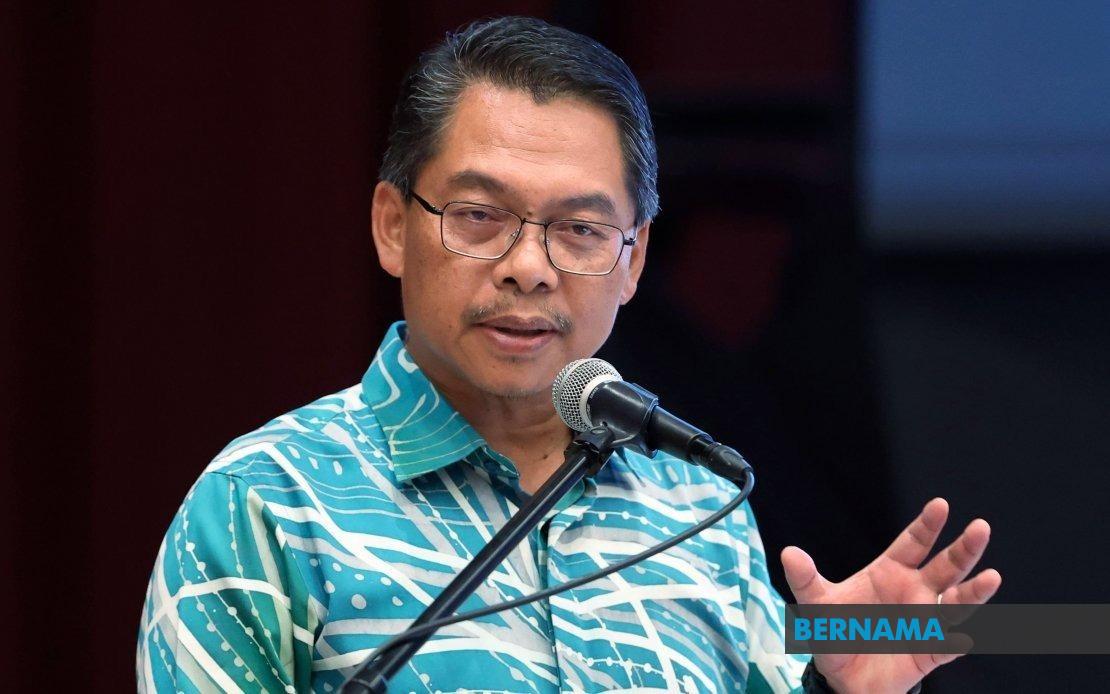
The attendance of Sabah Chief Minister Datuk Seri Hajiji Noor and senior Gabungan Rakyat Sabah (GRS) leaders at the 2026 PKR National Congress in Melaka on August 15 underscores a significant thawing of political relations between Sabah's state government and the federal administration under Prime Minister Datuk Seri Anwar Ibrahim. Sabah PKR Leadership Council chairman Datuk Mustapha Sakmud characterised the high-profile presence of rival coalition figures as emblematic of a broader commitment to collaborative governance that transcends traditional party politics when state interests are at stake.
Mustapha, who serves as Minister in the Prime Minister's Department (Sabah and Sarawak Affairs), emphasised that the cooperative framework extends substantially beyond symbolic political gestures. He articulated a vision where partnership channelled resources and policy attention towards tangible improvements in living standards for Sabahans. His statement positioned stability not as an end in itself, but as a prerequisite for unleashing economic potential, expanding employment opportunities, upgrading infrastructure, and tackling long-standing challenges that directly affect household welfare across the state's diverse communities.
The MADANI Government's approach, according to Mustapha, reflects a recognition that uniform national policies cannot adequately serve Malaysia's geographically and demographically distinct regions. Sabah, with its unique position as a former British protectorate and signatory to the Malaysia Agreement 1963, requires development strategies that acknowledge its historical autonomy and contemporary needs. The federal administration, Mustapha indicated, has committed to pursuing inclusive growth that respects regional variation rather than imposing centralised templates indiscriminately.
A cornerstone of this cooperation framework centres on the implementation and defence of MA63 provisions. PKR, through Mustapha's statement, reaffirmed its commitment to advancing Sabah's constitutional rights within the federal structure. This pledge carries weight given ongoing debates about fiscal federalism, resource distribution, and state autonomy in sectors such as education, immigration, and land administration. PKR's positioning as a champion of these interests suggests the party views Sabah affairs as integral to national governance rather than peripheral concerns.
The delegation of GRS luminaries present at the congress—including Deputy Chief Minister I Datuk Seri Dr Joachim Gunsalam, Rural Development Minister Datuk Rubin Balang, and Youth, Sports Development and Creative Economy Minister Datuk Nizam Abu Bakar Titingan—represented not merely ceremonial attendance but substantive engagement with federal partners. The inclusion of Education, Science and Technology Minister Datuk James Ratib among the attendees particularly signals ongoing dialogue on knowledge-sector collaboration, an area where federal and state initiatives must align for institutional effectiveness.
Mustapha's framing of the attendance as a message that "political differences should not be a barrier" merits careful analysis within Malaysia's contemporary political landscape. Since the 2022 elections, Malaysia has experienced unprecedented coalition fluidity, with GRS maintaining strategic distance from both major federal blocs while negotiating case-by-case cooperation. Sabah's balancing act—leveraging federal goodwill whilst preserving autonomy—mirrors broader patterns across Malaysia where state governments increasingly function as independent power brokers rather than mere extensions of national party machinery.
The congress itself, themed "Memugar Reformasi, Membina MADANI" (Nurturing Reform, Building MADANI), was inaugurated by Anwar in his capacity as PKR president at the Melaka International Trade Centre. The event provided a platform for the ruling coalition to articulate its vision whilst simultaneously demonstrating its capacity to accommodate partners from non-aligned regional governments. This inclusive approach may reflect learning from earlier governance challenges and an appreciation that durable policy implementation requires buy-in from influential state actors regardless of party affiliation.
For Malaysian and Southeast Asian observers, the Sabah-federal rapprochement illustrates how subnational governments increasingly wield leverage in federal systems, particularly where constitutional arrangements guarantee regional safeguards. GRS's willingness to participate in PKR forums, coupled with PKR's receptiveness to GRS presence, suggests both parties recognise mutual benefit in channelling state-federal relations through constructive rather than adversarial pathways. This pragmatism contrasts with more ideologically rigid coalition politics elsewhere in the region.
The emphasis placed on development outcomes—economic opportunities, infrastructure, service delivery—rather than on power-sharing or patronage distribution also signals evolving governance norms. Mustapha's consistent linkage of political cooperation to material improvements suggests stakeholders expect collaborative frameworks to yield demonstrable results. For Sabahans, this framing establishes benchmarks against which cooperation may be evaluated; whether federal investment, project rollout, and service standards actually improve provides the ultimate test of partnership authenticity.
Moving forward, the significance of this attendance likely extends beyond this single congress. It establishes precedent for ongoing Sabah-federal engagement on substantive policy matters and potentially creates platforms for regular dialogue between GRS and MADANI components. If sustained, such engagement could stabilise Malaysia's often turbulent intergovernmental relations and provide a model for how competing political entities navigate shared governance responsibilities.
The broader implication for Malaysian politics involves normalisation of cross-coalition cooperation at operational levels even when parties compete vigorously at electoral junctures. This represents a maturation from the zero-sum competitive dynamics that characterised earlier coalition arrangements. For Sabah specifically, strong federal ties—provided they translate into development outcomes—enhance the state's capacity to extract resources and influence national policy direction. The attendance at PKR's congress should therefore be interpreted as both symbolic acknowledgment of partnership and strategic positioning for maximising state interests within the federal framework.

