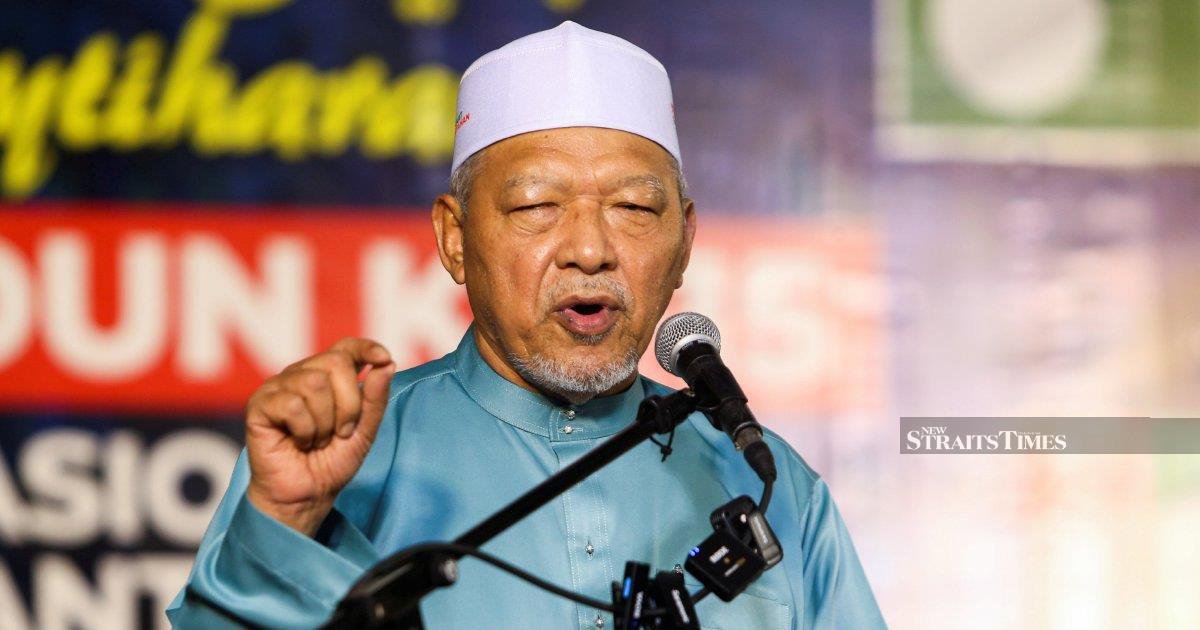
Tan Sri Abdul Hadi Awang, president of Pas, has thrown his weight behind a series of electoral arrangements with Barisan Nasional targeting three significant state elections, responding to what party officials characterise as a grave political juncture. The understanding covers the forthcoming contests in Johor and Negri Sembilan, alongside provisions for the next electoral cycle in Melaka, signalling a deepened commitment between the two established political entities in Malaysia's fractious political landscape.
The decision to formalise such pacts represents a strategic realignment within Malaysia's traditional opposition-turned-governing coalition architecture. Hadi's assessment of the current political environment as "dangerous" provides crucial context for understanding PAS's calculus in pursuing formal cooperation rather than independent campaigns. This framing suggests the party leadership perceives existential challenges emanating from rival political actors or ideological movements that transcend typical electoral competition.
The geographic scope of these agreements warrants particular attention for Malaysian political observers. Johor, as the nation's southernmost peninsula state and a traditional BN stronghold, holds symbolic and practical significance. The southern state has represented a stable electoral foundation for the coalition, though demographic shifts and opposition mobilisation in recent years have complicated this picture. Negri Sembilan, smaller yet politically competitive, frequently mirrors broader national electoral trends and serves as a bellwether for coalition performance in central Peninsular Malaysia. The contingency arrangement for Melaka indicates forward planning extending beyond the immediate electoral cycle.
PAS's willingness to subordinate independent campaigns to coordinated arrangements with BN reflects substantial repositioning within the party's political strategy. The Islamic party's trajectory through multiple coalition permutations over recent decades demonstrates flexibility in pursuit of power-sharing arrangements. However, the explicit framing of this decision as responsive to an external "major threat" suggests factors beyond routine electoral mathematics influence party calculations. This language pattern typically signals concerns about ideological competitors, organisational infiltration, or perceived threats to Islamic governance frameworks the party champions.
The implications for rival opposition coalitions remain significant. Such arrangements potentially consolidate the BN-PAS axis that has governed Malaysia since the 2022 general election, reducing electoral fragmentation that might otherwise benefit loosely coordinated opposition fronts. For Pakatan Harapan and other opposition-aligned parties, these pacts establish clearer battlefield demarcations in state-level campaigns, requiring strategic resource allocation and messaging refinement.
Within Malaysian federalism, state elections occupy increasingly prominent positions as alternative power bases and policy laboratories. Control of Johor provides leverage over one of the peninsula's most economically significant states, whilst Negri Sembilan and Melaka represent important stepping stones within the central corridor. Electoral victories in these jurisdictions would reinforce BN-PAS dominance in peninsular governance, potentially constraining opposition opportunities to implement alternative policy agendas in these regions.
The coordination between Hadi's leadership and BN hierarchy underscores institutional adaptation within Malaysia's political establishment. Both entities possess deep organisational infrastructure spanning decades, enabling relatively sophisticated electoral coordination despite philosophical differences. BN's traditional conservative, secular-nationalist orientation contrasts with PAS's Islamist framework, yet shared opposition to alternative governance models apparently outweighs these ideological tensions in current political circumstances.
For Malaysian voters, particularly in the affected states, these arrangements effectively reduce choice architecture within certain constituencies. Electoral agreements typically involve seat-sharing arrangements whereby coalition partners divide available constituencies to avoid inter-coalition competition. Whilst this reduces overall candidate diversity within the coalition framework, it potentially strengthens BN-PAS's competitive position against opposition contenders by concentrating resources and messaging.
The timing of these announcements carries significance within Malaysia's electoral calendar. State elections typically require several months' notice, and formalising agreements ahead of official dissolution announcements enables coalition partners to coordinate campaign infrastructure, candidate selection, and resource deployment efficiently. This proactive positioning suggests both parties anticipate near-term electoral contests and wish to maximise coordination advantages.
Hadi's public endorsement of these pacts in Tumpat, a Kelantan constituency, carries domestic signalling value within PAS itself. Such announcements often serve to consolidate party rank-and-file support around leadership decisions, particularly when internal factions might harbour reservations about coalition partnerships. The leadership's articulation of external threats legitimises cooperation arrangements that some party activists might otherwise perceive as compromising PAS's distinct Islamic agenda.
Regional dimensions of Malaysian electoral politics add further layers to these developments. Competition between federal government formations and opposition-controlled state governments influences broader Southeast Asian governance patterns, particularly given Malaysia's demographic diversity and institutional complexity. Electoral outcomes in Johor and other states potentially influence national political dynamics during the subsequent general election cycle, making these state contests strategically important for national coalition building.
Moving forward, the durability of BN-PAS electoral arrangements remains uncertain. Historical patterns show such coalitions frequently fracture following electoral cycles as partners reassess power-sharing mathematics and prioritise factional interests. However, for the immediate electoral contests ahead in Johor, Negri Sembilan, and Melaka, these pacts represent clear commitments that will substantially shape electoral competition and voter choice in these crucial states.

