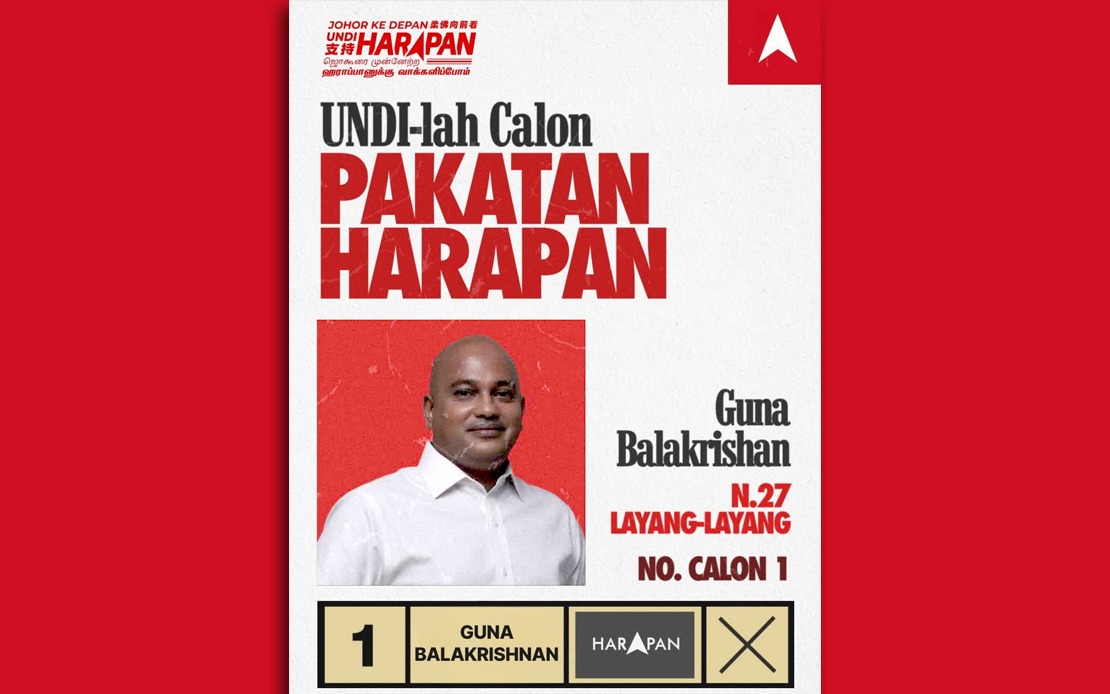
With the Johor state election set for July 11, Pakatan Harapan's candidate for the Layang-Layang seat, Guna Balakrishnan, has released a detailed six-point development manifesto aimed at transforming the constituency through what he describes as inclusive progress that reaches every household. Speaking in Kluang, Guna framed his candidacy around the principle of accessibility, emphasizing his intention to function as a genuine conduit between residents and the state apparatus rather than a distant representative focused solely on ceremonial duties.
The manifesto's centrepiece addresses a perennial challenge that has plagued the constituency for years: seasonal flooding that disrupts normal life in multiple residential areas. Communities in Kampung Senda, Sungai Sayong, Kampung Tengah Renggam, Ulu Benut, Simpang Renggam and Kampung Chokro have experienced recurring inundation that damages homes and livelihoods. Guna's commitment involves not merely managing crisis response but implementing structural solutions, including accelerating the rollout of flood mitigation infrastructure, systematically upgrading stormwater drainage networks, and establishing maintenance schedules for roads and public amenities that currently deteriorate during heavy rainfall periods.
Beyond physical infrastructure, Guna has positioned digital connectivity as essential to rural development in Layang-Layang. His proposals target improvements to street lighting in poorly illuminated areas and expansion of broadband coverage across villages where internet access remains limited or unreliable. For a constituency where economic activity increasingly depends on online commerce and where students require dependable connectivity for remote learning, this focus reflects understanding of contemporary rural challenges that extend beyond traditional development priorities. The underlying argument is that digital inclusion becomes a prerequisite for educational opportunity and business competitiveness.
Youth employment and skills development feature prominently in the manifesto, with Guna proposing expanded access to Technical and Vocational Education and Training programmes that provide alternatives to traditional university pathways. Recognizing that not all school-leavers pursue academic qualifications, his platform includes a distinctive proposal to establish a motorsports track facility that would channel youthful enthusiasm for racing into structured, supervised environments rather than informal street activities. This represents an attempt to address youth engagement through infrastructure that combines safety with economic potential, as motorsports facilities can generate employment and attract regional interest.
The manifesto extends its vision to underrepresented demographic groups within the constituency. Women's economic participation receives attention through commitments to strengthen entrepreneurship support mechanisms, acknowledging that female traders and business owners often lack access to networks, financing, and mentorship comparable to their male counterparts. For senior citizens, Guna proposes establishing a Senior Citizens Activity Centre—referred to as PAWE in local terminology—designed to foster social engagement and prevent isolation among elderly residents, a demographic often overlooked in conventional development planning despite their significant presence in rural Malaysian constituencies.
Local economic revitalization forms another pillar of the proposal, with Guna committing to support small traders through facilitative policies while simultaneously exploring Renggam's tourism potential as an income generation avenue. This dual approach recognizes that sustainable rural development requires both protecting existing small-scale economic activity and identifying new opportunities that leverage local assets. Tourism development, if executed thoughtfully, can create multiplier effects across hospitality, transportation, and retail sectors while providing employment alternatives to outmigration that typically drains younger populations from rural areas.
Guna has carefully positioned these pledges not as typical campaign rhetoric but as realistic, implementable commitments grounded in collaborative governance. He emphasizes the necessity of working in partnership with the Johor state government, local municipal authorities, and relevant federal agencies—a recognition that a state assemblyman's effectiveness depends on navigating bureaucratic channels and coordinating across multiple governmental layers. This framing distinguishes his approach from candidates who promise unilateral delivery without acknowledging institutional constraints and interdependencies inherent in Malaysian governance structures.
The Layang-Layang constituency encompasses 25,181 registered voters participating in a three-way contest that reflects Malaysia's contemporary political fragmentation. Guna faces competition from Barisan Nasional's Chua Jian Boon and the incumbent Abd Mutalip Abd Rahim representing Perikatan Nasional. This configuration means the 2023 election result provides limited predictability about voter preferences in 2024, and the contest remains genuinely competitive despite any conventional wisdom about regional political leanings. Early voting is scheduled for July 7, allowing voters unable to participate on the main election date to cast ballots.
For Malaysian constituencies examining candidate platforms, Guna's manifesto exemplifies the evolution of election campaigns toward substantive issue-based positioning rather than personality-driven messaging. His emphasis on consultation-based governance and community partnership reflects broader expectations among increasingly informed electorates that representatives should articulate detailed implementation strategies rather than vague prosperity promises. The specificity regarding flood mitigation, digital infrastructure, youth facilities, and senior citizen services demonstrates engagement with tangible local grievances rather than abstract national narratives.
The Johor state election takes place amid broader discussions about economic regionalism within Malaysia, with Johor's strategic location and economic weight making its political direction nationally significant. How constituencies like Layang-Layang address rural development priorities will influence not only local livelihoods but broader perceptions about whether traditional party formations remain responsive to evolving voter expectations. Guna's platform, whether ultimately endorsed by residents or not, represents an attempt to reframe state-level politics around concrete delivery and sustained engagement rather than transactional campaign periods followed by dormancy.

