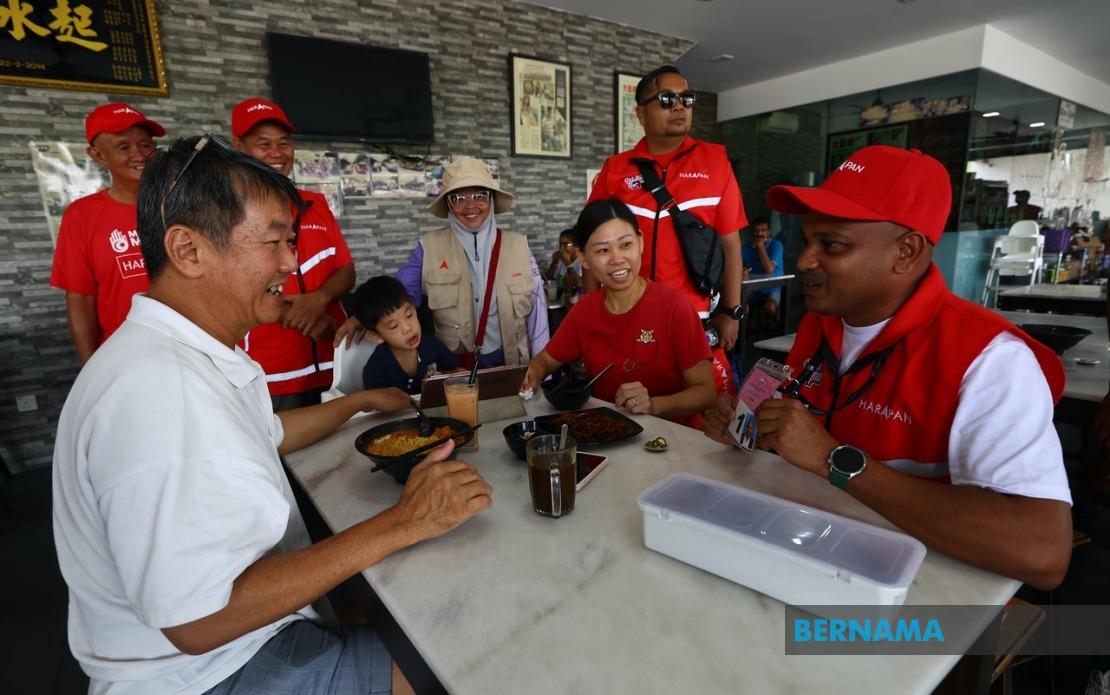
With five days remaining before voters head to the polls in Johor's state election, Pakatan Harapan candidate Guna Balakrishnan is ramping up efforts to connect with constituents in the Layang-layang seat, having already covered roughly four-fifths of the electorate through door-to-door campaigning. The final stretch of his campaign aims to capture the elusive remaining 20 per cent of the constituency as he seeks to consolidate support in what has become a competitive three-way race.
Speaking at the opposition coalition's local operations headquarters in Kluang, Guna characterised the remaining campaign period as a critical moment to intensify outreach. He explained that while his team had achieved substantial ground coverage, the final days would require accelerated effort to ensure comprehensive voter engagement. The candidate framed the challenge not merely as a matter of logistics but as a test of determination, suggesting he would need to double his efforts to achieve saturation coverage before polling day arrives.
The central difficulty facing Guna and his campaign team, according to his own assessment, lies in persuading Layang-layang residents to embrace the broader narrative of political change that PH is advancing. Rather than focusing solely on local grievances, his messaging attempts to situate the choice before voters within a national context, emphasising the coalition's record in delivering substantive governance reforms. This broader appeal reflects PH's strategy of combining local responsiveness with appeals to systemic change at the state and federal levels.
Guna's electoral platform for Layang-layang addresses multiple dimensions of constituency life. Flood mitigation emerged as a primary concern, reflecting the area's vulnerability to seasonal inundation—a perennial challenge in parts of Johor. Beyond disaster management, his manifesto encompasses infrastructure modernisation through road upgrades and improved street lighting, practical improvements that resonate with residents across Malaysia's secondary urban and rural centres. The candidate has also prioritised digital infrastructure, pledging to enhance internet connectivity in the constituency, recognising that rural broadband access remains uneven across the state.
Human development initiatives form the second pillar of Guna's campaign promises. He has committed to supporting women's entrepreneurship schemes, a policy area gaining traction across Malaysian politics as parties recognise the economic contribution of female business owners. Equally prominent is his pledge to expand Technical and Vocational Education and Training access for young people, responding to broader anxieties about youth employment prospects in constituencies outside Kuala Lumpur's metropolitan reach. These initiatives signal an attempt to appeal to working families and younger voters concerned about economic mobility.
A notable addition to Guna's platform involves establishing a senior citizen activity centre, designated as PAWE in his materials. This commitment addresses the needs of an ageing demographic segment that often receives limited attention in campaign discourse. By explicitly pledging enhanced welfare provision and social engagement opportunities for seniors, Guna's manifesto seeks to signal inclusivity across generational lines—a demographic consideration increasingly relevant as Malaysia's population ages.
Local residents consulted by media have articulated positive responses to Guna's platform. Trader Tan Ah Kiat, a 55-year-old business owner, highlighted the candidate's grasp of community priorities, specifically naming flood prevention, drainage improvements, and street lighting enhancements as issues that directly affect daily life and commerce in Layang-layang. Tan further emphasised the relevance of Guna's digital connectivity pledge, arguing that unstable internet coverage directly constrains educational opportunities and business development in rural areas—a point that underscores how infrastructure gaps create compounding disadvantages beyond mere inconvenience.
R. Kalaiselvan, age 48, echoed support for Guna's human capital proposals while particularly welcoming the senior citizen initiative. Kalaiselvan's framing of the manifesto as demonstrating "inclusive long-term vision" reveals how campaign platforms are assessed by voters as indicators of a candidate's philosophy and priorities across different population segments. The emphasis on TVET and women's entrepreneurship appears to have resonated with this respondent as addressing structural economic challenges rather than offering tokenistic gestures.
The Layang-layang seat presents a demographically diverse challenge with 25,181 registered voters spread across an area encompassing urban, semi-rural, and rural pockets. This composition means campaign messaging must accommodate varied priorities—urban voters concerned with flood risk and internet access, traders anxious about economic opportunity and infrastructure, and seniors focused on welfare provision and social engagement. The three-way contest involving Guna, Barisan Nasional's Chua Jian Boon, and Perikatan Nasional incumbent Abd Mutalip Abd Rahim indicates none of the major coalitions can take the seat for granted.
The incumbent PN representative's presence in the race adds a defensive dimension for both PH and BN, as voters must assess not only which coalition offers superior governance but also whether to retain experience or seek change. Guna's campaign strategy appears to emphasise that fresh representation aligned with PH's broader reform agenda would better serve Layang-layang than maintaining the status quo. The concentration of PH resources in the final week suggests party strategists view this seat as competitive and winnable.
Early voting is scheduled for Tuesday, July 7, with the general election occurring four days later on July 11. The compressed timeline between early polling and election day means that momentum and final messaging may prove decisive, particularly among voters who have not yet settled their preferences. Guna's intensified campaign push directly addresses this reality, seeking to crystallise support during the window when voter attention peaks and undecided constituents make final determinations.
The Layang-layang contest reflects patterns visible across several Johor constituencies where traditional BN dominance has eroded, giving rise to genuine three-way competition. For Pakatan Harapan, capturing seats in Johor remains strategically important to any future prospects of governing the state, making candidates like Guna central to the coalition's broader electoral ambitions. Success in secondary constituencies often determines whether coalition victories at the state level prove durable and command clear mandates.

