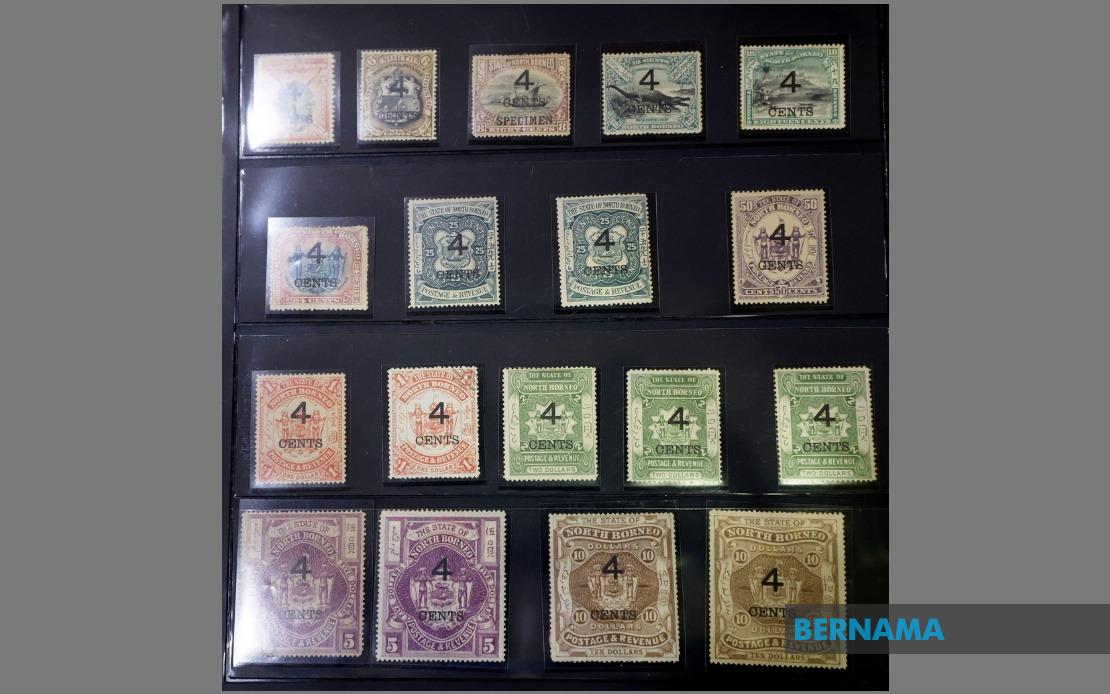
The urgency surrounding the conservation of North Borneo stamps reflects a broader concern among heritage enthusiasts and historians in Sabah: as these rare philatelic items become increasingly scarce and expensive, the window to safeguard the stories they tell of the region's colonial past continues to narrow. Dr Shari Jeffri, founder and president of the Borneo History Association, frames these stamps as far more than mere collectibles—they represent a "living archive" documenting Sabah's transformation across nearly a century of British colonial administration and beyond.
The challenge facing current and future generations stems partly from shifting cultural practices around stamp collecting itself. What was once a widespread hobby commanding serious attention from enthusiasts across social classes has contracted significantly among younger Malaysians. Dr Shari observes that contemporary collectors are few in number, and the pool of active philatelists continues to diminish with each passing year. This demographic reality threatens not just the hobby itself, but the very preservation of historical artifacts that depend on dedicated stewards to maintain them properly. Without collectors passionate enough to invest time and resources into their care, these stamps risk deterioration, loss, or dispersal into private collections where their historical significance may be undervalued or forgotten entirely.
A survey conducted in Kota Kinabalu's antique shops unveiled the economic reality confronting anyone seeking to acquire these historical pieces: prices have climbed substantially, determined primarily by age, condition, and rarity. Among the discoveries was a notable album containing specimens including a six-cent North Borneo stamp from between 1954 and 1961, which displayed Queen Elizabeth II alongside a Dusun woman, as well as a ten-cent denomination depicting logging operations. These specific issues represent crucial visual documentation of Sabah's mid-twentieth-century society, capturing both the colonial administration's symbolism and the economic activities sustaining the territory during that period.
Dr Shari's personal journey into philately illuminates how family inheritance and mentorship once sustained this scholarly pursuit. His grandfather, employed at the Recreation Club Jesselton during the 1920s, developed his stamp-collecting passion by observing British officers engaging in the hobby. This intergenerational transmission of knowledge and collections proved formative: introduced to philately at age seven, Dr Shari became an active collector during his secondary school years alongside friends who shared the enthusiasm. The inherited collection he carefully maintains represents not merely monetary value but a living connection to Sabah's historical fabric woven across generations.
Among Dr Shari's most prized possessions are two two-cent North Borneo stamps from the original 1883 issue, adorned with brown sailing boats and bearing postmarks that authenticate their postal use. For serious collectors, the 1883 issue represents the cornerstone of any comprehensive North Borneo collection—its absence would render any assembly fundamentally incomplete. Each stamp transcends its utilitarian function as postage; rather, it functions as a tangible narrative element recording specific moments in colonial territorial history. The British North Borneo Chartered Company introduced these stamps in 1883, maintaining their use for approximately 52 years, during which design evolution reflected both changing imperial priorities and growing recognition of Sabah's distinct regional identity.
The visual transformation across North Borneo stamp designs offers remarkable insight into shifting colonial attitudes and awareness. In their earliest form, stamps featured symbolic imagery including lions, boats, and tigers alongside various mottos, designs that persisted until approximately 1892. Beginning in 1894, designers fundamentally reoriented the aesthetic, transitioning toward representations of Borneo's botanical and zoological wealth—native flora, fauna, and distinctive wildlife became central decorative elements. This shift signaled growing emphasis on the territory's natural resources and ecological distinctiveness, moving beyond generic imperial symbolism toward representations specific to the North Borneo context. The stamps subsequently appeared in denominations ranging from two sen to one dollar, each denomination serving distinct postal needs across the colonial administration and mercantile networks.
Authenticity and preservation present twin technical challenges that distinguish serious philatelic study from casual collecting. Stamps bearing complete postal cancellations—marked with comprehensive information including mailing dates, post office names, times, and locations—command particular esteem among collectors and historians, as these marks provide documentary evidence of actual postal circulation. The quality and composition of stamp paper itself, specifically whether it incorporated an adhesive backing, functions as a critical authenticity indicator affecting both value and historical reliability. To master these technical distinctions, Dr Shari sought expertise from Singapore-based specialists Voon Kyam Foh and Tan Chun Lim, supplementing practical guidance with reference to authoritative catalogues such as Commonwealth & British Empire Stamps.
Storage and environmental conditions fundamentally determine whether these century-old artifacts survive intact for future scholarship. Dr Shari emphasizes that preservation requires acid-free albums, protecting stamps from chemical degradation and color fading that compromise both aesthetic integrity and historical authenticity. The technical requirements for proper conservation exceed what casual collectors might instinctively understand, underscoring why knowledge transmission between experienced and emerging philatelists remains essential. Without such expertise circulating through community networks and institutional education, well-meaning collectors might inadvertently damage irreplaceable items through ignorance of proper handling and storage protocols.
The decline of letter-writing and postal communication in the digital age has fundamentally altered the cultural context surrounding stamp collecting. What once represented living postal infrastructure now exists primarily as historical artifact. Yet this transition, while diminishing stamps' contemporary utility, simultaneously enhances their significance as historical documents. North Borneo stamps stand as tangible witnesses to Sabah's developmental journey through colonial administration, economic transformation, and eventual independence. They record not abstract political changes but concrete realities—the presence of Queen Elizabeth II alongside a Dusun woman captures a specific moment of colonial multiculturalism, while logging imagery documents the resource-extraction economy sustaining territorial revenues.
The institutional challenge of preservation extends beyond individual collectors' efforts. Museums, heritage organizations, and educational institutions bear responsibility for ensuring these stamps remain accessible to scholars and future generations interested in Sabah's history. Dr Shari's establishment of the Borneo History Association represents one organizational response, creating institutional frameworks to house collections and facilitate research. Yet such initiatives require sustained funding, professional expertise, and community engagement to function effectively. Without systemic support recognizing philatelic materials as legitimate historical sources worthy of archival preservation, individual collections risk scattering upon their creators' deaths, dispersing into private hands where historical context may be lost entirely.

