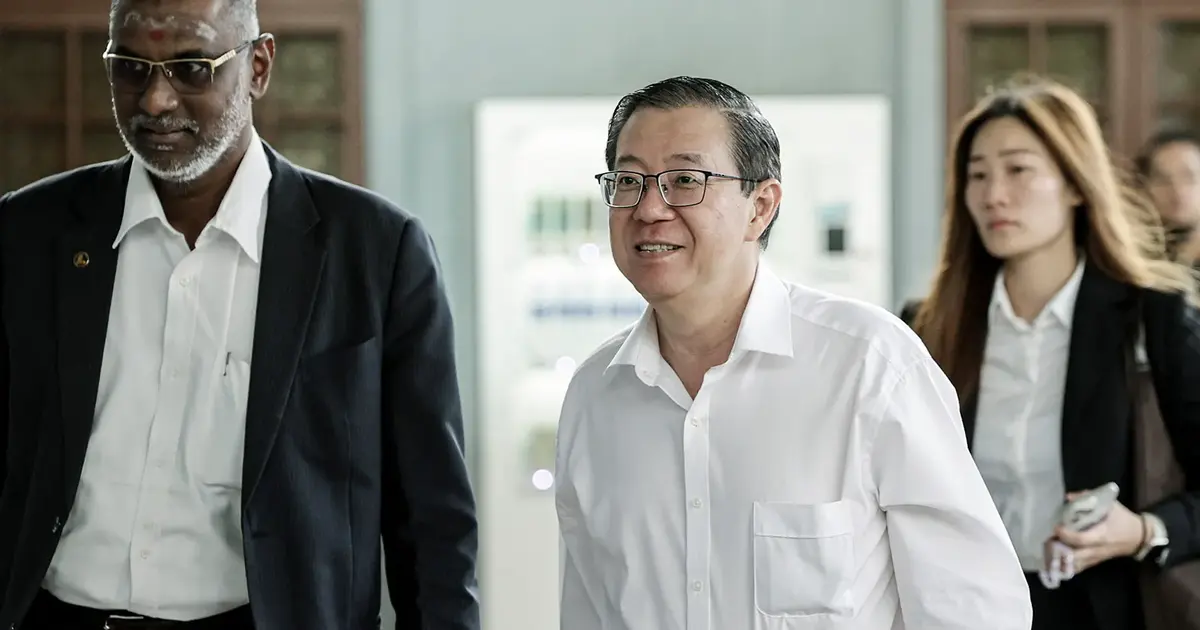
During ongoing court proceedings into allegations surrounding a contentious infrastructure development in Penang, a Malaysian Anti-Corruption Commission investigator disclosed that Lim Guan Eng had sought guidance from state government officials regarding the legal framework governing the tunnel project. The testimony, delivered in a sessions court hearing, indicated that the matter had been deliberated by Penang's executive council, which examined potential constitutional and regulatory concerns before moving forward with implementation.
The investigator's account suggests that the state government took measures to verify compliance with relevant laws and administrative procedures. According to the witness statement, the executive council had formally discussed the project's legal dimensions, demonstrating an apparent attempt to ensure that planned development aligned with statutory requirements and proper governance protocols. This procedural step would typically precede major public infrastructure investments in Malaysian states, where executive bodies regularly seek counsel on complex undertakings.
A key element of the testimony centered on the role played by Penang's state legal adviser, who was tasked with evaluating the project's lawfulness. The officer indicated that this official acted upon directions received from the executive council, following standard administrative channels where legal guidance flows from the state's chief minister and his cabinet colleagues. The legal adviser's involvement underscores the formal nature of the consultation process and suggests adherence to established protocols for vetting significant government initiatives.
The tunnel project in question represents a substantial infrastructure commitment for Penang, a state that has long grappled with congestion and transportation challenges. Such undertakings typically require multi-layered scrutiny, particularly when they involve complex engineering, significant public expenditure, and potential environmental implications. The executive council's decision to consult legal specialists reflects the due diligence expected of state governments when committing resources to major developments that will affect residents and the broader business environment.
For Malaysian observers, particularly those familiar with Penang's governance landscape, the revelation that formal legal consultation occurred may carry implications for how the state handles oversight of executive decisions. The consultation process described in court suggests that established accountability mechanisms were engaged, though the broader context of the MACC investigation indicates that questions persist about whether all procedures were conducted appropriately or whether any irregularities occurred downstream of the initial legal assessment.
The court's examination of how the tunnel project was conceptualized and authorized touches upon fundamental issues of administrative accountability that resonate across Malaysia's federal and state systems. Public infrastructure decisions of this scale inherently attract scrutiny, particularly when they involve large capital outlays or when critics question whether projects reflect genuine public need or serve narrower interests. The judiciary's role in examining the decision-making process helps establish whether procedural safeguards functioned as intended.
Penang's position as a progressive state government with significant private sector involvement in infrastructure development means that clarifying decision-making processes carries broader relevance. The state has become a laboratory for public-private partnerships and alternative funding models for infrastructure, arrangements that demand rigorous legal framework assessment. The tunnel project exemplifies this trend, representing the type of ambitious development that contemporary Malaysian states pursue to enhance competitiveness and livability.
The investigator's testimony also implicitly raises questions about the adequacy of legal advice provided and whether recommendations were heeded throughout implementation. Courts examining such matters must determine whether obtaining legal consultation satisfies procedural requirements or whether additional factors—such as competitive bidding, environmental assessment, or public consultation—were equally important and potentially neglected. The sessions court proceedings will likely explore these dimensions as evidence continues to unfold.
For Southeast Asian governance observers, Malaysia's willingness to investigate major infrastructure projects through its anti-corruption framework demonstrates institutional mechanisms at work, even when they generate political tension. Whether ultimately the charges prove substantiated or not, the judicial process itself serves an important function in subjecting executive decisions to scrutiny. This openness to investigation—despite involving a senior political figure—reflects aspects of Malaysia's democratic institutions that distinguish the country from some regional peers.
The implications of the MACC investigation extend beyond the specific tunnel project to broader questions about infrastructure governance in Malaysia. State governments must balance development imperatives against compliance requirements, and the careful documentation of legal consultations may become a baseline expectation for future major projects. The court proceedings thus establish precedent not only for this particular case but for how future administrations approach the legality of significant expenditures.
As the sessions court continues examining evidence related to the Penang project, the focus on whether appropriate consultations occurred addresses a foundational governance question: whether state institutions followed established procedures. The testimony that legal advice was sought suggests procedural awareness, though observers await further judicial examination of whether such consultations were genuinely independent, whether recommendations were substantially implemented, and whether other safeguards were equally observed throughout the project's development and approval stages.

