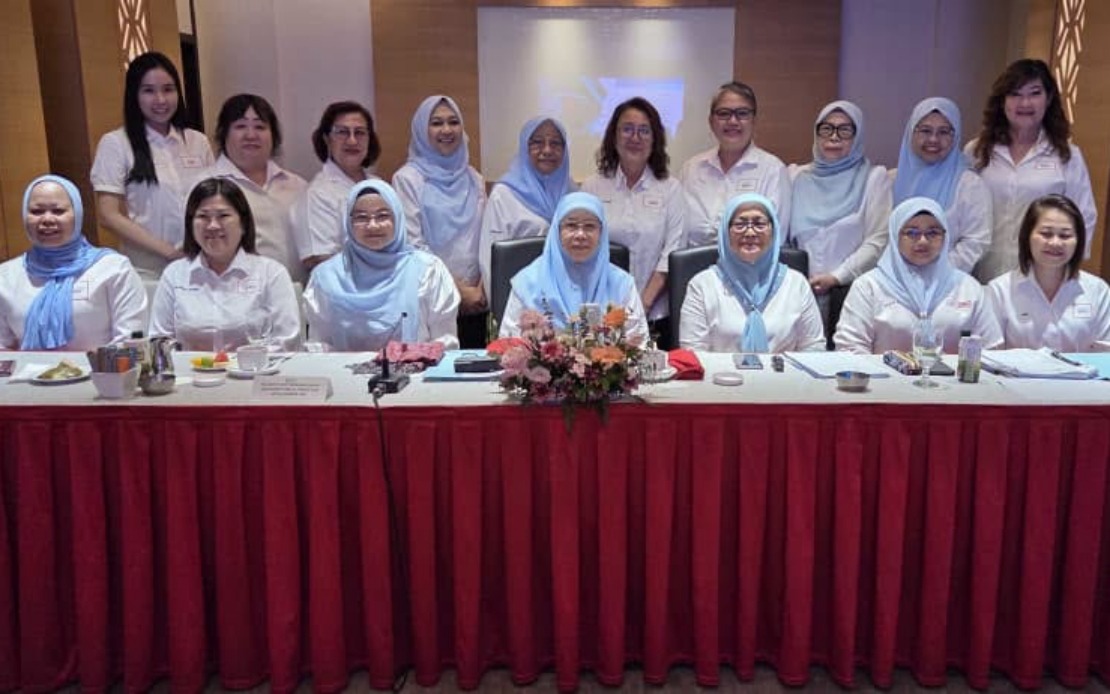
The Gabungan Rakyat Sabah Women's wing has moved to restructure its organisational framework by establishing five dedicated strategic units, a decision aimed at sharpening the coalition's electoral readiness and deepening its presence at the community level. The announcement came following a meeting held in Kota Kinabalu, where Datuk Seri Azizah Mohd Dun, the wing's chief, outlined how each unit would function as a specialized arm designed to tackle specific areas critical to the party's broader political agenda.
The newly created units divide responsibility across distinct portfolios, each with clearly assigned leadership. Azizah herself will oversee the Policy and Strategy Unit, positioning her to steer the wing's ideological direction and long-term planning. Datuk Surinam Sadikun takes charge of the Economic Unit, tasked with developing economic narratives and programmes that resonate with voters concerned about livelihoods and financial stability. The Health Unit falls to Simi Linggom, reflecting growing public concern about healthcare accessibility and pandemic preparedness across Sabah. Datin Atin Belynda Buntot will lead the Information Unit, a role critical in an era where rapid communications and media management determine political messaging. Finally, Datin Wong Siow Lee @ Mary Wong heads the Welfare Unit, positioning the wing to address social safety nets and vulnerable populations.
This structural reorganisation reflects a recognition within GRS that women's wings must evolve beyond traditional ceremonial roles to become active policy participants. By compartmentalising functions, the wing creates accountability mechanisms where each unit leader bears responsibility for delivering tangible results. This approach allows the coalition to respond more dynamically to community needs, whether through economic initiatives that address inflation concerns or health programmes addressing local medical gaps. The emphasis on structured engagement contrasts with less organised approaches, suggesting GRS believes systematic outreach yields better electoral returns than ad-hoc mobilisation.
For Malaysian politics more broadly, the move demonstrates how coalitions prepare operationally between election cycles. Unlike sudden campaign efforts, the advance establishment of these units allows months of groundwork—policy research, community mapping, programme piloting—before formal campaigning begins. This preparation particularly matters in Sabah, where geographic dispersion and infrastructure constraints make sustained engagement more challenging than in peninsular regions. GRS's decision to formalise women's wing participation signals confidence in female voters' influence and recognition that gender-specific messaging and programming drives participation.
Azizah's emphasis on political dynamism and avoiding complacency carries particular weight given the volatility of Malaysian coalition politics over the past five years. The statement that GRS cannot afford to remain static reflects hard lessons from political realignments that have destabilised incumbent parties. By establishing regular coordination mechanisms and rapid-response capabilities, the wing aims to prevent the drift toward irrelevance that has affected other political organisations. The health, economic, and welfare units specifically target bread-and-butter issues that matter most to voters during economic uncertainty—concerns that have driven electoral shifts elsewhere.
The Information Unit's creation deserves specific attention in Malaysia's polarised media environment. Control over narrative shapes electoral outcomes, and a dedicated unit ensures the women's wing can rapidly amplify or counter claims, coordinate across social media platforms, and ensure consistent messaging. This professionalisation reflects how modern political campaigns require media literacy and digital fluency alongside traditional organising.
For Southeast Asia's broader political landscape, GRS's move exemplifies how regional coalitions are professionalising internal structures to maintain competitiveness. Indonesia, Thailand, and the Philippines have seen similar developments where political parties invest in formal machinery rather than relying on personalities alone. The investment in women-led units particularly reflects regional trends acknowledging female voters' political importance and potential as campaign organisers.
The timing—ahead of the next general election whose date remains unannounced—reveals GRS's intent to remain perpetually campaign-ready. This contrasts with older political cultures where parties relaxed between elections. Continuous organising, however, exhausts party machinery and creates sustainability questions that Malaysian parties have struggled to address. Whether the five-unit structure proves durable depends on whether adequate resources flow to each unit and whether leaders maintain commitment beyond initial enthusiasm.
For Sabah specifically, the move signals GRS's intention to consolidate its dominance in the state's political sphere. Having emerged as the leading force after 2022's political upheaval, GRS faces pressure to demonstrate that it offers stable governance and tangible improvements in living standards. The units addressing health, economics, and welfare directly confront voter concerns in these areas. Success would strengthen GRS's claim to legitimacy; failure would expose the units as mere structural window-dressing.
The emphasis on regular meetings and coordination among unit leaders creates horizontal accountability structures that can either enhance or constrain decision-making, depending on implementation. If units operate in silos, coordination breaks down and messaging becomes incoherent. If over-centralised, the structures become bureaucratic rather than adaptive. GRS's challenge will be striking balance—maintaining unified direction while permitting local flexibility that responds to Sabah's regional diversity.
Ultimately, the five-unit framework represents how contemporary political organisations attempt to professionalise operations through specialisation and clear responsibility assignment. Whether the structure translates into electoral advantage depends less on its design than on whether appointed leaders deliver tangible results, maintain internal cohesion, and sustain effort across the years before campaigning formally begins.

