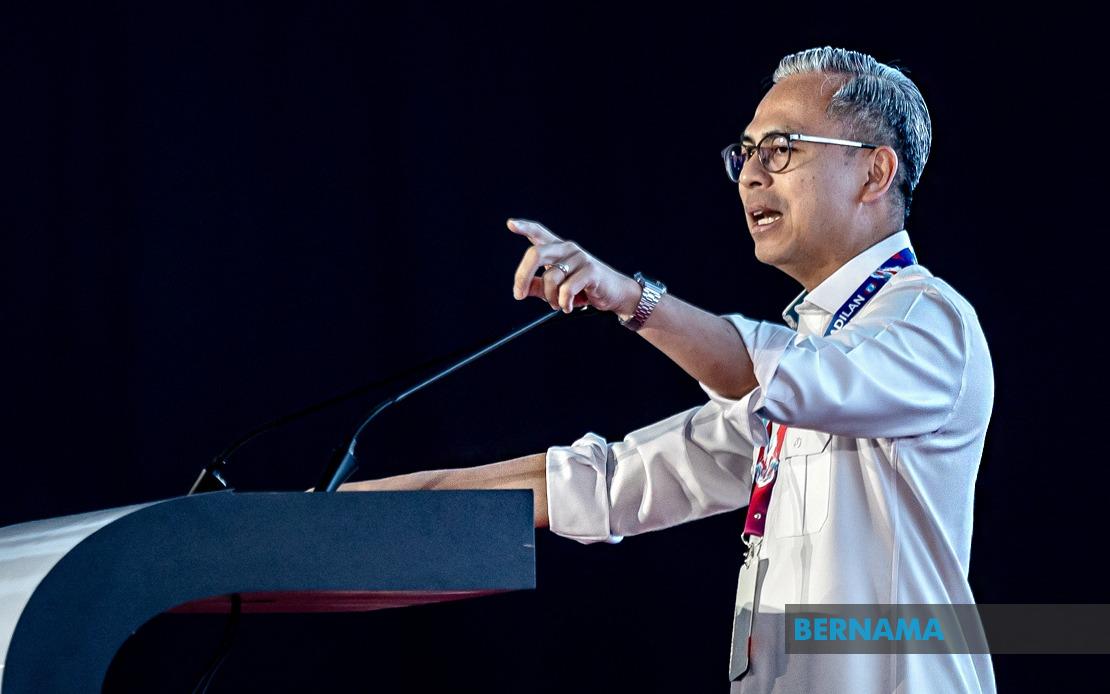
Communications Minister Datuk Seri Fahmi Fadzil has detected a noticeable shift in public consciousness surrounding Malaysia's national flag, with citizens increasingly familiarising themselves with the Jalur Gemilang's design specifications. Speaking in Melaka on August 16, he attributed this heightened attentiveness to growing national sentiment and an evolving appreciation for the symbols that represent the country's sovereignty and heritage.
The minister observed that members of the public have begun spontaneously scrutinising flag displays when they encounter them, verifying details such as the precise number of horizontal stripes and confirming that the final stripe adheres to the correct white colouring. This seemingly simple act of verification reflects a deeper engagement with national identity, suggesting that civic awareness campaigns and media coverage surrounding proper flag protocol have successfully resonated with ordinary Malaysians.
Fahmi characterised this development as evidence of a cultural shift where citizens are taking personal responsibility for upholding national symbols. The phenomenon has evolved into a community-reinforcing behaviour, with individuals gently correcting one another when discrepancies are spotted and offering guidance on proper display standards. This peer-to-peer enforcement mechanism demonstrates organic grassroots commitment rather than top-down regulation, which observers regard as a more sustainable approach to fostering national pride.
The minister confirmed that complaints regarding improper flag display have not proliferated recently, contradicting previous concerns that widespread violations might become commonplace. This reduction in reported infractions, combined with the increased public vigilance Fahmi has documented, suggests that awareness campaigns have successfully educated the population about acceptable standards for displaying the national flag throughout Malaysia's commemorative periods.
Regarding an incident involving an allegedly defective Jalur Gemilang at Batu Buruk in Terengganu, Fahmi indicated that the matter remains under investigation by relevant authorities and that he preferred not to comment prematurely. This measured response reflects the government's commitment to allowing investigative processes to conclude before drawing conclusions, avoiding speculation that might prejudice ongoing inquiries.
A notable practical trend has emerged among vehicle owners seeking alternatives to traditional flag displays. Many have shifted toward magnetic adhesive stickers bearing the Jalur Gemilang design, eliminating concerns about paint damage or bodywork deterioration while maintaining patriotic visibility. Fahmi welcomed this development as evidence of creative problem-solving, noting that the innovation allows citizens to express national sentiment without compromising their vehicles' aesthetic or structural integrity.
Preparations for the National Day and Malaysia Day celebrations are advancing according to schedule, with coordinating bodies reporting smooth progress across all logistical dimensions. The Ministry of Education has designed an elaborate human graphic performance scheduled for Putrajaya, while other government agencies continue assembling contingents and arranging support infrastructure. These preparations underscore the scale and complexity of organising Malaysia's premier annual commemorations.
Two major Merdeka Eve events will dominate celebrations in the capital. Merdeka Stadium will host an official ceremony organised by the Ministry of National Unity, featuring a significant address by Prime Minister Datuk Seri Anwar Ibrahim, while Dataran Merdeka will simultaneously present programming coordinated by Kuala Lumpur City Hall. Coordination meetings scheduled for August 17 and a virtual Malaysia Day planning session set for August 24 will ensure seamless execution of both celebrations.
Beyond his symbolic and ceremonial duties, Fahmi undertook welfare visits to two elderly stroke patients in Melaka, assessing their immediate requirements and exploring supplementary support mechanisms. His engagement with R. Sathia Devi, 70, at Pangsapuri Kiara in Batu Berendam and Abu Zarin Nordin, 64, at Kampung Tun Razak in Bukit Katil exemplified the government's efforts to identify vulnerable populations requiring targeted assistance. These visits revealed pressing needs including nutritional supplementation, rehabilitation services and coordinated support from the Social Welfare Department.
The minister indicated that follow-up measures would encompass conventional medical treatment alongside alternative therapeutic modalities such as acupuncture, reflecting a holistic approach to healthcare provision. His commitment to relay findings to relevant departments and facilitate ongoing support demonstrates the integration of welfare considerations into governmental operations beyond purely ceremonial functions.
Fahmi's observations about flag awareness carry broader implications for Malaysia's national cohesion and civic participation. The spontaneous community engagement with national symbols suggests that patriotic sentiment transcends political partisanship or demographic divisions, representing a unifying force accessible across different regions and population segments. As the country approaches its Independence Day celebrations, this demonstrated respect for national iconography provides an encouraging foundation for commemorating Malaysia's journey since 1957.

