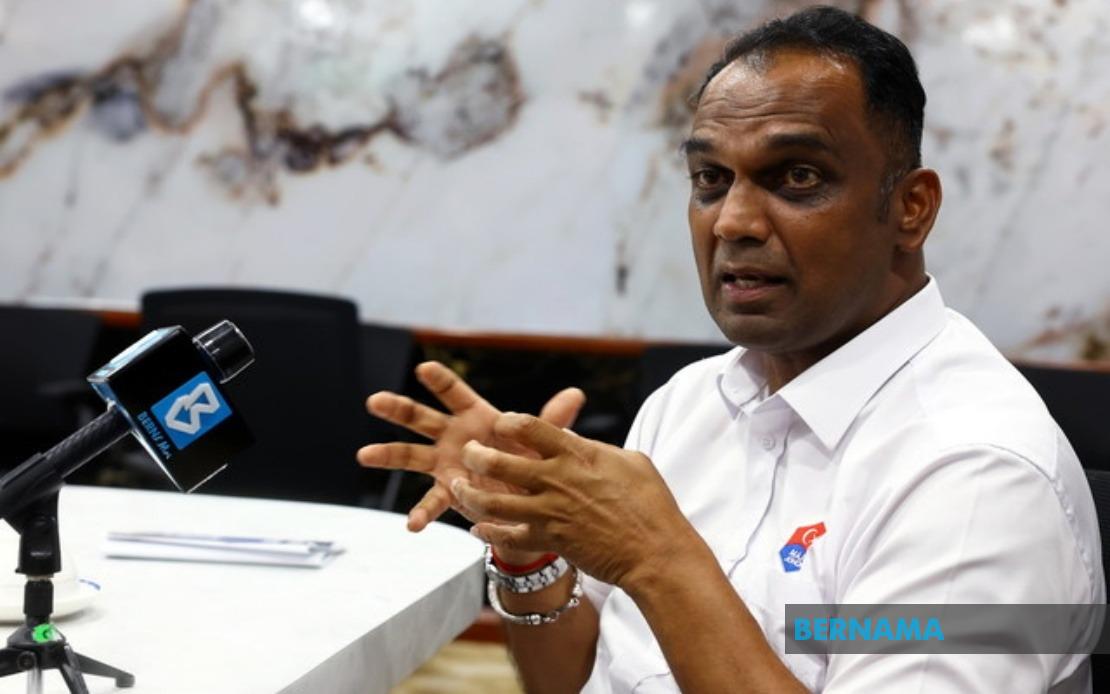
P. Pannir Selvam is banking on a distinctly personal campaign strategy in his bid to capture the Perling seat during Johor's 16th state election, eschewing the digital-first approach favoured by many contemporary politicians in favour of intensive grassroots engagement. The Barisan Nasional candidate, making his first foray into state-level electoral politics, has constructed his campaign around a series of intimate "pocket talks"—small-group conversations held throughout the constituency that prioritise direct human interaction over mass media messaging. This methodology reflects a calculated judgment that voters in Perling respond more favourably to face-to-face encounters that allow for genuine dialogue about community concerns, rather than broadcasting campaign messages through increasingly saturated social media channels.
While Pannir Selvam acknowledges that digital platforms have become integral to modern political communication, he maintains that the residual impact of personal meetings creates more substantial and lasting impressions among constituents. These pocket talks function simultaneously as constituent feedback mechanisms and as vehicles for candidate introduction, allowing Pannir Selvam to present himself as accessible and responsive to local grievances. The strategy also serves to collapse the traditional distance between elected representative and constituent, framing the relationship as one of mutual understanding rather than top-down governance. By emphasising his willingness to listen extensively to individual voter concerns within intimate settings, he positions himself as fundamentally different from candidates who rely primarily on megaphone politics and carefully choreographed public appearances.
The candidate's preliminary assessment of voter receptivity has buoyed his confidence considerably. Pannir Selvam reports that the response from residents attending pocket talks across the Perling constituency has been substantially positive, validating his conviction that this labour-intensive engagement model resonates with the electorate. The encouragement he has received during these sessions has reinforced his intention to expand and intensify this direct outreach as polling day approaches, suggesting that the strategy will become even more central to his campaign positioning in the final weeks before voting. This iterative feedback loop—where positive reception generates increased commitment to the chosen method—appears to be driving escalating investment of campaign resources into the pocket talk model rather than alternative approaches.
A significant dimension of Pannir Selvam's campaign narrative centres on his relationship with his father, Datuk KS Balakrishnan, a political veteran whose extensive experience in Johor's governance structures has become woven into the candidate's campaign identity. The elder Balakrishnan served five consecutive terms as Permas Assemblyman and held a position on Johor's state executive council, accumulating decades of institutional knowledge about how to navigate constituency service and public administration. Pannir Selvam has framed his father's continued active participation in campaign activities—remarkable given Balakrishnan is now 84 years old—as emblematic of intergenerational commitment to public service and as a source of sustained counsel and motivation for his own electoral journey. The patriarch's physical presence on the campaign trail, maintained regardless of weather conditions or personal discomfort, becomes a symbolic statement about dedication to the political cause.
Beyond the emotional dimension of familial support, Pannir Selvam has articulated the substantive lessons he has absorbed from his father's decades of political engagement. These include the foundational principle of impartial constituent service that transcends communal divisions, the practical skill of managing public concerns without partisan discrimination, and the capacity to absorb critical feedback without defensive reaction. Balakrishnan has reportedly counselled his son to govern according to principles of sincerity, honesty, and integrity, if granted electoral mandate—advice that reflects a particular philosophy of public office grounded in character rather than transactional politics. This intergenerational transmission of political values and operational experience provides Pannir Selvam with both ideological grounding and practical preparation for the complexities of constituency representation.
Pannir Selvam brings to his candidacy prior experience in municipal governance, having served on the Johor Bahru City Council (MBJB), an institutional background he believes equips him to manage the concrete problems that residents face daily. His platform emphasises addressing traffic congestion and parking shortages in and around Taman Perling Public Market, issues that directly impact the commercial vitality and residential quality of life in these areas. This focus on hyper-local, practical governance challenges reflects an understanding that electoral success often depends less on grand ideological statements than on demonstrable capacity to resolve the infrastructural and logistical irritants that dominate residents' daily experience. His prior administrative exposure to municipal problem-solving provides at least surface plausibility to claims that he can deliver tangible improvements in constituency conditions.
The Perling constituency presents a competitive electoral environment, with the contest involving three substantial candidates rather than a simple two-way race. Pannir Selvam faces opposition from Alan Tee Boon Tsong, representing Pakatan Harapan, and Boo Wei Han, the Parti Bersama Malaysia candidate. This triangular contest introduces additional strategic complexity, as Pannir Selvam must position himself distinctively relative to two distinct opposition coalitions with different political bases and messaging frameworks. The Perling electorate, comprising 109,992 registered voters, represents a sufficiently large constituency that demographic and sectional divisions likely play a significant role in candidate calculus and voter preference formation. Understanding the precise composition of this electorate—along with the geographic concentration of different voter populations—becomes crucial to efficient deployment of campaign resources and messaging strategies.
Johor's 16th state election represents a politically significant moment for the state's governance trajectory, with 172 candidates contesting across 56 state assembly seats. The election structure ensures that outcomes in individual constituencies like Perling will aggregate to determine the state government's partisan composition and policy direction. For Pannir Selvam and his Barisan Nasional colleagues, the election constitutes an opportunity to reinforce BN's historical dominance in Johor, though recent electoral trends in Malaysia have demonstrated that historical strongholds cannot be taken as guaranteed. The competitive intensity within Perling specifically—indicated by the presence of serious challengers from multiple opposition formations—underscores that even traditionally favourable terrain for ruling coalitions now requires energetic and substantive campaigning rather than relying on structural advantages alone.
The timing of the election, with polling day scheduled for July 11 and early voting on July 7, concentrates campaign activity into a relatively compressed period. Pannir Selvam's emphasis on sustained grassroots engagement through pocket talks becomes particularly significant given this compressed timeline, as the strategy must generate name recognition, establish credibility, and mobilise voter support within constrained temporal parameters. The intensity of effort required to maintain regular pocket talk sessions across a 109,992-person constituency while simultaneously pursuing media visibility and coordinating campaign logistics suggests that Pannir Selvam's team has prioritised labour-intensive grassroots work at potential expense of other campaign modalities. This allocation of campaign resources reflects confidence that direct voter contact will yield sufficient electoral returns to justify the intensity of ground-level mobilisation required.

