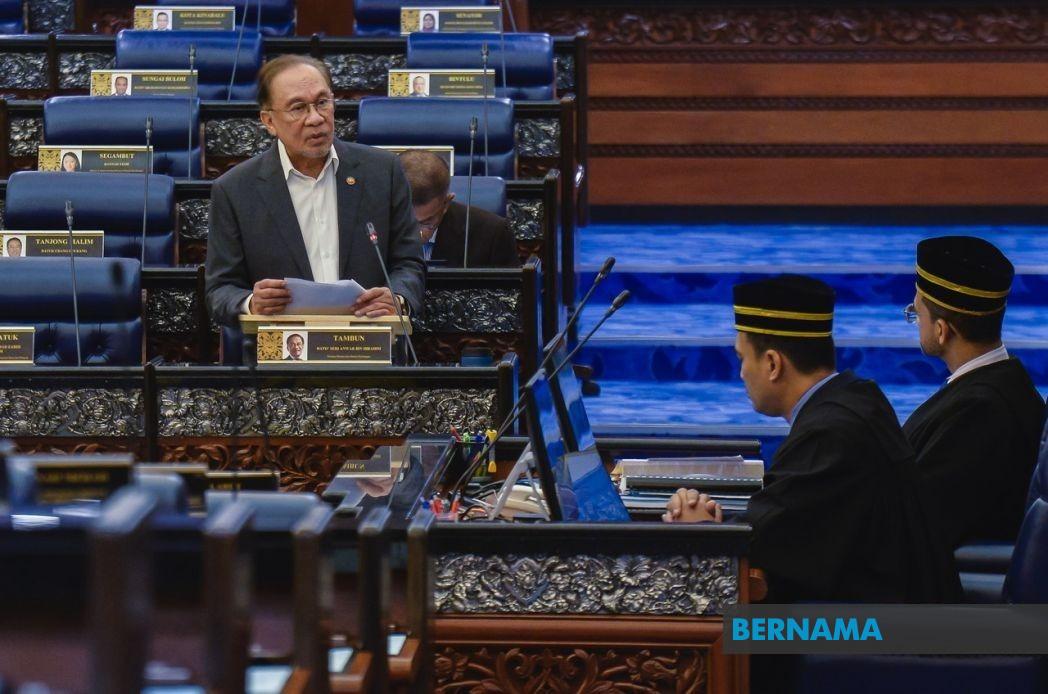
Prime Minister Datuk Seri Anwar Ibrahim has committed to investigating claims that petrol station operators suffered losses during the implementation of the government's revamped fuel subsidy framework, signalling that unresolved grievances from the transition phase remain under scrutiny. Speaking in Parliament on July 7, Anwar acknowledged the concern raised by Ipoh Timur MP Howard Lee Chuan How, who highlighted reports that station operators faced losses of between RM40,000 and RM50,000 during the shift to the targeted RON95 petrol and diesel subsidy mechanism. The Prime Minister indicated that Second Finance Minister Datuk Seri Amir Hamzah Azizan would lead efforts to gather comprehensive details and facilitate consultations with major oil companies regarding the alleged financial strain.
The government's targeted fuel subsidy programme represents a pivotal shift in how Malaysia manages one of its largest budget expenditures. Rather than providing blanket subsidies available to all consumers regardless of income level, the enhanced mechanism restricts subsidised fuel access to specific groups, fundamentally altering the cost structure for petrol station operators who must manage inventory pricing under the new framework. The transition period created operational complexities as stations adjusted their purchasing patterns, pricing systems, and customer service protocols to align with the revised subsidy rules. These administrative adjustments, compounded by potential timing mismatches between fuel price fluctuations and subsidy disbursements, appear to have generated unexpected costs for some operators.
Anwar's recognition of these difficulties carries particular significance given his dual role as Prime Minister and Finance Minister, placing him at the intersection of fiscal policy and economic management. His statement that the government "appreciated the cooperation extended by oil companies and petrol station operators" frames the matter as a collaborative challenge rather than a failure of implementation. However, this framing also implicitly acknowledges that cooperation came at a cost to certain stakeholders in the fuel distribution chain. The willingness to engage directly with oil companies through the Second Finance Minister suggests the government views potential remedies as negotiable rather than automatically dismissible.
The allegation of RM40,000 to RM50,000 in losses per operator warrants contextual consideration. For independent or small-chain petrol stations operating on razor-thin profit margins—typically between 2 and 5 percent of fuel sales—losses of this magnitude represent severe financial disruption. During a transition phase where volume fluctuations are common and inventory management critical, even brief disruptions can cascade into substantial bottom-line damage. Multiplied across thousands of petrol stations nationally, these individual losses compound into a sector-wide economic impact that extends beyond the immediate operators to their employees and suppliers dependent on station viability.
Malaysia's fuel subsidy structure has long been a contentious policy area, balancing affordability for ordinary Malaysians against fiscal sustainability and efficient resource allocation. The transition to a targeted subsidy system represented a pragmatic acknowledgement that blanket subsidies benefit wealthier consumers disproportionately and strain government finances. However, targeted systems inevitably create implementation complexities and transition costs that manifest differently across the distribution chain. Petrol station operators, positioned between major oil companies and consumers, often bear unexpected adjustment costs when policy shifts occur, particularly when the transition occurs rapidly without sufficient lead time for operational recalibration.
Parliament serves as the forum where such grievances receive formal airing and government accountability mechanisms activate. Howard Lee's supplementary question exemplifies how parliamentary procedure enables backbenchers to surface constituent concerns and compel executive acknowledgement. The fact that Anwar responded directly rather than deflecting suggests the issue carries sufficient political weight to merit prime ministerial attention. This responsiveness may reflect both legitimate concern for affected operators and political calculation that unresolved resentment in the business community could influence electoral dynamics.
The government's decision to delegate investigative work to the Second Finance Minister represents a measured bureaucratic response. Rather than commissioning an external inquiry or task force, which might imply systemic failure, the government is directing an existing senior official to liaise with industry stakeholders. This approach allows information gathering while maintaining relatively low political visibility. The outcome may range from acknowledging that losses were unavoidable during any major policy transition, to identifying specific compensation mechanisms or accelerated subsidy adjustments for affected operators.
For Malaysian readers and regional observers, this episode illustrates the complexities inherent in managing subsidies across large, diverse economies. When governments attempt to modernise subsidy systems to improve targeting and reduce fiscal leakage, implementation costs often concentrate on specific intermediaries in the supply chain. The petrol station sector's experience provides lessons for other subsidy transitions across Southeast Asia, where similar pressures to reform costly support mechanisms are mounting. Thailand, Indonesia, and Vietnam have all grappled with comparable subsidy restructuring, often encountering resistance from affected commercial actors.
The broader context involves Malaysia's ongoing fiscal consolidation efforts. With debt levels requiring attention and revenue collection challenges persisting, the government has limited capacity to compensate losses comprehensively. Yet completely disregarding petrol station operator grievances risks eroding business confidence and cooperation with future policy initiatives. The investigation Anwar committed to undertaking therefore serves dual purposes: gathering facts necessary for potential remedial action, and providing a mechanism for acknowledging stakeholder concerns publicly.
Moving forward, the findings from these discussions may influence how the government designs and implements future subsidy reforms. If investigation reveals that transition losses were substantially avoidable through better coordination and advance notice, policymakers might commit to longer phase-in periods for future subsidy restructuring. Alternatively, if losses prove inevitable given the magnitude and speed of the policy change, the government might establish contingency mechanisms or compensation frameworks for affected businesses. Either pathway requires detailed, good-faith engagement between government agencies and industry representatives.
The Prime Minister's commitment to investigate and discuss reflects recognition that sustainable policy implementation requires maintaining stakeholder confidence. Fuel subsidies remain politically sensitive across Malaysian society, touching middle-class affordability concerns and low-income consumer welfare simultaneously. Handling the petrol station operator issue carefully preserves both fiscal credibility with international creditors and business-community goodwill essential for economic growth. As discussions progress between Finance Ministry officials and oil companies, the outcomes will signal whether government commitments to investigate grievances translate into concrete resolutions or remain procedural gestures.

