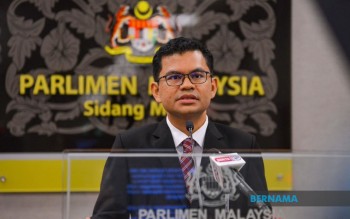
The Malaysian government has signalled its commitment to supporting the domestic plastics manufacturing sector by tasking the Ministry of Investment, Trade and Industry (MITI) and the Economy Ministry with a detailed examination of concerns raised by the Malaysian Plastics Manufacturers Association (MPMA). The directive came from the National Economic Action Council (NEAC) following a presentation by the industry body at a recent meeting, where manufacturers outlined structural challenges threatening their competitiveness in regional and global markets.
Economy Minister Akmal Nasrullah Mohd Nasir told stakeholders that the government recognises the gravity of pressures confronting plastics producers, particularly the widening gap between raw material acquisition costs in Malaysia compared to international competitors. This disparity has emerged as a critical bottleneck for downstream manufacturers who must absorb higher input costs while competing in price-sensitive global markets. The differential pricing reflects both geopolitical factors affecting commodity distribution networks and structural inefficiencies in Malaysia's supply procurement mechanisms that merit urgent policy attention.
The plastics sector represents a cornerstone of Malaysia's industrial ecosystem, functioning as a crucial supplier to numerous downstream industries beyond the manufacturing floor. With sales valued at RM62.69 billion in 2025—down slightly from RM64.78 billion in 2024—the industry demonstrates its substantial economic footprint even amid headwinds. The packaging segment alone commands 45 per cent of market share, while the electrical and electronics subsector accounts for 29 per cent, reflecting the industry's deep integration into Malaysia's export-oriented manufacturing base. These proportions underscore why stabilising plastics producer economics carries implications extending far beyond the sector itself.
The government's examination will encompass a carefully calibrated approach that balances multiple competing interests rather than implementing narrow relief measures. Akmal Nasrullah stressed that any policy response must account for the health of the entire industrial value chain, fiscal prudence in government budgeting, and Malaysia's long-term positioning as a competitive global manufacturer. This multilayered framework reflects recognition that short-term subsidies or protective measures, while providing temporary relief, risk undermining broader economic stability if they inflate input costs elsewhere or distort resource allocation across the economy.
A particularly significant element under review involves the proposed implementation of Extended Producer Responsibility (EPR) schemes on a voluntary rather than mandatory basis. EPR frameworks require manufacturers to shoulder responsibility for their products' entire lifecycle, including post-consumer disposal and recycling. The government intends to analyse both the cost implications for producers and the readiness of Malaysia's recycling infrastructure to handle expanded material streams. Small and medium enterprises, which constitute a meaningful portion of the plastics manufacturing landscape, face particular vulnerability to regulatory costs that larger competitors might absorb more readily, creating a critical equity consideration in policy design.
Despite these sectoral pressures, Akmal Nasrullah expressed confidence in Malaysia's broader economic trajectory and the government's ability to sustain growth momentum throughout 2025. The administration maintains a target range of 4.0 to 5.0 per cent gross domestic product expansion, a projection anchored in solid first-half performance. The Malaysian economy expanded 5.4 per cent in the first quarter of 2025, buoyed by robust domestic consumption patterns, strength in the services and manufacturing sectors, and particularly resilient electrical and electronics exports that have weathered global market volatility.
Inflationary pressures remain well-anchored, with consumer price growth holding steady at 2.0 per cent in May 2025 compared to 1.9 per cent the previous month, suggesting price stability has not eroded despite supply chain challenges. This benign inflation environment provides policymakers with flexibility to address sector-specific concerns without triggering broader macroeconomic complications. The trade performance data reinforces Malaysia's economic resilience, with total merchandise trade increasing 18.3 per cent year-on-year through May 2025 to nearly RM1.5 trillion, encompassing RM793.8 billion in exports and RM661.1 billion in imports, generating a substantial trade surplus of RM132.8 billion.
The MPMA's decision to present its case before the NEAC reflects a strategic recognition that industry-specific competitiveness challenges increasingly require coordinated governmental response rather than market-only solutions. By channelling concerns through formal government structures, manufacturers signal willingness to engage constructively with policymakers while simultaneously placing their concerns on the official agenda. This approach contrasts with adversarial industry-government dynamics sometimes observed in other jurisdictions and suggests a pragmatic consensus on the benefits of inclusive policy formulation.
The broader context involves Malaysia's vulnerability to global supply chain disruptions that have intensified since 2021. The plastics industry, dependent on hydrocarbon inputs whose international pricing fluctuates with geopolitical developments and energy markets, faces particular exposure to these volatilities. Southeast Asian competitors in countries such as Thailand and Indonesia may enjoy relative cost advantages through different raw material sourcing arrangements or domestic petroleum industry integration. Understanding and potentially addressing these structural cost disadvantages forms part of the rationale behind the government's deliberate, comprehensive review rather than hasty responses.
The circular economy potential identified by Akmal Nasrullah represents a longer-term strategy complementing immediate competitiveness concerns. By expanding recycled material deployment, Malaysia could reduce raw material import dependence while developing a domestic secondary feedstock supply chain less vulnerable to international commodity price shocks and geopolitical disruptions. This transition requires substantial infrastructure investment and regulatory framework development, but successful execution would fundamentally alter the industry's risk profile and strengthen its long-term resilience.
The government's commitment to examining EPR on a voluntary basis initially suggests a transitional approach that allows manufacturers and recycling systems to build capacity gradually. Rushing into mandatory schemes without adequate infrastructure could create perverse incentives, including informal disposal practices, rather than achieving genuine circular economy outcomes. The phased approach acknowledges that transformative environmental policies require careful calibration with industrial capacity and economic realities to succeed sustainably.
For Malaysian stakeholders—including manufacturers, workers, and downstream industrial users—the government's substantive engagement with the MPMA represents a meaningful development suggesting that sectoral concerns will receive serious analytical attention rather than dismissal. The timeline for the MITI and Economy Ministry review remains unspecified, but the involvement of two major economic ministries indicates this will not constitute a perfunctory exercise. How policymakers ultimately balance the legitimate cost competitiveness grievances against broader fiscal and macroeconomic considerations will significantly shape the plastics sector's prospects throughout the remainder of 2025 and beyond.

