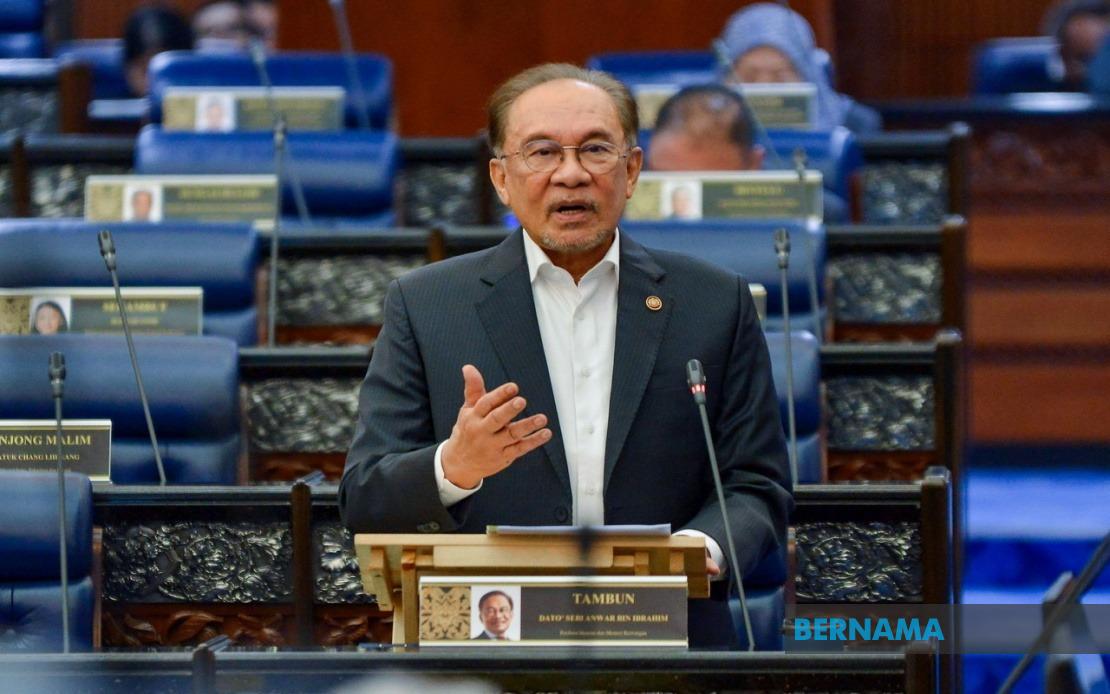
Prime Minister Datuk Seri Anwar Ibrahim has outlined a balanced approach to Malaysia's labour market, pledging that the government will continue examining foreign worker requirements through established regulatory frameworks while ensuring local job seekers receive priority. Speaking in Parliament on July 14, Anwar acknowledged that while certain sectors genuinely require overseas workers, recruitment decisions must be made strategically and with proper coordination between relevant agencies.
The government recognises that millions of foreign workers are already present in Malaysia, and Anwar emphasised the necessity of deploying this existing workforce before approving new arrivals. This approach reflects broader concerns about managing labour supply effectively without unnecessary expansion of the migrant workforce. The Prime Minister noted that several economic sectors remain dependent on foreign talent, a reality that cannot be ignored despite the preference for local hiring. However, he stressed that any expansion of foreign worker numbers must be justified and controlled rather than reactive.
Anwar's remarks came in response to a parliamentary question from Khoo Poay Tiong (PH-Kota Melaka) concerning the impact of foreign worker shortages on small and medium enterprises alongside concerns about youth employment prospects. This question highlights the tension between SME operators seeking to fill vacancies quickly and government objectives to create meaningful work for young Malaysians. The Prime Minister's response suggests the administration is attempting to navigate these competing pressures through more rigorous oversight rather than blanket restrictions or unlimited expansion.
A particular focus of Anwar's statement was the need to dismantle what he characterised as foreign worker syndicates that have operated for decades. He described these networks as problematic mechanisms for wealth accumulation, suggesting they represent inefficiency and potential exploitation within Malaysia's labour importation system. This criticism points to systemic issues beyond simple supply-demand calculations, including informal networks and potentially corrupt practices that distort fair competition and worker protections. Addressing such syndicates could improve labour market transparency and ensure that recruitment serves genuine economic needs rather than narrow interests.
The government has tasked the Ministry of Human Resources and the Ministry of Home Affairs to jointly conduct a comprehensive study on foreign worker requirements, with explicit consideration of security implications. This collaborative approach reflects recognition that labour policy extends beyond economic metrics to encompass broader security and social cohesion concerns. Malaysia's experience with irregular migration and associated challenges means that any expansion of foreign worker programmes must be assessed through multiple lenses. The involvement of the Home Affairs Ministry signals that security vetting and documentation standards will remain central to approval processes.
Anwar underscored that enforcement against law-breaking workers will intensify regardless of the worker's origin or ethnicity, specifically naming the Rohingya population. This statement appears designed to address concerns about selective enforcement and to signal that rule of law applies universally. Workers who comply with regulations will receive protection and fair treatment, but those violating Malaysian law face business closures and other penalties. The Prime Minister's emphasis on ethnically neutral enforcement suggests awareness of potential tensions around migrant communities and a commitment to principles-based rather than discriminatory governance.
A secondary but significant dimension of Anwar's position concerns tightening approval procedures for foreign professional workers, particularly in high-skill sectors. The government has identified instances where companies obtained permits to recruit workers claiming expertise in cutting-edge fields such as artificial intelligence but deployed them in roles unrelated to their supposed specialisation. This abuse of the system undermines both workforce development objectives and fair competition among employers. By restricting such misuse, the government aims to ensure that foreign worker approvals genuinely address genuine skill gaps rather than serving as convenient pathways for general labour recruitment.
The approach reflects a recognition that Malaysia's long-term competitiveness depends on developing local expertise in emerging sectors rather than indefinitely relying on overseas talent. When companies are permitted to bring in specialists in digital technologies or artificial intelligence without legitimate justification, it potentially slows investment in training Malaysian workers for these crucial fields. Anwar's assertion that Malaysia should import expertise only when genuinely necessary reflects a strategic vision of building domestic capacity. This rationale will likely resonate with policymakers concerned about economic self-sufficiency and generational opportunity.
For Malaysian businesses, particularly labour-intensive SMEs, the government's position presents both constraints and clarity. While approval processes may become more stringent, the emphasis on deploying existing foreign workers more efficiently could reduce recruitment delays. Companies operating in sectors with demonstrated legitimate demand for overseas labour may find pathways to approval if they can demonstrate genuine need and compliance with regulations. The government appears willing to work with employers to solve labour shortages, but through coordinated channels rather than ad-hoc or informal arrangements.
The broader policy narrative reflects tensions between competing economic objectives common across Southeast Asia. While regional economies attract migrant workers due to labour shortages and wage differentials, governments face pressure to protect local employment and address social concerns about migrant communities. Malaysia's approach under Anwar attempts to accommodate both imperatives through more disciplined governance rather than choosing between open and restrictive extremes. This middle path requires significant administrative capacity and inter-agency coordination.
The implications for Malaysia's labour market extend beyond immediate hiring practices. A system that prioritises local workers while maintaining capacity to recruit overseas talent positions Malaysia to respond to economic shifts more flexibly. During periods of strong domestic growth, employers can scale up local recruitment. During downturns, the system need not suddenly expel foreign workers but can manage attrition through stricter controls on new approvals. This flexibility may prove valuable as Malaysia navigates uncertain economic conditions and technological disruption across sectors.
For young Malaysians entering the workforce, Anwar's commitments represent both opportunity and challenge. The prioritisation of locals creates job access, but only if available positions match skill levels and expectations. The government's concurrent emphasis on preventing abuse of professional worker schemes suggests an intention to preserve high-skill opportunities for qualified Malaysians. However, successful execution requires vocational training systems and educational institutions producing workers equipped for modern sectoral demands. Without such investment, employers may argue that local talent simply cannot fill specialist roles.
The government's stated approach will be tested through implementation. Enforcement against foreign worker syndicates, coordination between the Human Resources and Home Affairs Ministries, and tightening of professional worker approvals all require sustained institutional effort and political will. As Malaysia progresses, the effectiveness of these measures will substantially shape the country's labour competitiveness, local employment prospects, and social stability in communities with significant migrant populations.

