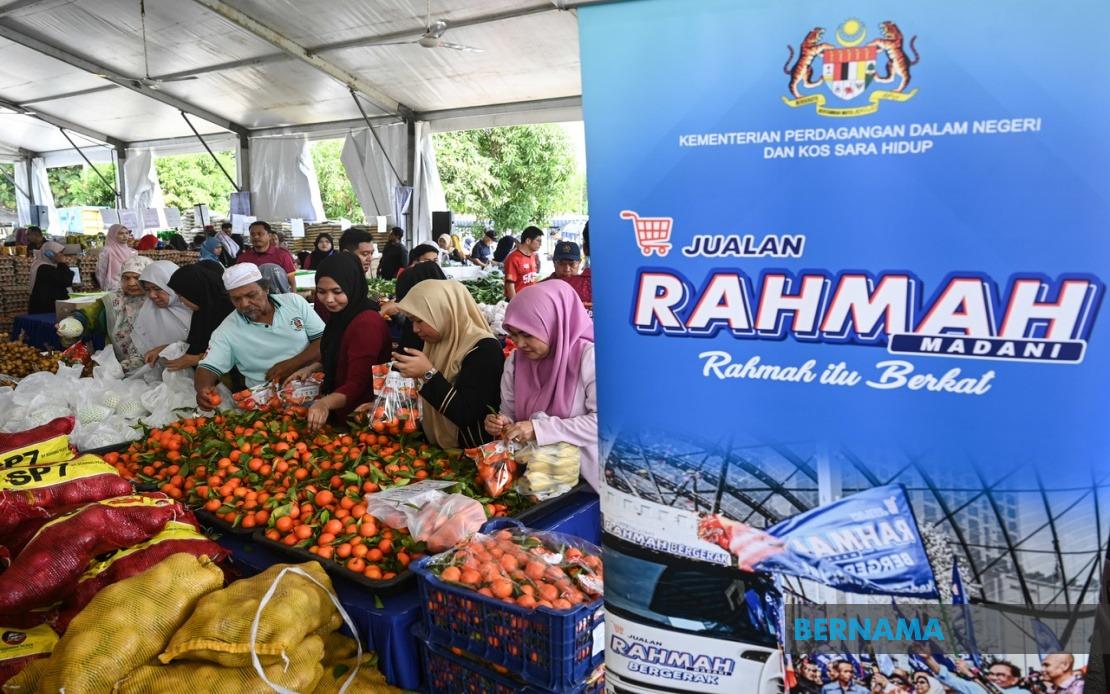
The Malaysian government is preparing to roll out the Ihsan Rahmah 9.9 online sale on September 9, marking a significant shift in how the nation's cost-of-living assistance programme reaches consumers. Prime Minister Datuk Seri Anwar Ibrahim made the announcement following his official opening of the TikTok Shop Summit Malaysia in Kuala Lumpur, underscoring the administration's commitment to leveraging digital commerce platforms for public benefit.
This inaugural online iteration of the Ihsan Rahmah initiative represents a departure from previous editions of the programme, which have traditionally operated through physical retail locations. By moving the sale into the digital realm, the government aims to democratise access to discounted essentials across the country, particularly benefiting residents in areas where conventional distribution networks may be limited. The timing of the launch—coinciding with Malaysia Day celebrations—carries symbolic weight, positioning the initiative as a nationwide gesture of support for all Malaysians.
Anwar framed the programme as a comprehensive expression of the government's commitment to the nation's 34.5 million residents, emphasising that the online format would enable broader participation and awareness. He stressed that the initiative would be executed in partnership with multiple government agencies and stakeholders, a collaborative approach designed to maximise efficiency and ensure the programme's successful implementation across diverse consumer demographics.
The Ihsan Rahmah programme, administered by the Ministry of Domestic Trade and Cost of Living (KPDN), offers essential household items and food products at discounts ranging from 10 to 30 per cent below prevailing market prices. These reductions apply to goods that form the foundation of household budgets—cooking oils, rice, flour, sugar, and other staple items—making a measurable difference for families navigating inflationary pressures. The programme has earned recognition as an effective tool in the government's broader cost-of-living management strategy.
Three senior cabinet ministers attended the announcement ceremony, reflecting the cross-government coordination required for the initiative's execution. Communications Minister Datuk Seri Fahmi Fadzil, Entrepreneur and Cooperative Development Minister Steven Sim Chee Keong, and Domestic Trade and Cost of Living Minister Datuk Armizan Mohd Ali were present, signalling that the digital sale involves multiple portfolios—from regulatory oversight to entrepreneurial support to consumer protection.
Anwar articulated a broader economic philosophy during his remarks, noting that robust growth figures must be accompanied by tangible improvements in living standards for ordinary citizens. He identified four critical dimensions of quality-of-life enhancement: educational access, healthcare provision, basic infrastructure development, and cost management. The Ihsan Rahmah sale addresses the fourth pillar directly, whilst complementing government efforts in the other three areas. This integrated perspective suggests that the administration views price support as one component of a comprehensive development strategy rather than an isolated intervention.
The Prime Minister also called for extensive promotion of the initiative to ensure maximum reach and participation. The emphasis on awareness reflects recognition that even well-designed programmes fail to deliver intended benefits if target populations remain unaware of their existence. With the sale occurring online through digital platforms, the government must invest in marketing across multiple channels—social media, conventional broadcasting, mobile applications, and community outreach—to penetrate all socioeconomic segments and geographic regions.
The selection of September 9 as the launch date provides a two-week window for preparation following the announcement, allowing participating retailers and government agencies to configure digital infrastructure, coordinate logistics, and execute promotional campaigns. The date's alignment with Malaysia Day adds patriotic resonance, framing consumer support as a national observance rather than routine commerce. This calendrical choice may enhance public engagement by tapping into the commemorative sentiment surrounding the holiday.
For Malaysian consumers, the online format offers several practical advantages over traditional physical sales. Convenience represents the most obvious benefit—shoppers can browse and purchase from home at their preferred times, avoiding crowded venues and transportation costs. Additionally, digital platforms enable real-time inventory visibility, reducing the frustration of product unavailability that has occasionally characterised previous Jualan Rahmah events. E-commerce systems also facilitate price comparison across participating merchants, empowering consumers to optimise their purchasing decisions.
From a policy perspective, the digital transition generates valuable data for government analysis. Transaction records, purchasing patterns, and consumer demographics provide insights that can inform future cost-of-living interventions and targeting mechanisms. This information advantage positions policymakers to refine subsequent iterations of the programme based on empirical evidence rather than assumptions.
The initiative also carries implications for Malaysia's e-commerce ecosystem development. By channelling government-supported purchasing through digital platforms, the administration reinforces the legitimacy and utility of online shopping among populations that may harbour reservations about digital commerce. This indirect stimulus could accelerate broader adoption of e-commerce technologies across Malaysian society, with positive consequences for digital literacy and economic participation.
The Ihsan Rahmah 9.9 programme arrives at a moment when regional economies face persistent inflationary pressures and cost-of-living concerns dominate public discourse. Neighbouring countries grapple with similar challenges, making Malaysia's approach noteworthy for regional observers. The combination of targeted price subsidies, digital distribution innovation, and cross-ministerial coordination offers a model that other Southeast Asian governments may study and adapt.
As preparations advance, success will depend on flawless execution across multiple dimensions—robust digital infrastructure, reliable supply chains, effective publicity, and coordinated ministerial action. The online format introduces new technical requirements and vulnerabilities absent from physical sales, including cybersecurity protections, payment processing reliability, and digital accessibility for less tech-savvy consumers. The government's ability to address these challenges will determine whether the Ihsan Rahmah 9.9 sale achieves its ambitious aims of broadly distributing price relief across the nation.

