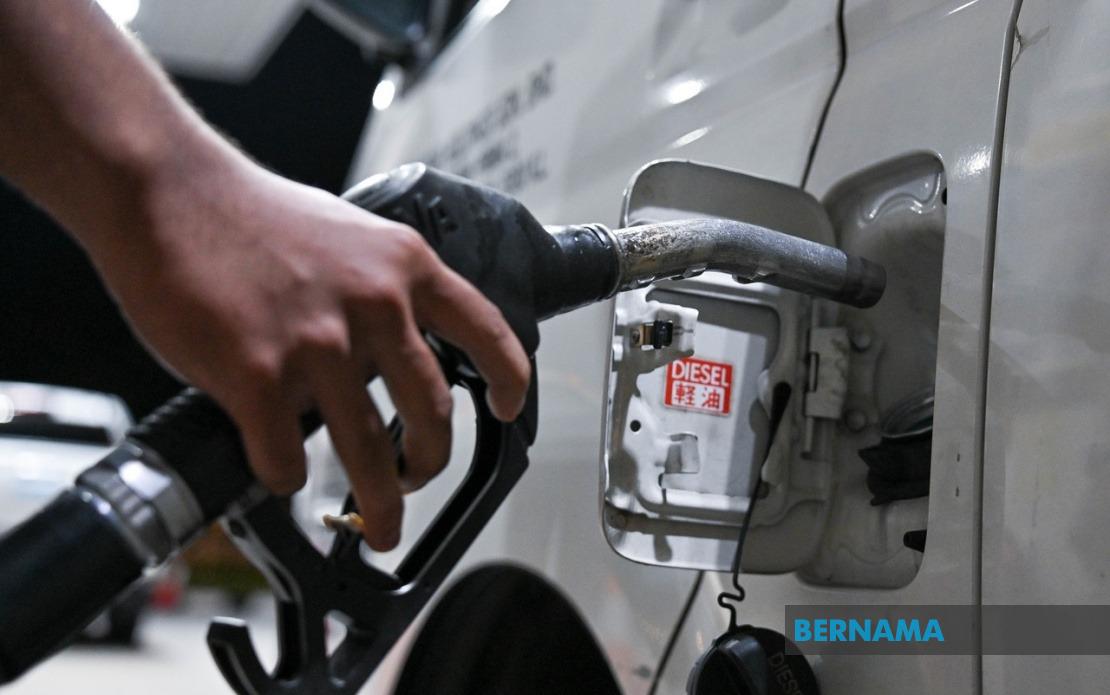
The Federal Government intends to shape the rollout of its BUDI Diesel subsidy programme through evidence gathered from the field rather than adhering to fixed review schedules, according to Finance Minister II Datuk Seri Amir Hamzah Azizan. Speaking in Kota Kinabalu on July 5, he emphasized that policymakers remain attentive to real-world consumption data and responses from users, oil station operators, and other stakeholders involved in the initiative's execution across Sabah and Sarawak.
Amir Hamzah addressed questions about whether a formal reassessment period would follow the July 1 launch, clarifying that the government's methodology prioritizes responsiveness over rigid timelines. This adaptive stance mirrors previous refinements to the broader BUDI fuel subsidy framework, which he cited as precedent for how the administration approaches fuel programme calibration. The flexibility inherent in this approach suggests that quota levels, eligibility thresholds, or distribution mechanisms could shift as operational insights accumulate, though such changes would depend on compelling evidence rather than political pressure or preliminary observations.
Central to the government's monitoring strategy is the analysis of consumption patterns across the eligible user base. Amir Hamzah drew attention to the earlier BUDI95 programme, where initial quota allocations of 300 litres per user were subsequently revised downward to 200 litres. Importantly, he stressed that this reduction was not an arbitrary cost-cutting measure but rather a response to granular usage statistics. The data revealed that between 94 and 95 per cent of participants consumed fewer than 300 litres monthly, while fewer than one per cent consistently exceeded 200 litres. This precision—grounding policy decisions in actual behaviour rather than assumptions—underscores the government's stated commitment to evidence-based subsidy design, a principle increasingly valued across Southeast Asia as fuel support schemes face fiscal pressures.
At the time of his remarks, the BUDI Diesel initiative had operated for approximately five days in the two largest Malaysian states on Borneo. During this nascent phase, the government's priority centred on ensuring that the digital infrastructure supporting the programme functioned smoothly and that all eligible citizens and residents could access subsidized fuel without technical obstacles. Amir Hamzah reported that petrol stations nationwide had deployed the system without significant disruption, and routine purchasing transactions had proceeded normally, suggesting that the initial implementation phase cleared a critical hurdle in establishing operational viability.
Beyond system stability, the government has begun collecting qualitative feedback on ground realities that may not be immediately apparent from transaction data alone. Ministries and relevant agencies are working in concert to synthesize this feedback with quantitative metrics, enabling targeted interventions where specific challenges emerge. This collaborative approach recognizes that fuel subsidy programmes do not operate in a vacuum; they intersect with transport logistics, rural livelihoods, commercial vehicle operations, and urban commuting patterns. Amir Hamzah indicated that the government would allocate resources to address legitimate grievances or implementation gaps as they surface, rather than waiting for a predetermined review date.
One category of concern already receiving attention involves vehicle ownership verification and eligibility determination. Some users or stakeholders have raised questions about how the programme accommodates vehicles registered under corporate entities, family members, or in the names of fleet operators. The government has dispatched teams to engage these constituencies and explore whether the existing framework—which relies primarily on MyKad identification for individual transactions—can accommodate alternative verification mechanisms. For service providers operating in remote regions, including those delivering essential supplies or emergency services, the government is considering whether fleet cards or other payment arrangements could be integrated, ensuring that subsidy benefits reach those whose work requires higher fuel consumption without inadvertently creating loopholes for misuse.
The introduction of BUDI Diesel enquiry counters at petrol stations represents another dimension of the government's implementation strategy. These facilities aim to reduce confusion and administrative friction by assisting users in verifying their eligibility, understanding programme rules, and completing online applications or QR code-based verification processes on-site. Amir Hamzah acknowledged that public awareness remains a work in progress and emphasized the importance of collaboration with petroleum companies and station operators to deliver clear, accessible guidance. This retail-level customer service component reflects recognition that digital infrastructure alone cannot guarantee successful programme uptake; human support and transparent communication remain essential, particularly in reaching less digitally familiar populations.
The government's emphasis on flexibility carries particular significance for Malaysia and the region, where fuel subsidies carry outsized fiscal and political weight. Neighbouring economies have grappled with the challenges of reforming or rationalizing subsidy schemes, often encountering resistance from constituencies accustomed to below-market fuel prices. By anchoring policy adjustments to observable data rather than ideology or external pressure, Amir Hamzah's administration aims to build defensibility and legitimacy for any future modifications. This approach also allows the government to maintain the appearance of responsive, pragmatic governance, potentially building support for deeper structural reforms should economic conditions demand them.
The timeline for comprehensive quota reassessment remains open-ended. Amir Hamzah made clear that any system-wide adjustment would require sustained monitoring of rollout data, meaning that significant changes are unlikely to occur in the immediate weeks following launch. However, targeted interventions addressing individual issues or specific stakeholder concerns can proceed more rapidly, particularly where government field teams have already identified recurring problems. This bifurcated approach—quick fixes for discrete issues paired with longer-term monitoring for structural decisions—reflects pragmatic governance under resource constraints and administrative capacity limitations.
Looking forward, the BUDI Diesel programme will likely evolve as the operational data matures and as policymakers discern which aspects of the framework require adjustment. The government's explicit commitment to data-driven decision-making provides a framework for justifying changes to the public, whether quotas rise, fall, or remain stable. For Malaysian consumers, particularly in rural and remote areas where fuel costs consume a larger share of household income, the success of BUDI Diesel hinges not only on initial quota generosity but on whether the government's stated flexibility translates into genuine responsiveness. The coming months will test whether this evidence-based philosophy produces outcomes that satisfy both fiscal sustainability and the subsidy programme's underlying objective of ensuring accessible, affordable fuel across the nation.

