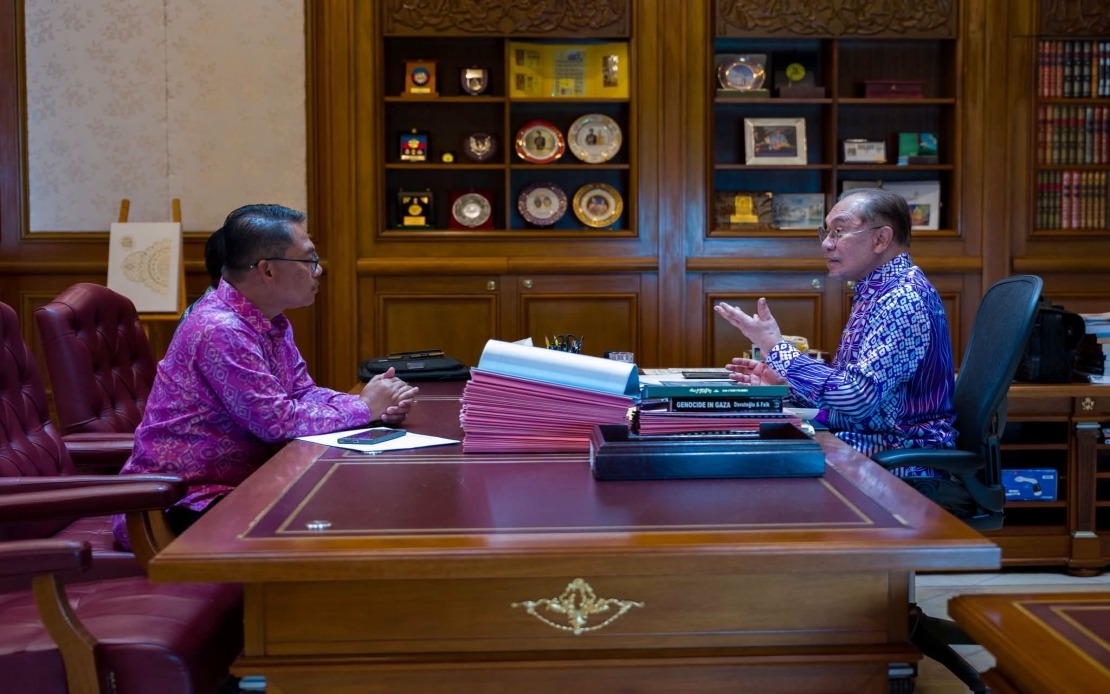
The federal government has committed to revising how it manages targeted fuel subsidies across Sabah and Sarawak, with policymakers pledging to absorb input from local communities and frontline stakeholders. Datuk Mustapha Sakmud, Minister in the Prime Minister's Department overseeing the two eastern Malaysian states, announced on July 16 that refinements to the scheme would be guided by grassroots concerns and the experiences of residents who depend on the fuel programme.
The initiative reflects an acknowledgment that rolling out economic reforms in Malaysia's geographically dispersed eastern states requires sustained engagement with affected populations. Mustapha indicated that a series of ongoing consultations involving relevant stakeholders, state governments, and federal bodies would proceed to ensure the subsidy system operates efficiently while protecting the standard of living of Sabahans and Sarawakians, particularly those in remote and rural communities where fuel access is critical.
Prime Minister Datuk Seri Anwar Ibrahim has personally invested time in hearing public concerns about implementation difficulties, particularly regarding the BUDI Diesel initiative in Sabah. This hands-on approach signals that the leadership recognises the programme's real-world complexities and is responsive to community-level friction. Mustapha emphasised his appreciation for the Prime Minister's willingness to set aside his demanding schedule to engage directly with grassroots voices, framing this as consistent with the administration's commitment to inclusive governance.
The BUDI Diesel scheme, which commenced nationwide on July 1, establishes a means-tested approach to fuel assistance. Qualifying private diesel vehicle owners receive a baseline monthly allocation of 200 litres available at the subsidised rate of RM2.10 per litre, a price point representing government intervention in fuel markets. This basic entitlement aims to ease the burden on ordinary motorists while controlling fiscal expenditure through targeted distribution rather than blanket subsidies.
The framework includes provisions for vehicle owners operating sports utility vehicles and pickup trucks to petition for an additional 100-litre monthly quota, subject to satisfying predetermined eligibility requirements. This tiered structure accommodates different vehicle types and usage patterns, yet the existence of supplementary quotas suggests that initial consultations may have identified gaps between baseline allocations and the transport requirements of certain occupational groups—such as agricultural producers, small business operators, or rural tradespeople who depend on larger vehicles.
The government's signals about refinement hint that early feedback from Sabah and Sarawak has surfaced frictions requiring administrative adjustment. Rural Malaysia's geography and dispersed settlement patterns create distinct challenges compared to urban centres; communities in these regions often face longer supply chains, higher transport costs, and limited alternative fuel sources. A fuel subsidy that functions adequately in Kuala Lumpur or Petaling Jaya may generate unintended consequences or coverage gaps when applied across the vastly different landscape of Sabah's interior or Sarawak's river communities.
The stated principle that "the voice of the people is a sacred voice" underpins the administration's positioning of this consultation process as a core feature of the MADANI (Stability, Prosperity, and Inclusiveness) governance model. By framing policy adjustment as responsive to community input rather than top-down technocratic reform, the government attempts to build legitimacy for a subsidy regime that, while targeted to reduce wastage, still represents a substantial fiscal commitment and may affect how businesses and individuals allocate resources.
For Malaysian readers, particularly those in Sabah and Sarawak, this announcement signals that the feedback mechanism exists and that policymakers are listening. However, the timeline for specific adjustments remains unspecified. The phrase "continue efforts to refine" suggests an iterative process rather than imminent overhaul, meaning beneficiaries and affected communities may face a period of uncertainty while consultations proceed. Businesses relying on diesel—transport operators, construction firms, agricultural enterprises—will likely monitor announcements closely to understand whether quota allocations or pricing will shift.
The regional dimension of this initiative is significant for Southeast Asian observers. Sabah and Sarawak constitute roughly 40 percent of Malaysia's land area but house less than 8 percent of its population, yet they hold substantial economic weight through resource extraction, agriculture, and growing tourism. Fuel subsidies in these states carry outsized importance to their economies and to national unity. Any adjustment that either reduces entitlements or further complicates access could generate political friction, particularly given these states' historical experience of feeling peripheralised in national policymaking.
The engagement by Prime Minister Anwar directly in listening sessions represents a deliberate political investment in east Malaysian constituencies. Both states have demonstrated voting patterns that reward governments perceived as attentive to local interests; personal engagement by senior leadership conveys priority that mere bureaucratic consultation cannot achieve. This outreach may also be designed to preempt opposition narratives that frame the targeted subsidy as penalising rural communities or benefiting urban constituencies.
Implementation challenges emerging from the BUDI Diesel rollout underscore a persistent tension in Malaysian governance: designing policy at the federal level while accounting for radically different local conditions. The two-month window since the scheme's launch appears to have generated sufficient feedback to warrant public acknowledgment of refinement needs. Whether these adjustments will involve expanded quotas, price modifications, or procedural simplifications—such as easing application processes or improving digital registration for rural communities with limited internet access—remains to be clarified.
The commitment to ongoing stakeholder discussions suggests that finalised adjustments will not emerge precipitously. Bureaucratic consultation in Malaysia typically unfolds over months rather than weeks, meaning communities should anticipate continued discussions through the latter half of 2024. Motorists and businesses affected by the subsidy will need to plan expenditure based on current terms while remaining alert to official communications about prospective changes, a posture that creates both opportunity and uncertainty in household and enterprise budgeting.

