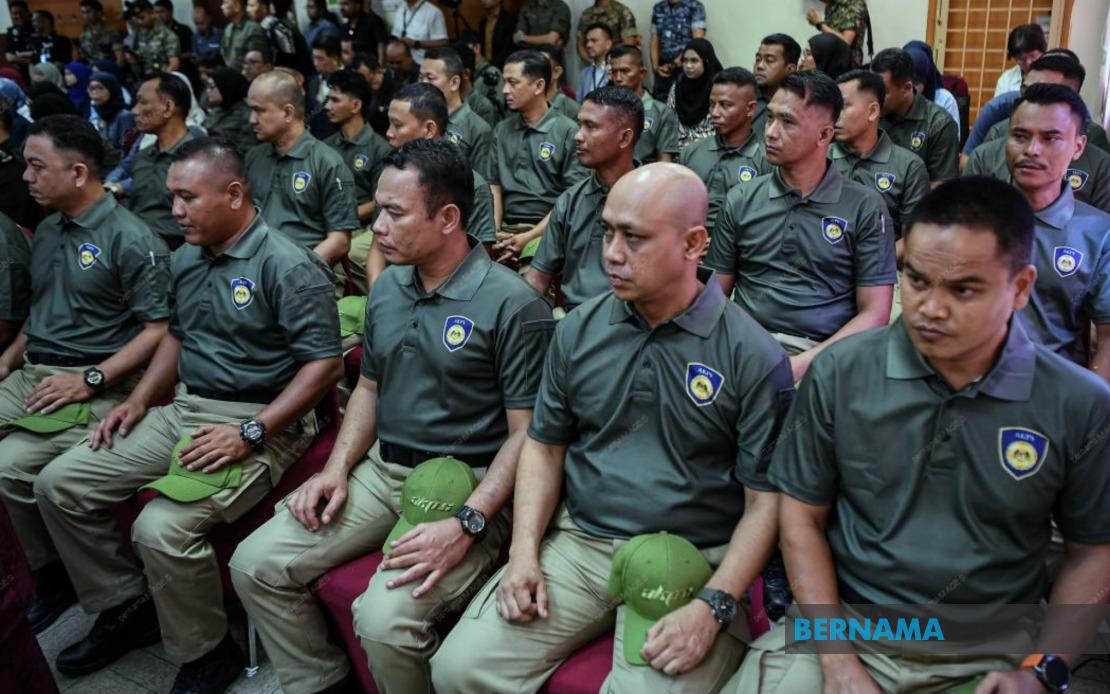
The Malaysian government moved to reassure approximately 8,400 personnel of the Border Control and Protection Agency (AKPS) that their employment protections and entitlements will remain intact as the agency undergoes a structural realignment under the Public Service Department beginning July 1. Deputy Home Minister Datuk Seri Dr Shamsul Anuar Nasarah delivered the assurance in Parliament, addressing widespread concerns among enforcement staff about potential impacts on their career advancement, seniority rankings, and retirement provisions during the transition period.
The AKPS emerged from a consolidation of multiple enforcement bodies with the mandate to oversee immigration, customs, and border security operations across Malaysia's 122 designated entry points. Since its formation, the agency has managed personnel flows through secondment arrangements, whereby officers from parent departments were temporarily assigned to fill operational positions. This transitional staffing model has created a complex employment situation that the new service scheme aims to formalize and clarify.
Under the revised arrangements, officers who elect to remain within their original service classification—whether immigration, customs, or other related enforcement agencies—will face no disadvantage. Their promotion pathways, length-of-service calculations for seniority purposes, and long-service benefits including retirement gratuities will continue unaffected by their AKPS assignment. This safeguard addresses a primary anxiety among personnel who fear that transfers could reset their service records or disadvantage them relative to colleagues who remained in parent departments.
Shamsul Anuar explained that those declining formal appointment transfer to AKPS will maintain their interim status within the agency, pending formal placement decisions made collaboratively by the Public Service Department and the respective parent ministries. The government thus preserves optionality: officers can pursue permanent integration into AKPS under the new scheme or retain their original positions, with reassignment logistics handled according to departmental requirements and operational vacancies.
Current staffing figures reveal that as of mid-June, AKPS had successfully filled 6,824 of its 8,403 authorized positions, leaving approximately 1,579 vacancies to be addressed. The government attributed this shortfall not to systemic recruitment failures but to the progressive nature of the placement process, which involves coordination among multiple stakeholder agencies including AKPS itself, the Home Ministry, the Public Service Department, and the original parent departments. This multi-agency approach, while comprehensive, inherently requires extended timelines.
To incentivize candidates to accept permanent appointment within AKPS and ensure sustained operational capacity at border checkpoints, the government introduced targeted financial benefits. Officers transferring to AKPS under the new scheme receive supplementary annual salary increments (known locally as KGT) in addition to a RM200 service incentive. These measures attempt to offset any perceived disadvantage from leaving established parent departments and signal government commitment to making AKPS an attractive posting.
The AKPS reorganization reflects broader civil service modernization trends across Southeast Asia, where regional governments seek to consolidate border and enforcement functions under unified command structures. Malaysia's approach distinguishes itself through explicit employment protections and consultation mechanisms, contrasting with more abrupt structural reforms implemented elsewhere in the region. For Malaysian enforcement officers, the graduated transition period and opt-in framework provide greater agency compared to mandatory restructuring models.
For Malaysian readers and regional observers, the AKPS case study illuminates the administrative complexities underlying institutional reform in developing democracies. Creating new agencies requires not merely reorganizing responsibilities but managing expectations among thousands of civil servants whose livelihoods depend on employment continuity. The government's emphasis on guaranteeing promotion prospects and retirement benefits reflects political recognition that enforcement personnel form a constituency whose confidence in institutional stability directly affects border security effectiveness.
The parliamentary assurance from the Deputy Home Minister carries particular significance given Malaysia's reliance on efficient border management to combat smuggling, human trafficking, and illegal immigration—issues with direct relevance to Southeast Asian regional stability. Personnel anxieties about the transition could theoretically undermine operational commitment during a sensitive period, making explicit welfare commitments a practical governance necessity rather than merely symbolic gesture.
Looking forward, the success of AKPS under the new service scheme depends substantially on filling the remaining 1,579 vacancies while maintaining morale among existing officers. The recruitment timeline coinciding with the July 1 implementation date suggests the government must accelerate placement decisions and formal appointment paperwork during the coming weeks. Any administrative delays in processing transfers could amplify uncertainty among personnel who remain unconfirmed in their employment status.
The broader context involves Malaysia's ongoing professionalization of its public service workforce. By introducing financial incentives and explicitly protecting employment rights, the government signals recognition that institutional legitimacy depends on demonstrable commitment to employee welfare. This approach may serve as a model for other ASEAN nations undertaking similar civil service rationalization efforts, particularly those consolidating border and security functions to enhance regional cooperation frameworks.

