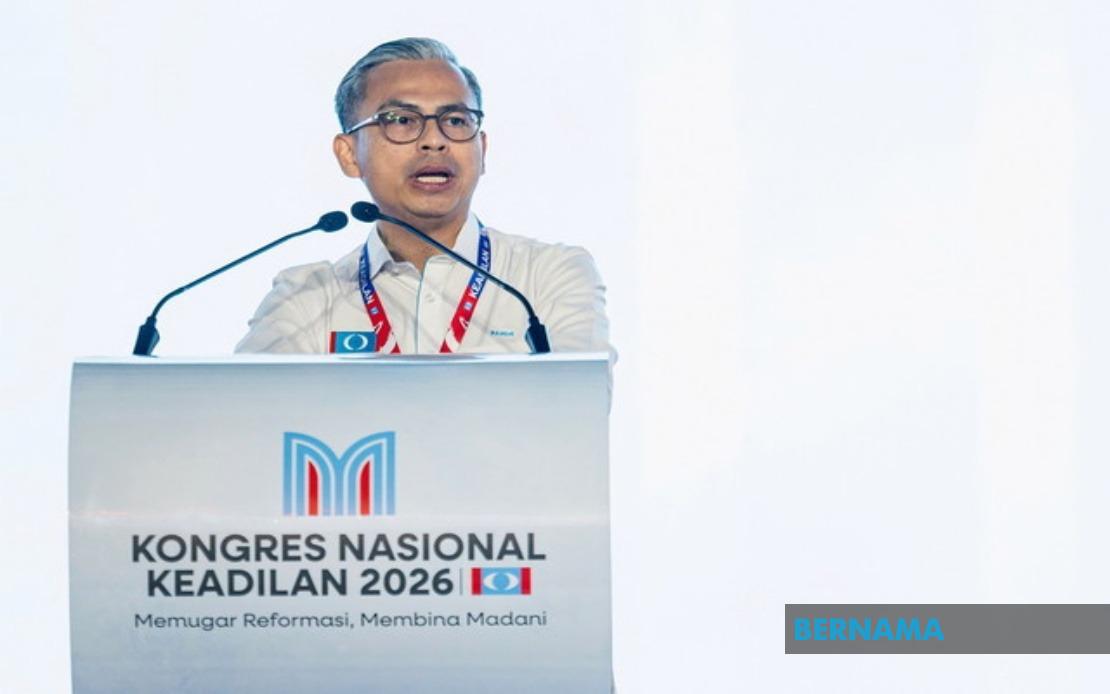
Datuk Seri Fahmi Fadzil, the PKR information chief and Communications Minister, has admitted that the government's messaging machine requires significant strengthening, despite what he describes as substantial progress on the economic front under the leadership of PKR president Datuk Seri Anwar Ibrahim. Speaking at the 2026 PKR National Congress in Melaka on Friday, Fahmi conceded that while the administration has introduced numerous policies it considers successful, these achievements have not resonated sufficiently with ordinary Malaysians or translated into improvements they can genuinely observe in their daily lives.
The disconnect between government economic performance and public perception represents a critical challenge that extends beyond simple messaging failures. Fahmi articulated this problem by distinguishing between what he termed "pot economy"—the aggregate macroeconomic figures and policy frameworks—and the lived reality of citizens. The government has achieved stability in broader economic indicators, yet this has not generated widespread confidence or tangible benefits that average households can identify and credit to government action. This gap underscores a fundamental credibility challenge facing the administration as it heads toward the latter stages of its current term.
Recognising that conventional top-down communication strategies have proven inadequate, Fahmi outlined plans to recalibrate how information reaches the public. The strategy involves shifting away from broad announcements toward smaller, localised discussions that permit more relaxed dialogue and direct engagement with communities. These grassroots-level forums would allow government representatives to explain policies within familiar settings, creating space for residents to ask questions and voice concerns without the formality that characterises larger public events. This represents an implicit acknowledgment that citizens require more than statistics to understand government initiatives—they need interpretation and context delivered by officials they can interact with meaningfully.
The role of PKR's grassroots machinery will prove essential to this revamped communication approach. Fahmi emphasised that cooperation with division chiefs and grassroots leaders must intensify to ensure information filters downward more effectively through the party structure to reach voters at the community level. By mobilising PKR's existing organisational framework, the party hopes to leverage relationships and trust built at the local level to enhance message penetration. This approach essentially positions party leaders as interpreters and advocates who can localise national policies and connect government achievements to specific community concerns and benefits.
Parallel to improving positive messaging, the government recognises the threat posed by deliberate misinformation targeting emotionally sensitive areas. Fahmi highlighted that since the Johor state election, the Malaysian Communications and Multimedia Commission has identified and removed over 8,410 fake accounts exploiting issues around religion, race, and royal institutions—the so-called 3R issues. These accounts exploit emotional attachments and cultural sensitivities to undermine confidence in government initiatives and mislead public opinion. The scale of this coordinated disinformation effort suggests organised campaigns designed to prevent citizens from accepting government narratives about economic progress and policy achievements.
The decision to strengthen cooperation with the MCMC reflects an understanding that communication strategy must address both sides of the equation—ensuring accurate information reaches the public while simultaneously countering false narratives that might otherwise dominate discourse. Disinformation campaigns targeting 3R sensitivities prove particularly effective because they activate deep-seated concerns and identities, potentially overwhelming rational assessment of government performance. By combating these falsehoods, authorities hope to create clearer informational space where substantive discussion of government achievements becomes possible.
Fahmi's remarks also touched on the government's relationship with media institutions, emphasising that no attempt at media control is underway. Rather, when inaccurate reporting occurs, the information machinery would address this through proper channels and respectful dialogue. This framing suggests a distinction between defending government interests from false representation and attempting to suppress legitimate criticism or oversight. For Malaysian media outlets and editors, this signals the government's intent to engage in factual disputes about specific claims while maintaining the principle of press freedom.
The communications strategy adjustment also involves closer coordination with the PKR women's wing, recognising that female party members occupy significant positions within communities and possess channels to reach populations that formal government communication structures might not access effectively. This signals an appreciation that communication operates through multiple networks and informal relationships, not exclusively through official state machinery. Women leaders often maintain substantial grassroots connections that bridge government and community in ways that prove more persuasive than institutional channels alone.
These communications adjustments carry implications extending beyond mere public relations management. They reflect the government's anxiety that despite genuine economic achievements and policy accomplishments, the narrative and sentiment among voters has not shifted correspondingly. For Malaysian voters and observers, this acknowledgment suggests that confidence in the government remains conditional upon better demonstration that economic improvements are translating into household-level benefits. The failure to close this perception gap represents a vulnerability that opposition parties may exploit during election campaigns.
For regional observers and investors, the government's difficulty in communicating economic success signals broader challenges in building and maintaining domestic consensus around policy direction. When citizens do not perceive government achievements regardless of objective economic metrics, political stability and policy continuity face pressures. Effective communication becomes essential infrastructure for sustaining voter support through economic transitions and policy shifts, particularly when such changes require short-term sacrifices in exchange for long-term gains.
As the congress concluded with remarks from Datuk Seri Anwar Ibrahim, the strategic focus on improved communication appeared to acknowledge that governing involves not merely implementing policies but securing public understanding and buy-in for those initiatives. The government's willingness to examine its messaging failures and propose systematic improvements suggests recognition that remaining in office requires translating aggregate economic data into narratives and tangible benefits that resonate at community level. Whether these communication enhancements sufficiently narrow the gap between government performance and public perception will significantly influence electoral prospects and policy capacity in coming years.

