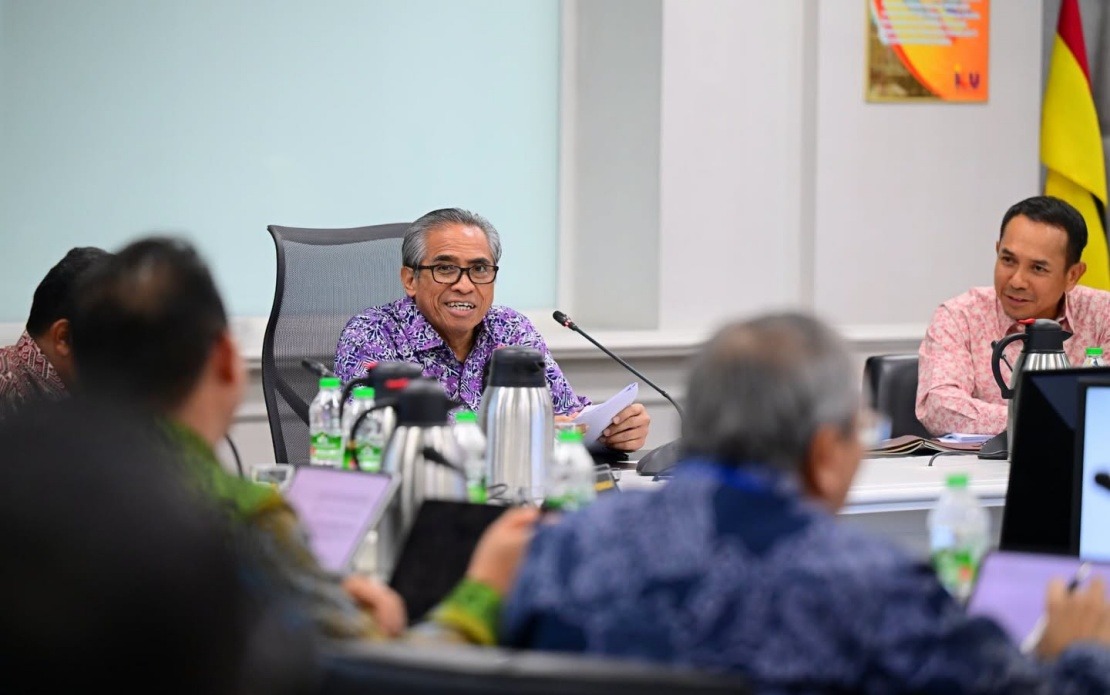
Malaysia's government machinery is being redirected to prioritise rapid implementation of more than 40,000 small-scale development projects scattered across the nation, according to a directive issued by Chief Secretary to the Government Tan Sri Shamsul Azri Abu Bakar. The move signals a strategic pivot towards delivering tangible improvements to communities in the near term, moving beyond grand infrastructure schemes to address the practical needs that residents encounter daily.
During a National Development Action Committee meeting chaired by Shamsul Azri, ministry secretaries-general were explicitly tasked with ensuring these initiatives advance swiftly. The overarching rationale behind this concentrated focus is rooted in pragmatism: these projects represent what officials term "low-hanging fruit," endeavours that can demonstrate visible government responsiveness without requiring extended planning cycles or substantial capital outlays. By concentrating ministerial resources on such undertakings, the administration aims to deliver results that resonate with communities before longer-term, more complex development programmes reach fruition.
The portfolio of projects encompasses a decidedly practical range of interventions across public infrastructure and services. Road repairs and drainage maintenance address the infrastructure maintenance backlog that affects daily life in residential areas. Refurbishment of government quarters improves living conditions for civil servants, while classroom repairs and school facility upgrades directly benefit students and educators. Healthcare facility enhancements expand service capacity and quality at the community level, and improvements to public stalls and markets support traders and shoppers alike. This diversity of project types reflects an understanding that development need not be singular in character; rather, a multifaceted approach touching various sectors can compound the cumulative benefit citizens experience.
The timeframe for project completion establishes an ambitious but achievable target. With most undertakings scheduled for realisation within three to six months, the government is deliberately compressing the interval between announcement and actual service delivery. This compressed timeline serves multiple purposes: it demonstrates bureaucratic efficiency, maintains public confidence through visible momentum, and allows communities to experience improvements while memory of the government's commitment remains fresh. In the context of Malaysian governance, where large infrastructure projects frequently encounter delays and cost overruns, this focus on smaller initiatives with faster delivery cycles represents a calculated attempt to rebuild institutional credibility through readily measurable outcomes.
Crucially, Shamsul Azri has mandated that secretaries-general conduct regular site visits and maintain close oversight of implementation progress. This supervisory requirement is significant because it places accountability squarely on senior ministry officials rather than allowing projects to languish in lower administrative tiers. By requiring physical presence on the ground, the directive implicitly acknowledges that governance challenges often stem not from lack of resources but from insufficient monitoring and coordination. The directive to resolve issues as they emerge reflects recognition that small projects, while individually simpler than mega-infrastructure schemes, still encounter logistical and bureaucratic friction that requires senior-level intervention to clear.
For Malaysian readers and the broader Southeast Asian context, this initiative carries implications beyond immediate infrastructure improvements. The Philippines, Indonesia, and Thailand have similarly experimented with distributing development resources through multiple smaller projects rather than concentrating investment in flagship schemes. Malaysia's approach demonstrates how a functioning bureaucracy can pivot to prioritise community-level outcomes when given clear direction. Whether such initiatives can be sustained beyond initial enthusiasm, however, remains a perennial challenge for developing democracies attempting to balance immediate popular needs with long-term strategic investments.
The emphasis on projects that are "very close to the hearts of the people" reveals an administration attuned to electoral and public relations calculations. In Malaysia's competitive political landscape, where state and federal governments vie for popular support and opposition parties maintain credible electoral prospects, visible service delivery serves as a powerful validation of government legitimacy. Communities that experience tangible improvements to roads, schools, and markets are inclined to view their government as responsive and competent, sentiment that translates into electoral advantage. Yet this political dimension need not delegitimise the underlying initiative; governments everywhere respond to constituent preferences, and channelling resources toward widely valued projects represents a form of democratic responsiveness.
The coordination demands implicit in this directive should not be underestimated. With 40,000 projects distributed across multiple ministries and geographic locations, managing implementation requires robust information systems, clear accountability chains, and frequent inter-ministerial communication. Malaysian government agencies have historically struggled with such horizontal coordination, with ministerial silos limiting effectiveness. The National Development Action Committee's role in overseeing execution will therefore test whether institutional reforms have genuinely improved bureaucratic integration or whether traditional patterns of departmental autonomy reassert themselves.
The sustainability question lingers. Initial enthusiasm for accelerated project delivery frequently dissipates as implementation encounters the inevitable complications of Malaysian governance: contractor performance variability, supply chain disruptions, local political complications, and competing budget demands. Whether Shamsul Azri's directive creates sustained momentum or represents a temporary surge in activity depends heavily on whether secretaries-general receive adequate resources to discharge their supervisory duties and whether political leadership maintains consistent pressure for accountability. Previous Malaysian government initiatives launched with similar fanfare have demonstrated uneven follow-through, suggesting that vigilance will be required to ensure these 40,000 projects do not become a partial success story.
From a regional perspective, Malaysia's pivot toward distributed small-scale development reflects a broader recognition across Southeast Asia that effective governance increasingly depends on responsive service delivery at the local level. As citizens across the region gain greater access to information and comparison points, their tolerance for unaccountable bureaucracy and delayed projects diminishes. Governments that can combine strategic infrastructure investment with visible community-level improvements position themselves more effectively within competitive political environments. Malaysia's initiative, if successfully executed, could establish a model that other Southeast Asian administrations examine and potentially emulate.

