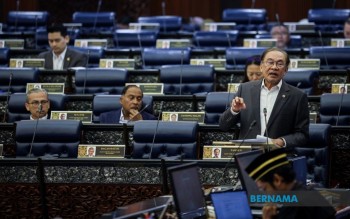
Prime Minister Datuk Seri Anwar Ibrahim has unveiled a fresh initiative targeting Malaysia's business community, particularly those operating at smaller scales. The government is rolling out an e-Invoice Voluntary Declaration Programme that will remain active until December 31, 2027, positioning this as a strategic intervention to reduce the financial and administrative burden imposed by tax compliance requirements. The announcement, made during parliamentary proceedings yesterday, reflects growing recognition that the transition to digital invoicing systems requires differentiated support across the business spectrum.
The centrepiece of this initiative is its non-punitive approach. Any corrections, updates, or declarations made voluntarily during the designated period will not trigger penalties from the Inland Revenue Board of Malaysia, a particularly generous stance that Anwar emphasised remains uncommon in income tax administration. This flexibility recognises the practical reality that many businesses, especially those operating with limited administrative infrastructure, require breathing room to align their systems with evolving regulatory expectations. By removing the threat of financial sanctions during the adjustment period, the government hopes to encourage comprehensive compliance rather than discourage documentation altogether.
The timing of this announcement resonates with broader economic pressures facing Malaysia's enterprise sector. As businesses navigate uncertainties stemming from global market volatility and shifting consumer patterns, the added friction of technological transition can prove decisive for survival. The government's framing of this measure as a response to challenges highlighted by parliamentarians indicates parliamentary awareness of grassroots business frustrations. Datuk Seri Anwar's role as both Prime Minister and Finance Minister positions him to bridge policy aspiration with fiscal reality—a combination that lends weight to commitments that might otherwise be dismissed as rhetoric.
Complementing the declaration programme, the government has approved accelerated tax incentives to offset implementation costs. Eligible businesses can now claim full capital allowance deductions within a single financial year for expenses incurred in deploying e-invoice systems. This approach acknowledges that while e-invoicing ultimately streamlines operations, the upfront investment in software, hardware, and staff training creates genuine cash flow pressure for capital-constrained enterprises. By collapsing depreciation schedules into immediate deductions, the government reduces the effective after-tax cost of digital transformation.
Context from earlier policy evolution strengthens this initiative's coherence. In December 2025, authorities raised the income threshold for e-invoice exemption from RM500,000 to RM1 million, a decision that benefited more than one million taxpayers by removing compliance obligations entirely for smaller operators. Yesterday's announcement builds on that foundation, creating a graduated regulatory approach. Businesses below the RM1 million threshold face no e-invoice requirements whatsoever. Those above that line but still building capacity now enjoy a penalty-free voluntary period coupled with accelerated tax benefits. This scaffolding suggests deliberate policy architecture rather than ad-hoc concessions.
The emphasis on MSMEs reflects their disproportionate vulnerability during compliance transitions. Unlike multinational corporations with dedicated finance teams and existing technology infrastructure, small and medium enterprises typically manage accounting functions with skeleton crews operating legacy systems. The human cost of reskilling staff and the disruption during system migration represent real expenses that don't appear in official cost-benefit analyses. By explicitly targeting support towards this segment—described in yesterday's parliamentary exchange as facing particular survival challenges—the government acknowledges that uniform rules create unequal outcomes across business sizes.
Regional comparisons illuminate Malaysia's positioning. Several Southeast Asian nations have similarly grappled with mandatory e-invoicing rollouts, often encountering compliance resistance and implementation delays. Thailand, Indonesia, and Vietnam have each experimented with extended transition periods and incentive structures. Malaysia's approach of combining exemption thresholds with voluntary declaration windows and tax incentives represents a relatively comprehensive toolkit compared to neighbouring approaches, potentially offering lessons for regional coordination should ASEAN tax authorities coordinate digital transformation standards.
The parliamentary origin of this initiative matters for implementation prospects. Rather than emerging from bureaucratic routine, the measure responded directly to a question from Lee Chuan How (PH-Ipoh Timor) regarding government responsiveness to business sector challenges. This parliamentary visibility creates accountability mechanisms—opposition members can track progress and hold officials responsible for delivering promised flexibility. The public commitment in the Dewan Rakyat also signals that this programme enjoys cross-party validation, reducing risks of sudden policy reversals under future administrations.
For Malaysia's business community, the practical implications are substantial. The voluntary declaration window eliminates a critical compliance risk during system transition. Businesses can experiment with e-invoice implementations, make corrections, and optimise procedures without accumulating tax exposures. The one-year accelerated depreciation for implementation costs directly reduces tax liability in the year investments occur, improving cash flow precisely when capital demands peak. Combined, these measures reduce the effective cost of compliance by perhaps 20-30 percent depending on business scale and implementation complexity.
Longer-term policy implications suggest this approach may establish precedent for future regulatory transitions. Digital transformation requirements will continue proliferating across tax, labour, health, and environmental domains. Should this pilot succeed in achieving high voluntary compliance with measurable business satisfaction, it could model how regulators balance enforcement rigour with practical implementation flexibility. For multinational enterprises already embedded in Malaysia's economy, this experience may inform assessments of long-term regulatory stability—critical for foreign direct investment decisions.
The December 31, 2027 sunset date deserves specific attention. This creates a finite window rather than indefinite flexibility, preserving enforcement credibility while acknowledging transition realities. By that date, the government will have accumulated sufficient data to assess adoption rates and identify persistent compliance gaps. This timeline also aligns with international corporate reporting standards evolution, suggesting Malaysia's policymakers are calibrating domestic requirements with global trends rather than operating in isolation. The specificity of this endpoint indicates serious implementation planning rather than aspirational policy announcement.

