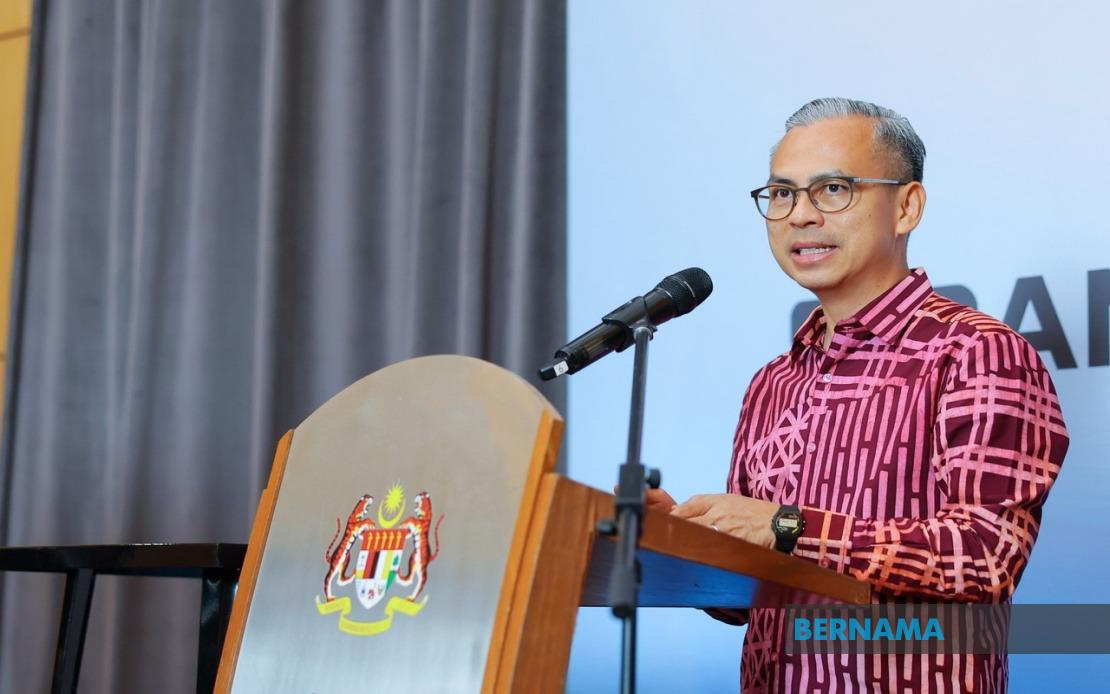
The Malaysian government has moved to confront the escalating threat of online fraud by establishing a dedicated inter-agency task force, Communications Minister Datuk Fahmi Fadzil announced this week. The decision to form the special working committee and technical group came after senior Cabinet officials convened for a strategic retreat where they examined the alarming trajectory of digital scam incidents affecting citizens nationwide. The committee, officially constituted on June 18, represents a significant pivot toward more coordinated governmental action on a crime category that has become increasingly difficult for individual agencies to manage in isolation.
This initiative marks a departure from previous piecemeal approaches to cybercrime enforcement. For the first time, Malaysia's response framework explicitly incorporates the private sector, bringing representatives from the banking industry, telecommunications providers, and major digital platforms including social media companies into the operational loop. Such collaboration has proven essential given that scammers increasingly exploit the interconnected nature of digital ecosystems—moving between messaging applications, e-commerce sites, and financial platforms with relative ease. By bridging the traditional divide between government institutions and commercial entities, the committee aims to create intelligence-sharing mechanisms and coordinated response protocols that were previously absent.
Fahmi characterized the undertaking as a proactive defensive measure rather than reactive crisis management. He explained that the cross-agency architecture is designed to strengthen three critical dimensions: enforcement capacity against perpetrators, legal frameworks governing digital conduct, and investigative methodologies for tracking and prosecuting scammers. The government signaled that early outcomes from the committee's work should materialize within the near term, though ministry officials declined to divulge specific strategies or operational tactics. This reluctance to publicize detailed plans reflects a strategic calculation that transparency about enforcement techniques could inadvertently serve as a tutorial for the criminal elements the committee aims to suppress.
The comparative success of similar coordination mechanisms in addressing other crime categories informed this decision. Fahmi noted that a parallel cross-agency approach previously deployed against child sexual exploitation crimes had demonstrated measurable effectiveness through targeted special operations. That precedent suggested that bureaucratic silos—historically a weakness in Malaysian law enforcement—could be overcome when clear political direction and ministerial leadership exist. The establishment of this online fraud committee signals that the government views digital crime with comparable urgency to child protection issues, reflecting a recognition that financial losses and psychological trauma from scam victimization constitute a serious national problem.
The timing of this initiative aligns with mounting public concern about online fraud. Malaysian citizens have reported experiencing everything from romance scams and investment fraud schemes to impersonation attacks on banking credentials. The sophistication of recent operations—involving deepfake technology, coordinated multi-channel targeting, and international money laundering networks—has overwhelmed conventional enforcement agencies operating within their traditional jurisdictional boundaries. A committee structure enables rapid information exchange about emerging scam methodologies, suspected perpetrator networks, and vulnerability patterns across institutions that previously maintained separate threat assessment systems.
The inclusion of telecommunications and financial sector partners addresses a critical operational gap. Banks and telecom companies possess real-time visibility into transaction flows and communication patterns that government investigators alone cannot access without lengthy legal processes. When victims transfer money through banking channels or receive scam solicitations via SMS or messaging applications, these institutions are positioned at the transaction point. By incorporating their technical capabilities and data analytics into a coordinated response, the committee can implement faster fraud detection, victim warning systems, and account freezing protocols. Social media platforms, similarly, operate content moderation and user authentication systems that can complement government investigation efforts when properly aligned.
For ordinary Malaysians navigating digital platforms increasingly central to work, commerce, and social connection, this development carries tangible implications. Enhanced enforcement activity should generate more arrests and prosecutions of domestic scammers and disrupted international criminal networks. Improved legislative frameworks could establish clearer penalties and legal tools for prosecutors. Coordinated investigation efforts might accelerate case resolution and victim restitution processes. The committee's work may also catalyze public awareness campaigns about scam prevention, as agencies coordinate messaging rather than issuing contradictory guidance.
However, the initiative also reflects uncomfortable truths about Malaysia's digital crime landscape. The very need for such a committee underscores how comprehensively scammers have exploited regulatory fragmentation and institutional blind spots. The scale of the problem—requiring Cabinet-level attention and the establishment of new bureaucratic structures—suggests that previous, agency-based responses proved insufficient. For Southeast Asian countries observing Malaysia's approach, the committee model offers a potential template, though regional variations in technological infrastructure and regulatory capacity would require adaptation.
The committee's success will ultimately depend on sustained political commitment and resource allocation. Cross-agency initiatives in developing democracies frequently suffer from turf disputes, competing budget priorities, and operational inertia. The early meetings will be crucial in establishing working protocols, information-sharing agreements, and clearly defined roles that prevent the committee from becoming merely another administrative layer without operational teeth. Given that scammers operate across borders and continually adapt their methodologies, the committee must maintain sufficient agility and flexibility to pivot tactics as criminals innovate.
The involvement of the private sector introduces both opportunities and challenges. Commercial platforms have financial incentives to combat fraud—reputational damage and regulatory pressure affect their bottom lines. Yet their interests do not entirely align with broader public welfare objectives. Financial institutions, for instance, may prioritize protecting their own assets over victim recovery. Social media companies may resist disclosure of platform vulnerabilities. The committee must navigate these inherent tensions between collaborative efficiency and potentially conflicting institutional interests. Clear memoranda of understanding and governance structures will determine whether private sector participation strengthens the response or becomes merely symbolic.
Looking forward, the committee's impact will be measured not merely by statements and internal meetings but by concrete metrics: reduction in reported scam incidents, faster investigative timelines, increased prosecution rates, and recovered assets returned to victims. As the first working committee meeting approaches, Malaysian citizens and regional observers will watch to assess whether this structural innovation represents genuine transformational change or another layer of coordination that leaves the fundamental problem of online fraud largely unresolved.

