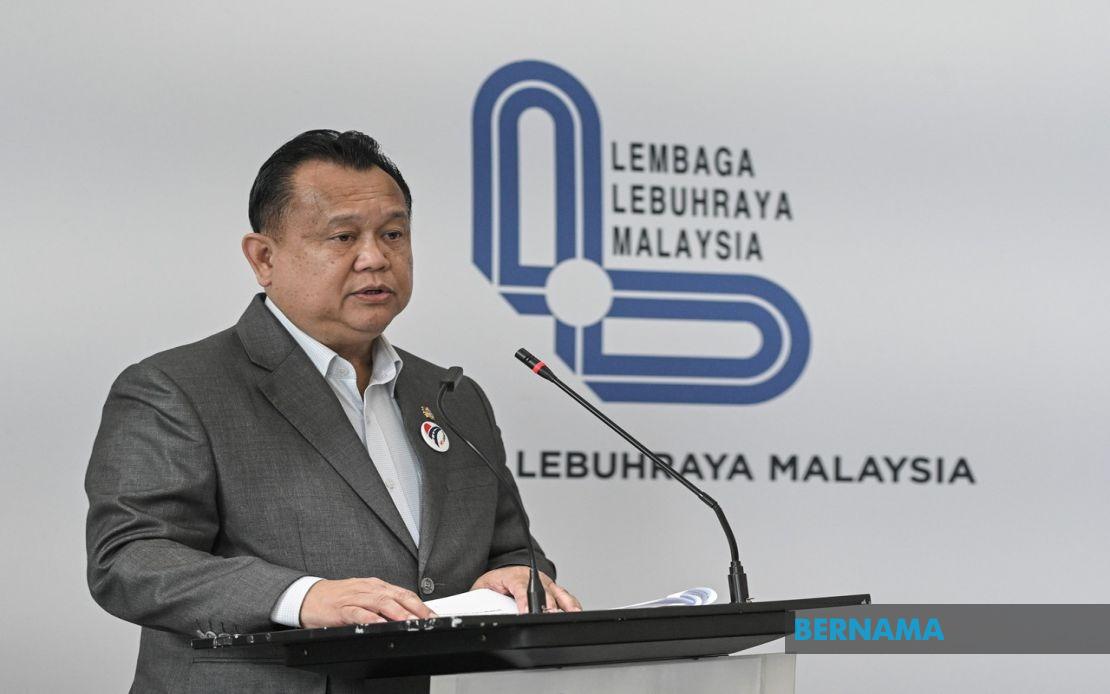
Malaysia's government is rolling out a significant safety initiative on its highways, allocating RM25.2 million to illuminate 32 accident-prone stretches with solar-powered LED street lights. Works Minister Datuk Seri Alexander Nanta Linggi announced the project launch, which represents the first phase of a broader highway safety enhancement scheme backed by Prime Minister Datuk Seri Anwar Ibrahim's commitment in the 2026 Budget announcement last October.
The installation programme will see 3,000 light poles erected across the identified high-risk locations, transforming poorly lit sections of Malaysia's highway network where accidents cluster. These sites have been selected based on accident data and road safety assessments, making this an evidence-driven approach to reducing traffic fatalities and injuries. The solar technology ensures energy efficiency and reduces long-term operational costs, while LED bulbs provide superior illumination compared to traditional street lighting solutions.
Implementing this project falls under the MADANI Monitoring programme, a broader government framework aimed at improving public services and citizen welfare. The collaboration involves three key government bodies: the Works Ministry, which oversees implementation; the Finance Ministry, which manages budget allocation; and the Malaysian Highway Authority (LLM), which operates many of the highways receiving upgrades. This inter-agency coordination reflects the government's structured approach to tackling road safety as a comprehensive policy challenge rather than an isolated infrastructure concern.
Minister Nanta clarified that the initial RM25.2 million allocation represents the first tranche of a larger RM30 million commitment. This phased approach allows the government to assess performance, gather feedback, and adjust requirements based on field conditions before deploying additional funds. The contractor received formal Letter of Acceptance approval, enabling immediate commencement of site work. The government has set an ambitious completion deadline of November 2024, suggesting a compressed but achievable construction timeline.
Road safety remains a critical concern across Malaysia and Southeast Asia more broadly. The region consistently records among the world's highest traffic fatality rates, with poor visibility cited as a significant contributing factor in many accidents. By targeting high-risk locations specifically, this initiative addresses a root cause of preventable crashes. Nighttime accidents on poorly lit highways disproportionately affect long-distance travellers, commercial drivers, and emergency response services, making strategic lighting improvements a practical safety intervention.
The solar LED technology choice carries multiple strategic advantages beyond immediate safety benefits. First, it eliminates dependence on grid electricity connections, which may be unavailable or unstable at remote highway locations. Second, solar systems require minimal ongoing maintenance compared to traditional streetlights, reducing government operational expenses over the installation's lifespan. Third, the renewable energy component aligns with Malaysia's broader sustainability commitments and green development goals outlined in the National Energy Transition Roadmap.
For highway users and road safety advocacy groups, the project addresses longstanding complaints about inadequate lighting on major routes. Commercial transport operators, who often operate during night hours, particularly benefit from improved visibility at dangerous curves, intersections, and high-crash zones. Insurance and road safety data consistently demonstrate that enhanced lighting reduces accident rates by 20 to 30 percent, depending on location characteristics and driver behaviour patterns.
The selection of 32 specific locations followed systematic risk assessment methodology, likely analysing crash statistics, traffic volume patterns, road geometry, and historical incident reports. This data-driven site selection ensures maximum impact from the allocated budget. Highway authorities throughout Southeast Asia have increasingly adopted similar targeting strategies, recognising that infrastructure investment proves most cost-effective when directed toward genuine high-risk zones rather than blanket coverage approaches.
The project timeline carries significance for the work-study cycle and government transparency. With a target completion date of November 2024, the Works Ministry commits to measurable delivery within a defined period. Such deadlines improve accountability and allow government agencies to report concrete achievements to stakeholders and taxpayers. Post-completion, crash data collection from these illuminated sections will provide valuable evidence about lighting intervention effectiveness.
For Malaysian road users, particularly those commuting on highways during evening and early morning hours, this represents tangible government commitment to reducing accident risk. The MADANI framework positioning signals that road safety receives policy priority alongside economic development. As Malaysia continues upgrading its transport infrastructure and the National Transport Master Plan unfolds, lighting investments complement other safety initiatives including speed enforcement, road design improvements, and driver education programmes.
The contractor selection process, though not detailed in this announcement, will likely involve established infrastructure companies with experience in highway lighting projects. Monitoring and quality assurance mechanisms should ensure that installations meet specifications for brightness, coverage, and durability under Malaysia's tropical climate conditions, where intense rainfall, humidity, and salt spray in coastal areas pose maintenance challenges for exposed outdoor equipment.
This initiative also reflects evolving government priorities regarding public infrastructure maintenance and preventive safety investment. Rather than responding reactively to accident clusters, the proactive lighting installation approach demonstrates strategic foresight. As the programme progresses and performance data emerges from the 32 initial locations, the government may expand similar projects to other identified high-risk areas, potentially utilising the remaining RM5 million from the original RM30 million allocation or seeking additional budget support in future appropriations.