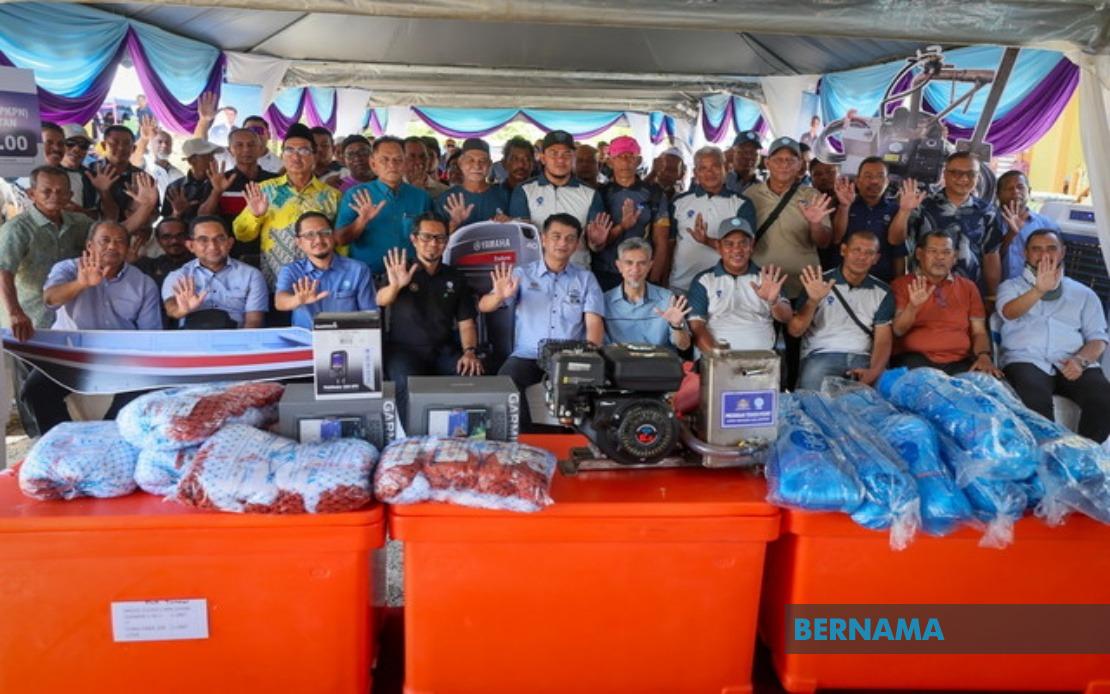
The Malaysian government is channelling RM10 million into the Special Fishermen Housing Project this year, a strategic initiative designed to elevate living standards and strengthen the financial resilience of fishing communities across the country. The funding represents a deliberate commitment to address housing deficiencies among Malaysia's fishing population, a sector often overlooked in broader development planning despite its cultural and economic significance to coastal regions. Speaking in Tumpat, Kelantan, Muhammad Faiz Fadzil, chairman of the Fisheries Development Authority of Malaysia (LKIM), outlined how the allocation addresses two interconnected housing challenges: the urgent need to rehabilitate deteriorating structures and the construction of new dwellings for eligible beneficiaries.
The funding breakdown reveals a pragmatic approach to housing intervention. More than RM6.8 million has been designated for repairing existing homes belonging to 344 fishermen nationwide, while just over RM3.1 million targets the construction of 36 new residential units. This allocation framework acknowledges that many fishing families occupy substandard accommodation requiring immediate remedial work, even as infrastructure gaps persist across coastal communities. The housing repair component has already achieved 80 percent completion, with full delivery anticipated by August or September 2024. Construction of new homes proceeds on a slower timeline, complicated by land tenure complications and property inheritance disputes that frequently plague rural development projects in Malaysia.
The per-unit allocation varies geographically to reflect construction cost disparities across regions. Peninsular Malaysia receives RM84,000 per new house, while Sabah and Sarawak benefit from RM95,000 allocations, acknowledging higher material and labour expenses in East Malaysia. Repair programmes provide individual fishermen with up to RM20,000 per property, enabling meaningful upgrades to sanitation, structural integrity, and living comfort. Kelantan, traditionally a fishing stronghold, receives RM388,000 dedicated to the programme this year, reflecting both its substantial fishing population and historical reliance on marine resources.
Beyond bricks and mortar, LKIM officials are promoting a structural economic transformation within Malaysia's fishing sector. Muhammad Faiz articulated a fundamental concern: traditional fishing faces mounting sustainability pressures as fish stocks diminish and operational costs escalate, particularly fuel expenses despite continuing government subsidies. This reality compels a deliberate pivot toward aquaculture as a complementary and eventually dominant income source for fishing communities. The government has established an ambitious target that 40 percent of Malaysia's total fish production should originate from aquaculture by 2030, a considerable shift from current dependency on wild-capture fisheries.
The aquaculture initiative targeting Kelantan exemplifies this strategic reorientation. LKIM has allocated RM400,000 to the Kelantan State Fishermen's Association for tank-based prawn farming operations, a controlled-environment approach reducing reliance on variable ocean conditions and volatile catch volumes. This aquaculture pathway offers fishermen income stability and predictability absent from conventional fishing, where weather, fuel costs, and stock availability create perpetual uncertainty. Officials view fisherman participation in aquaculture not merely as supplementary income but as fundamental economic restructuring necessary for long-term community resilience.
The housing project and aquaculture initiatives constitute interconnected strategies addressing distinct but overlapping challenges. Improved housing provides the foundational living standards necessary for fishermen to invest time and capital in economic diversification activities. When families inhabit structurally sound, sanitary homes, household resources previously consumed addressing housing deficiencies become available for business investment and skills development. Conversely, successful aquaculture ventures generate surplus income enabling families to improve their residential circumstances independently, creating virtuous cycles of development.
Malaysia's fishing communities occupy a complicated economic position within the broader national development narrative. While mechanisation and coastal industrialisation have transformed maritime sectors in neighbouring countries, Malaysian fishing communities retain labour-intensive characteristics and limited capital accumulation patterns. The LKIM initiatives address these structural constraints through direct housing investment and economic diversification support, acknowledging that market forces alone cannot facilitate necessary transitions within traditional fishing populations. Government intervention becomes essential infrastructure for enabling adaptation.
The emphasis on aquaculture reflects global fisheries trends increasingly apparent across Southeast Asia. Wild fish stocks face depletion from overfishing, climate change impacts, and competing commercial pressures, necessitating supply supplementation through farming. Countries ahead in aquaculture adoption—such as Vietnam and Thailand—have leveraged the sector for rural income generation and export growth. Malaysia's 2030 aquaculture target positions the nation to capture similar opportunities while supporting coastal livelihoods. Fishermen obtaining aquaculture expertise and capital become stakeholders in an expanding, relatively young sector offering growth potential absent from mature capture fisheries.
Implementation of both housing and aquaculture initiatives will encounter typical rural development obstacles. Land disputes complicating new house construction will require mediation mechanisms and creative tenure solutions. Aquaculture adoption demands technical knowledge diffusion, market linkage establishment, and environmental compliance frameworks. Kelantan, as a pilot region, will generate implementation lessons applicable nationally. The state's concentrated fishing population and geographic characteristics provide suitable testing grounds for identifying best practices and refining delivery mechanisms before broader rollout.
The RM10 million housing allocation, while substantial, addresses only a fraction of Malaysia's fishing community housing deficiency. Approximately 344 repair projects and 36 new constructions represent progress rather than comprehensive solutions. Sustainable improvement requires sustained annual commitments exceeding current levels and complemented by private sector participation and community contributions. The aquaculture reorientation presents longer-term wealth generation potential exceeding what housing subsidies alone can achieve, suggesting strategic prioritisation of skills and capital deployment toward income-generating activities.
For Malaysian coastal regions and Southeast Asian observers, these initiatives signal governmental recognition that traditional fishing communities require deliberate support navigating structural economic transitions. Housing improvement demonstrates commitment to basic living standards, while aquaculture promotion acknowledges inevitable shifts in how marine protein reaches consumers. Fishermen who successfully transition into farming become entrepreneurial stakeholders rather than subsidy-dependent populations, fundamentally altering economic dynamics and social trajectories. The RM10 million investment, when coupled with aquaculture initiatives, represents strategic positioning for evolving fisheries sectors likely to characterise Southeast Asian maritime economies through 2030 and beyond.

