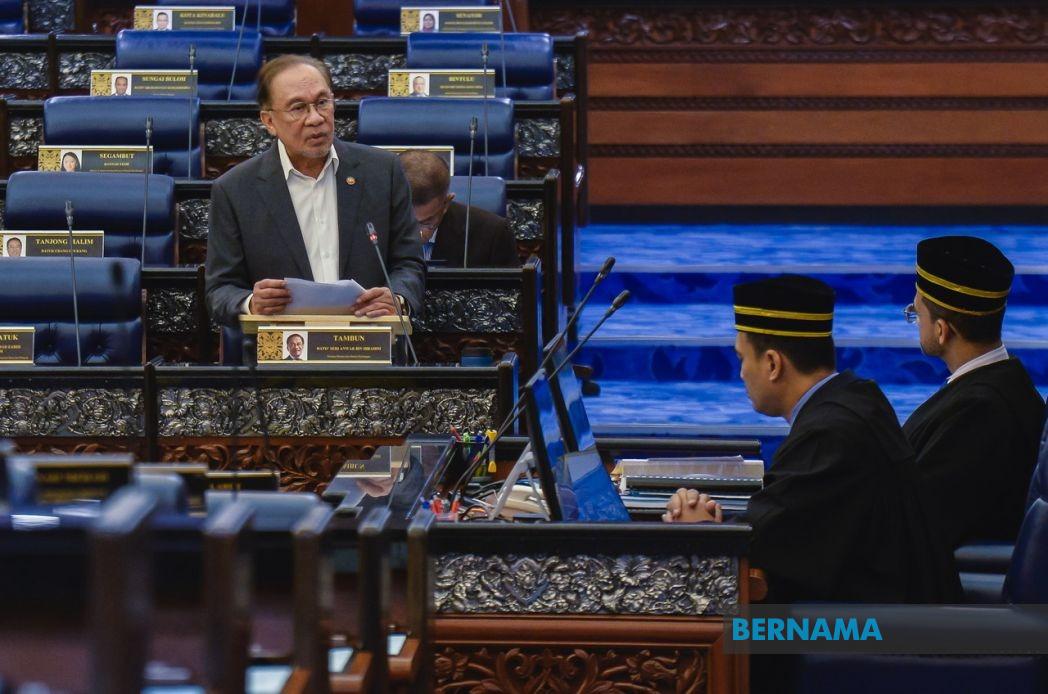
Prime Minister Datuk Seri Anwar Ibrahim moved swiftly to dispel suggestions that his administration has imposed restrictions on activities within Federal Land Development Authority settlements, reaffirming during parliamentary questioning that such programmes remain permissible provided they comply with electoral regulations. The clarification emerged during Minister's Question Time in the Dewan Rakyat, where the Prime Minister emphasised that the constraint applies specifically to the deployment of government resources for campaigning rather than to the holding of events themselves.
Anwar's statement came in response to questions from Datuk Seri Hamzah Zainudin of Perikatan Nasional, who represents the Larut constituency. The Prime Minister categorically denied authorising the cancellation of the FELDA Settlers' Day programme that had been scheduled for Kluang in Johor on June 20 and 21, suggesting that confusion may have arisen from misinterpretations of guidelines rather than deliberate government suppression of activities.
Understanding the distinction between programme prohibition and campaign resource restrictions is crucial for stakeholders in rural Malaysia. The government has made clear that state governments retain full autonomy to organise events within FELDA settlements and to carry out developmental initiatives such as distributing land titles. This clarification carries significant implications for opposition-led states that may have interpreted earlier communications as blanket restrictions on their activities in these traditionally sensitive rural constituencies.
The Prime Minister's emphasis on electoral law compliance reflects Malaysia's longstanding constitutional framework governing the conduct of elections. Federal law strictly prohibits the mobilisation of government machinery, personnel, and resources for partisan campaigning purposes. Breaches of these provisions can trigger investigations and legal action, creating genuine constraints on how both ruling and opposition administrations operate during election periods. However, the rules do not prevent state authorities from independently organising grassroots engagement or development programmes.
Anwar took the opportunity to redirect focus towards the MADANI Government's broader development agenda for FELDA communities. He articulated a narrative of historical neglect, arguing that many settlements suffered from inadequate investment and attention during previous administrations. This framing positions the current government's initiatives as remedial measures designed to correct longstanding disparities in rural infrastructure and service provision across FELDA areas that dot peninsular Malaysia.
The administration has initiated several concrete projects aimed at improving quality of life in FELDA settlements. The establishment of dialysis centres represents a healthcare-focused intervention addressing chronic disease management in dispersed rural communities where specialist facilities had previously been inaccessible. These health infrastructure projects address a genuine gap in medical services available to FELDA residents, many of whom face transportation challenges in accessing urban hospitals.
Beyond healthcare, the government has signalled intention to expand development facilities through federal agencies operating in rural areas. Such initiatives encompass infrastructure improvements, agricultural modernisation support, and connectivity enhancements that could transform economic prospects for settler families. Deputy Prime Minister Datuk Seri Dr Ahmad Zahid Hamidi has been positioned alongside the Prime Minister in championing these improvements, suggesting coordinated commitment at the highest levels of government.
The FELDA narrative holds particular resonance in Malaysian politics given the historical significance of settler communities in nation-building and their traditional role as a support base for ruling coalitions. Approximately 120,000 FELDA families occupy schemes across the country, representing a concentrated demographic whose voting patterns significantly influence electoral outcomes in multiple constituencies. Perceptions of government investment or neglect in these communities ripple across political calculations and electoral mathematics.
The clarification by Anwar also addresses potential concerns among state governments, particularly those not aligned with federal authority, that infrastructure development or community programmes in FELDA areas would face obstruction. By reaffirming that state-level initiatives remain permissible, the government appears to be separating the legitimate exercise of state powers from restrictions that specifically target the misuse of federal resources for electoral advantage. This distinction matters operationally for state administrators planning development projects in FELDA zones.
The broader context involves managing the relationship between federal oversight of electoral conduct and respect for state government prerogatives under Malaysia's federal system. The Prime Minister's statement suggests the administration recognises the political risks of appearing to weaponise federal authority to disadvantage state governments, even those from opposition coalitions. Such perceptions could undermine institutional legitimacy and fuel accusations of partisan governance that extends beyond the bounds of law.
For Malaysian development priorities, FELDA communities represent important constituencies requiring targeted attention. Many settlements, despite their historical role in agricultural development, have faced economic stagnation as palm oil commodity cycles fluctuate and younger generations migrate to urban centres seeking opportunities. Revitalisation efforts address both infrastructure deficiencies and economic sustainability challenges that have accumulated over decades.
The timing of Anwar's clarification reflects sensitivity about state-federal relations during an environment of heightened political contestation. By publicly affirming that legitimate state government activities face no obstruction, the Prime Minister appears to be creating space for constructive engagement with opposition-governed states while maintaining the government's position on electoral law compliance. This approach potentially reduces tensions that could otherwise complicate cooperative governance on shared development objectives.

