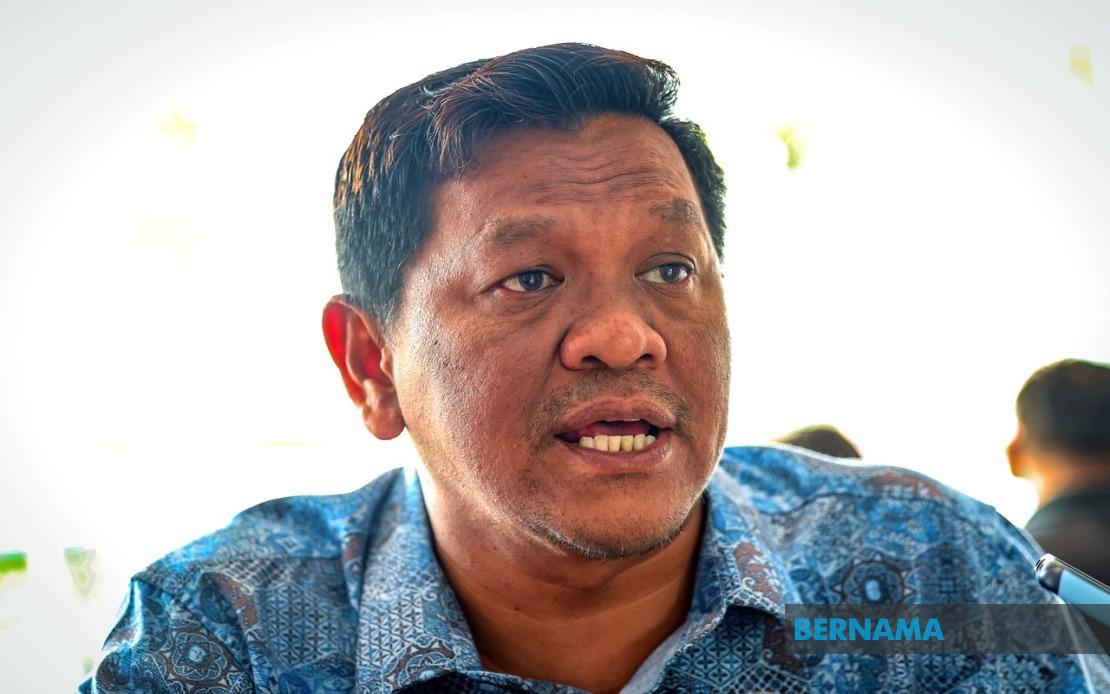
Two hundred motorcyclists in Renggam, Johor received RM5 fuel vouchers on June 25 as part of a government assistance programme designed to ease the financial pressures faced by daily wage earners and small-scale transport workers in the district. The distribution took place during the Jiwa@Komuniti MADANI Sembang Santai World Cup Edition event, bringing together multiple government agencies to engage directly with residents on policy matters and community concerns.
Abdullah Izhar Mohamed Yusof, political secretary to the Communications Minister, framed the initiative as reflecting broader government commitment to social welfare and national cohesion. Speaking at the event, he emphasised that such assistance reflects the administration's recognition of the economic challenges facing ordinary Malaysians, particularly those in smaller towns and rural areas where two-wheeled vehicles remain the primary mode of personal transport. The voucher scheme represents a targeted approach to addressing the cost-of-living pressures that have become increasingly acute across Southeast Asia in recent years.
The government's decision to implement this programme on a recurring basis signals an intention to move beyond one-off handouts toward sustainable engagement mechanisms. Abdullah Izhar indicated that regular grassroots interactions would become a standard feature of government outreach, positioning community dialogue as integral to policy development rather than merely ceremonial. This approach aligns with broader international trends toward participatory governance, where officials seek direct feedback from constituents rather than relying solely on formal legislative channels.
The Renggam event combined three complementary elements: material assistance through voucher distribution, information dissemination, and genuine dialogue. Officials from the National Security Council, Information Department (JaPen), and Department of Community Communications (J-KOM) participated in briefings covering current policy issues. The structure acknowledged that financial support alone insufficient; citizens also require accurate information about government initiatives to navigate available benefits effectively. This multi-layered approach recognised the information asymmetries that often prevent lower-income communities from accessing programmes nominally available to them.
For residents in Renggam, where economic opportunities remain limited compared to urban centres like Kuala Lumpur, such assistance carries tangible weight. M. Raja, a 56-year-old father of five from Taman Sri Jaya, articulated the sentiment of many beneficiaries when expressing hope that initiatives might expand to monthly distributions. His cautious optimism reflected realistic expectations about government capacity while acknowledging genuine appreciation for support that genuinely reduces household burden. For families where motorcycling represents the sole personal transport option, fluctuating fuel prices directly impact disposable income available for food, education, and healthcare.
The inclusion of voices from kampung communities proved particularly significant. Hee Eeck Kwe, a 66-year-old resident of Kampung Baru, emphasised that rural populations often feel excluded from government programmes concentrated in urban areas. His comment underscores persistent spatial inequalities within Malaysia, where rural infrastructure, services, and economic opportunities lag substantially behind metropolitan regions. Government initiatives explicitly targeting small towns and villages signal recognition of these disparities and commitment to inclusive development.
From an economic perspective, fuel voucher schemes operate as direct cash transfers with minimal administrative overhead. Unlike more complex welfare programmes requiring extensive eligibility verification, voucher distribution can reach recipients rapidly. However, the RM5 denomination represents a modest sum—roughly equivalent to two litres of petrol—suggesting the programme functions more as symbolic recognition of hardship than comprehensive economic intervention. Motorcyclists consuming fuel regularly would require ongoing assistance to meaningfully offset rising transport costs.
The broader context matters considerably for Malaysian readers. Fuel prices fluctuate globally based on crude oil markets, and petrol costs in Malaysia have long remained contentious political issues. While the government maintains subsidies keeping domestic prices below regional averages, commuters still experience real pressure when international prices spike. Targeting motorcyclists specifically acknowledges that while four-wheel vehicle owners possess greater economic flexibility, two-wheeler users often lack alternatives and bear disproportionate burden from energy cost increases.
The involvement of multiple government departments—particularly J-KOM—indicates strategic integration of information policy with material assistance. By combining voucher distribution with policy briefings, authorities attempt to improve public understanding of government direction while building goodwill through tangible support. This bundled approach recognises that legitimacy requires both effectiveness and communication; citizens must both benefit materially and understand why decisions affecting them have been made.
Looking forward, Abdullah Izhar's commitment to nationwide expansion of such programmes raises questions about scalability and sustainability. Malaysia comprises diverse communities with varying needs, from urban industrial workers to agricultural labourers to informal service sector participants. Determining appropriate assistance levels and programme design requires careful calibration to ensure relevance across different contexts while maintaining fiscal responsibility. Renggam's experience may serve as pilot for more extensive national rollout, testing administrative mechanisms and gauging community reception.
For Southeast Asian policymakers observing Malaysian approaches, the Renggam initiative illustrates one model for addressing lower-income support through community engagement. Many regional governments face similar pressures from cost-of-living challenges affecting transport workers, informal economy participants, and rural populations. The Malaysian approach combining direct material assistance with information access and dialogue platforms offers lessons in inclusive governance, particularly regarding how nations can sustain social cohesion amid economic pressures without unsustainable fiscal commitments.
The success of programmes like this ultimately depends on consistency and expansion. One-time voucher distributions generate positive sentiment but produce limited lasting economic impact. Beneficiaries like Raja and Kwe expressed hope that initiatives would be sustained and deepened—monthly rather than one-off assistance, broader participant pools, and enhanced benefit levels. Whether the government can maintain momentum, secure budget allocations, and develop this into permanent structured support remains to be seen. Nevertheless, the Renggam programme demonstrates recognition that even symbolic gestures toward struggling Malaysians matter when coupled with genuine community engagement.

