The Malaysian government has committed more than RM10 billion to stabilise Lembaga Tabung Haji (TH), the state-backed pilgrimage savings institution, through a comprehensive bailout aimed at eliminating a crippling deficit rather than acquiring institutional assets, according to briefings delivered to the Dewan Rakyat. The intervention represents one of the largest financial rescues of a government-linked entity in recent years, undertaken to restore operational viability following years of financial deterioration stemming from internal mismanagement and embezzlement.
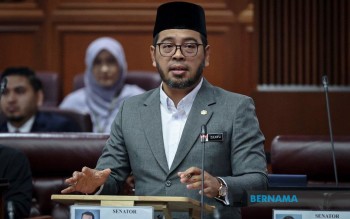
Dr Zulkifli Hasan, Minister in the Prime Minister's Department (Religious Affairs), presented the rescue framework to parliament during a special sitting, providing detailed context on the severity of TH's financial predicament. The bailout was structured explicitly to rehabilitate the institution's balance sheet and ensure long-term sustainability, not to assume control of valuable real estate and commercial holdings that form the cornerstone of TH's asset base. This clarification addressed persistent public misconceptions about the government's underlying motivations in engineering the rescue.
The financial collapse at TH had reached critical proportions by the fourth quarter of 2018, when the gap between liabilities and assets had surged beyond RM10 billion—a figure that shocked officials and prompted immediate intervention. With only three months remaining before the end of that financial year, the institution faced imminent technical insolvency without immediate capital infusion. The scale of deterioration underscored years of inadequate oversight and internal controls that had permitted widespread financial irregularities to accumulate undetected.
Dr Zulkifli explicitly rejected false claims circulating in public discourse that the government had orchestrated asset disposals to non-Muslim entities or Chinese-owned companies as part of the restructuring process. Such allegations, he stressed, represented malicious misinformation designed to inflame religious and ethnic tensions within the community. The minister emphasised that institutional assets remain under the custodianship of Urusharta Jamaah, a subsidiary wholly owned by the Minister of Finance Incorporated, ensuring continued bumiputera and Islamic governance of TH's substantial property portfolio.
The Royal Commission of Inquiry established to investigate TH's collapse had documented systematic failures in governance, financial oversight, and risk management that created an environment conducive to misappropriation. The RCI findings provided critical documentation of how administrative weaknesses and insufficient audit mechanisms allowed embezzlement schemes to expand unchecked across multiple departments and investment vehicles. These vulnerabilities reflected broader governance challenges that extended beyond individual misconduct to encompass structural deficiencies in institutional architecture.
The Pakatan Harapan administration had inherited this financial crisis shortly after assuming office, confronting an urgent situation where continued inaction would have triggered complete institutional failure with devastating consequences for millions of Malaysian pilgrims whose retirement and hajj savings were entrusted to TH. The government's bailout decision represented a pragmatic response to an acute crisis rather than a discretionary policy preference, driven by the imperative to protect depositors' interests and preserve a nationally significant Islamic financial institution.
The restructuring strategy deployed RM10 billion as capital injection to eliminate accumulated deficits and restore positive equity on TH's consolidated financial statements. This rehabilitation approach differed fundamentally from asset liquidation strategies that would have been triggered under normal insolvency proceedings, preserving TH's operational capacity to continue servicing its core pilgrimage and savings functions. The injection simultaneously provided a foundation for implementing comprehensive governance reforms designed to prevent recurrence of the vulnerabilities that had precipitated the crisis.
For Malaysian policymakers and the broader Southeast Asian financial sector, TH's collapse and subsequent rescue offered cautionary lessons regarding the supervision of state-linked financial institutions with large depositor bases. The case demonstrated how inadequate internal controls, insufficient regulatory oversight, and weak accountability mechanisms could transform a nationally trusted institution into a source of systemic financial risk. The bailout responded to immediate emergency conditions, but longer-term institutional recovery required parallel initiatives to strengthen governance frameworks and audit capabilities.
The government's commitment to maintain TH as a functioning pilgrimage-focused savings vehicle reflected recognition of the institution's importance to Malaysia's Muslim majority population, for whom hajj preparation represents both a religious obligation and a significant financial commitment spanning decades. TH's collapse would have disrupted established patterns of Islamic financial participation and eroded public confidence in state-managed savings mechanisms at a critical moment when trust in institutional integrity was already fragile.
Looking forward, the bailout's success would depend significantly on the effectiveness of governance reforms implemented during the restructuring process. Enhanced regulatory oversight, strengthened internal audit capacity, improved transparency in investment decisions, and clearer accountability mechanisms would be essential to converting the financial rescue into a durable institutional recovery. The government's explicit framing of the intervention as temporary crisis management rather than permanent subsidy underscored the expectation that TH would achieve self-sufficiency within a defined timeframe.
The RM10 billion commitment ultimately reflects the government's assessment that institutional rescue serves the broader public interest more effectively than allowing a major Islamic savings vehicle to collapse entirely. This decision prioritises the protection of millions of ordinary Malaysians whose financial security depends on TH's viability, even as it acknowledged the substantial fiscal costs associated with addressing years of accumulated mismanagement and theft.

