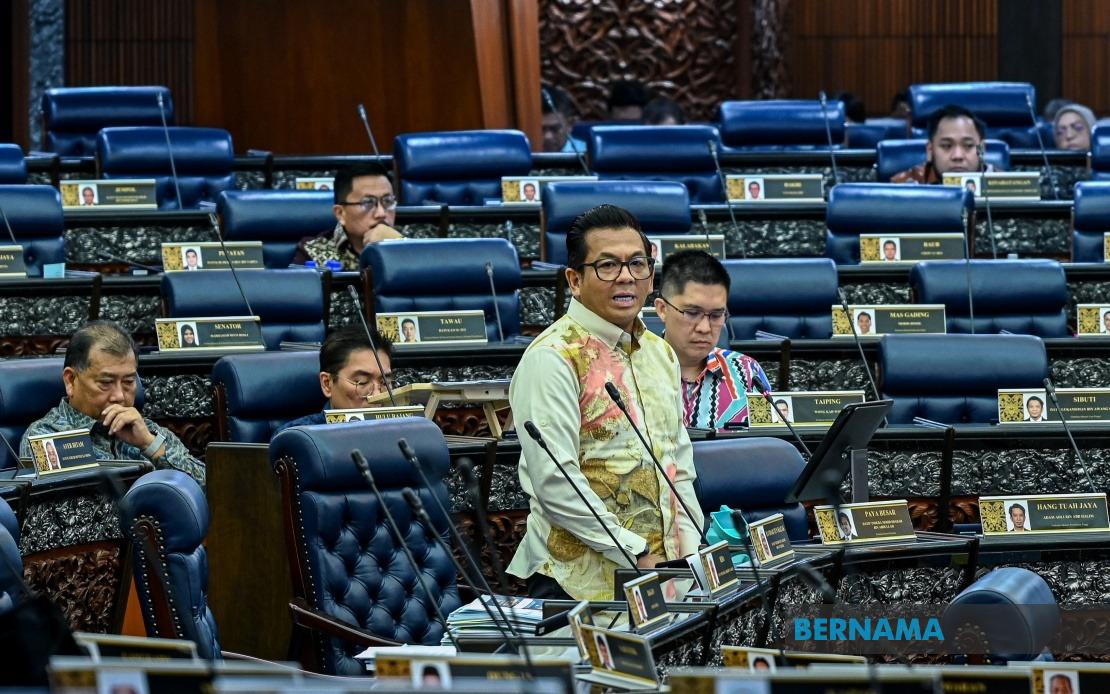
The Malaysian government is taking a data-driven approach to address the persistent gap between urban and rural living costs, relying on the Basic Living Expenditure framework—known locally as PAKW—to guide its policy interventions. Deputy Economy Minister Datuk Mohd Shahar Abdullah outlined this strategy during parliamentary question-and-answer proceedings, emphasizing that understanding regional spending disparities is crucial to formulating responses that actually work for different communities across the country.
The PAKW, developed by the Department of Statistics Malaysia, represents a significant methodological shift in how policymakers approach cost-of-living challenges. Rather than applying a one-size-fits-all approach, the framework recognizes that households in different regions face fundamentally different economic realities shaped by local affordability levels, geographical constraints, and variations in what residents need versus what they want to purchase. This granular understanding of spending patterns enables the government to design interventions that are more likely to be effective and equitable.
To make this data accessible to ordinary Malaysians, the government has created an online calculator available at myPAKW.dosm.gov.my, allowing citizens to input their own circumstances and understand how their spending patterns compare to regional and national benchmarks. This democratization of economic data represents an effort to shift from top-down policymaking to a model where Malaysians themselves can monitor their financial situations and make informed decisions about household budgeting. The tool also provides government officials with real-time feedback about how living costs are evolving across different demographic groups and regions.
The disparities revealed by PAKW data are striking. Kuala Lumpur, as Malaysia's economic centre and capital, records a basic living expenditure value of RM5,639 monthly, substantially higher than other regions. Kelantan, reflecting the lower cost structure of a rural state in the northeast, shows a PAKW value of RM4,254—roughly 75 percent of the Kuala Lumpur figure. Sabah, despite being a major state with significant economic activity, registers RM4,511, highlighting how geography and infrastructure development profoundly affect household costs. These variations underscore why uniform policies could leave some communities better served than others.
Wan Hassan Mohd Ramli, the member for Dungun representing Perikatan Nasional, had specifically inquired about a 2023–2025 economist field study aimed at developing solutions for inflation and rising prices, with particular attention to urban-rural cost disparities. His question reflected growing parliamentary awareness that inflation affects different Malaysian communities unequally, with rural residents often facing particular challenges in accessing affordable goods and services despite sometimes lower absolute prices. The government's reliance on PAKW data represents an attempt to ground policy responses in empirical evidence rather than generalizations.
Beyond measurement, the government's strategy involves active interventions to expand economic opportunities for lower-income Malaysians. Training programmes form a central pillar of this approach, designed simultaneously to increase the income floor—raising wages for the lowest earners—and the income ceiling, enabling higher earners to improve further. This dual focus aims to reduce inequality while creating genuine upward mobility. These initiatives are embedded within Malaysia's Five-Year Plans, demonstrating that cost-of-living interventions are treated as long-term structural challenges rather than short-term political responses.
The government's commitment to regular recalibration of poverty thresholds provides further evidence of this systematic approach. The Poverty Line Income, which defines the threshold below which households are considered poor, has risen dramatically from RM980 in 2016 to RM2,705 in 2024—an increase of approximately 176 percent over eight years. While inflation accounts for some of this increase, the revision also reflects the government's acknowledgment that definitions of poverty must evolve as living standards and expectations change. Updating these benchmarks twice per Five-Year Plan cycle ensures that safety nets remain relevant and targeted toward those genuinely in need.
For Malaysian policymakers and regional observers, the PAKW approach offers insights into how governments can move beyond anecdotal assessments of living costs toward evidence-based policy. The framework's regional granularity is particularly valuable in a country as geographically and economically diverse as Malaysia, where a single national average can obscure the real challenges facing specific communities. States experiencing rapid urbanization face different pressures than agricultural regions, and coastal areas have distinct cost structures compared to landlocked states.
The implications extend beyond Malaysia's borders. Southeast Asian neighbours grappling with similar urban-rural divides might examine whether comparable frameworks could improve their own policy responses. The availability of public-facing tools like the PAKW calculator also sets a standard for government transparency and civic engagement in economic data, allowing citizens to hold policymakers accountable based on measurable outcomes rather than rhetoric.
However, questions remain about implementation effectiveness. While PAKW data provides detailed diagnosis of cost-of-living problems, converting these insights into tangible improvements in household purchasing power requires sustained investment, strategic coordination across multiple agencies, and political will that transcends electoral cycles. Training programmes must lead to genuine wage improvements, not merely certificates. Infrastructure investments must meaningfully reduce the cost disadvantage that rural and remote communities face. The framework's analytical sophistication will ultimately be judged by whether Malaysian families, particularly in lower-income brackets, experience genuine improvement in their standard of living.

