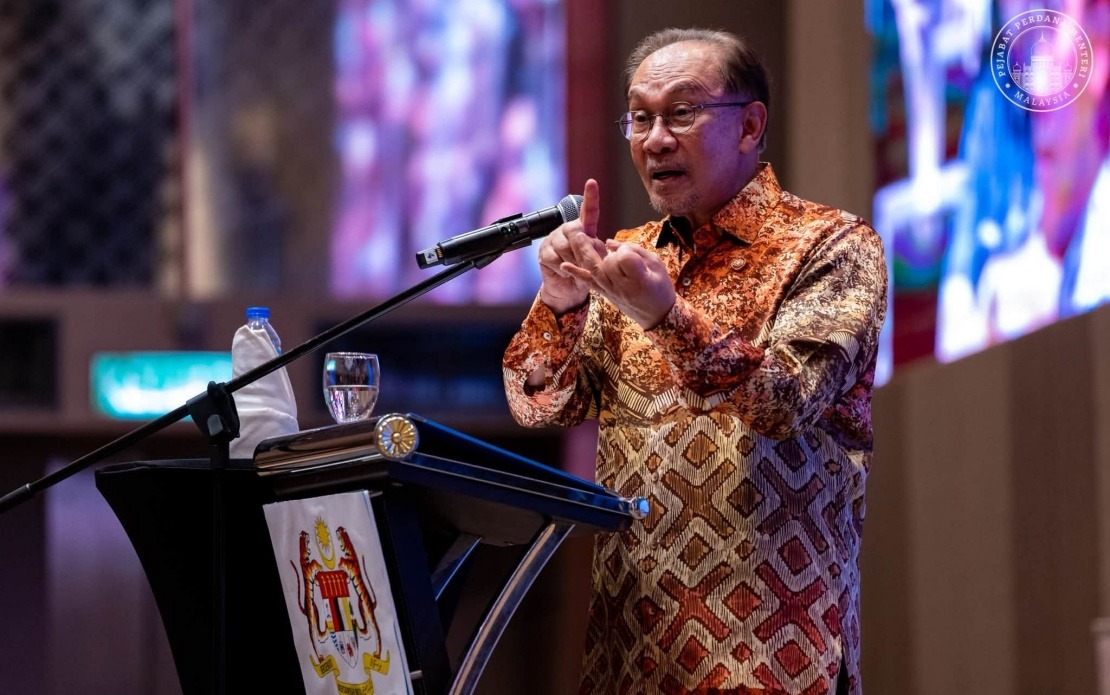
Prime Minister Datuk Seri Anwar Ibrahim has reaffirmed the government's resolve to leverage its resources and institutional capacity to assist young Malaysians grappling with the multifaceted challenges of contemporary society. Speaking following engagement with youth representatives at the "Temu Anwar" session and the opening of the 2026 International Youth Assembly (HAMKA) in Klang, Selangor, the Prime Minister emphasized that addressing youth concerns remains a priority for the administration.
The commitment reflects growing recognition within government circles that Malaysia's younger generation faces unprecedented pressures spanning employment, education, mental health, and social cohesion. At a time when economic uncertainty and rapid technological change shape prospects for millions of Malaysians under 30, direct dialogue between political leadership and youth constituencies has become essential for understanding ground-level anxieties and formulating responsive policy interventions.
In his remarks, Anwar drew attention to the distinctive environment in which today's youth operate—one characterized by ideological contestation and divergent viewpoints. Rather than viewing this plurality as inherently destabilizing, the Prime Minister framed intellectual diversity as potentially constructive, provided such exchanges remain anchored in reasoned discourse rather than emotional reactivity or factional allegiance. This positioning reflects broader concerns about polarization and the erosion of civil dialogue in Malaysian public life, particularly among younger demographics increasingly influenced by social media ecosystems.
The Prime Minister's emphasis on knowledge-based deliberation carries particular resonance given Malaysia's ongoing debates about religious interpretation, national identity, and social values. By stressing that differences of opinion must be "guided by knowledge, arguments, and manners, rather than sentiments, hatred, or group interests," Anwar signaled the government's preference for evidence-based policymaking and inclusive dialogue mechanisms that encompass youth perspectives across the political and ideological spectrum.
The naming of the assembly as HAMKA proved symbolically significant in Anwar's commentary. The abbreviation references Abdul Malik Karim Amrullah, the early 20th-century Indonesian Islamic intellectual whose scholarly contributions and written works profoundly influenced Southeast Asian thought on modernism, education, and social reform. By invoking this historical figure, the Prime Minister positioned contemporary Malaysian youth within a longer intellectual tradition emphasizing the synthesis of Islamic learning with progressive social engagement—a theme relevant to Malaysia's ongoing efforts to balance religious values with developmental aspirations.
Amrullah's legacy as both a prolific writer and eloquent speaker underscores values that resonate with government messaging around youth empowerment. His insistence on the importance of knowledge and the courage to articulate informed opinions provides a template for the kind of engaged citizenship the administration appears to encourage among younger Malaysians. This intellectual genealogy suggests the government views youth not as passive recipients of policy but as active participants in shaping national discourse and institutional evolution.
The "Temu Anwar" sessions represent an effort to create structured channels for youth engagement with the Prime Minister, moving beyond conventional town halls to enable more substantive exchange on priorities and grievances. Such initiatives, when sustained and responsive to feedback, can help narrow the perception gap between government and younger voters—a demographic increasingly critical of political establishments across the region due to sluggish wage growth, housing affordability crises, and concerns about climate and environmental stewardship.
For Malaysian youth specifically, the government's acknowledgment of complexity in their lived experience carries practical implications. Beyond rhetorical commitments, young people will scrutinize whether enhanced resource allocation materializes in areas such as mental health support, entrepreneurship funding, skills development aligned with labor market demands, and affordable housing programs. The willingness to listen, as Anwar emphasized, must translate into concrete policy adjustments and institutional responsiveness.
The timing of these remarks matters within Malaysia's broader political context. Youth constitute a substantial and increasingly volatile electoral bloc, with higher voter registration rates following electoral reforms and growing digital literacy enabling more sophisticated political engagement. Governments that successfully articulate compelling visions for youth welfare and opportunity tend to enjoy stronger generational support, while those perceived as dismissive of younger voices risk accelerating disengagement from formal democratic processes.
Anwar's framing also acknowledges that supporting youth extends beyond conventional economic metrics. Mental health challenges, social fragmentation, identity questions, and concerns about the future environment occupy significant space in youth consciousness, particularly among university-educated and urban cohorts. Addressing these dimensions requires whole-of-government approaches integrating education, health, social services, and economic policy rather than siloed institutional efforts.
The challenge facing the administration involves translating commitments into sustained action across government agencies that frequently operate with limited coordination. Youth-focused initiatives often languish due to budgetary constraints, bureaucratic inertia, or misalignment between ministerial priorities. Ensuring that government capacity actually expands to meet youth needs requires not only political will but also structural reforms enhancing inter-agency collaboration and dedicated funding streams insulated from competing demands.
Looking forward, the success of efforts to support Malaysian youth will be measured not by leaders' reassuring words but by observable improvements in employment prospects, educational access, affordable housing availability, and inclusive democratic participation. The government's acknowledgment that young people navigate an increasingly complex world represents a necessary starting point, but only sustained commitment backed by resource allocation and institutional innovation will determine whether such pledges materialize into meaningful improvements in lived experience for Malaysia's younger generation.

