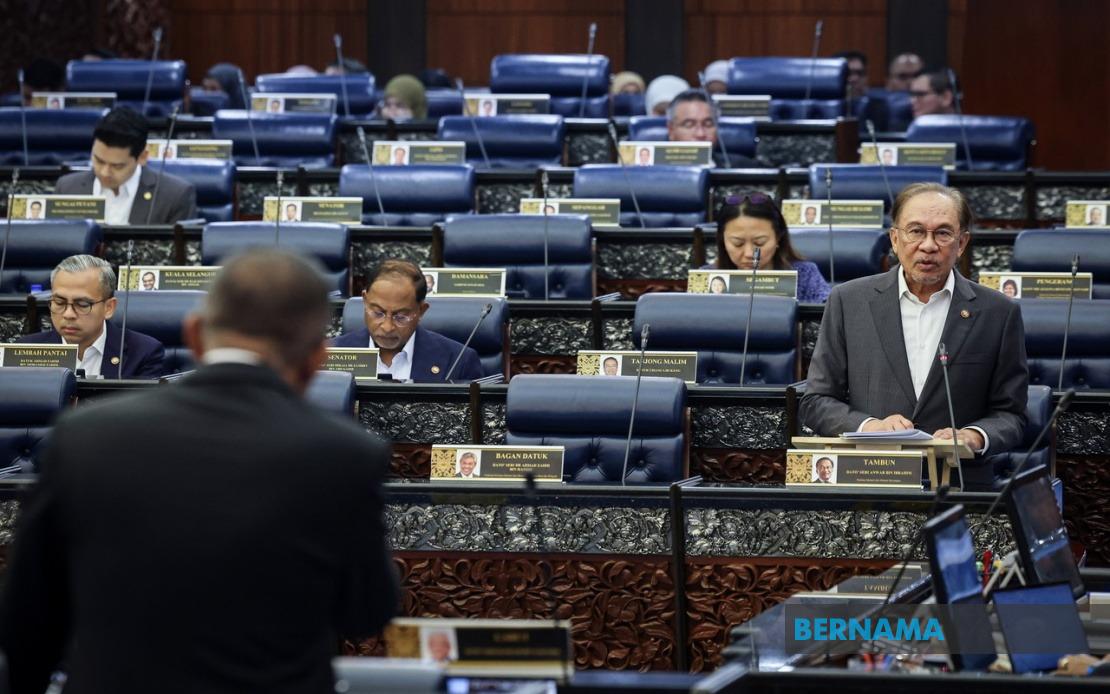
Prime Minister Datuk Seri Anwar Ibrahim has announced that Syarikat Jaminan Pembiayaan Perniagaan (SJPP), the government-owned financing guarantee company, has greenlit RM4.9 billion in credit approvals benefiting more than 6,000 micro, small and medium enterprises during the first six months of 2026. The announcement, made during parliamentary question time in the Dewan Rakyat, underscores the MADANI administration's commitment to addressing access-to-credit challenges that persistently constrain Malaysia's MSME sector.
SJPP operates as a wholly owned subsidiary under the purview of the Minister of Finance (Incorporated), positioning it as a strategic instrument for translating government lending policy into tangible market support. Anwar, who simultaneously holds the Finance Ministry portfolio, framed the RM4.9 billion approval figure as evidence of the government's intent to strengthen MSMEs' operational resilience. The financing is directed toward reducing working capital constraints and moderating the cost burdens that disproportionately affect smaller enterprises navigating Malaysia's increasingly competitive regional business environment.
The question posed by Lee Chuan How, the PH MP for Ipoh Timor, directly confronted the government's awareness of sectoral pressures. Small business operators across Malaysia have faced mounting challenges stemming from elevated global commodity price volatility, currency fluctuations affecting input costs, and competitive pressures from regional trade dynamics. The parliamentary exchange acknowledged that these external headwinds demand more than rhetorical commitment, requiring concrete financial mechanisms that translate policy aspirations into accessible credit.
Contextualising the RM4.9 billion figure within a broader financing architecture, Anwar disclosed that the government has mobilised total lending and guarantee facilities exceeding RM15 billion to underpin MSME working capital requirements. This sizeable commitment reflects recognition that Malaysia's MSME ecosystem—which encompasses approximately 80 percent of all registered businesses—requires sustained institutional support to maintain competitiveness and employment generation capacity. The scale of deployment indicates a systemic effort rather than marginal interventionism.
Significantly, the government has reserved RM5 billion of the total RM15 billion facility specifically for Bumiputera-owned enterprises. This allocation reflects deliberate policy prioritisation toward supporting indigenous Malaysian entrepreneurs and maintaining economic participation targets embedded in the constitutional framework. The ring-fencing of these resources acknowledges that Bumiputera business operators often encounter distinct financing barriers relative to other demographic groups, requiring targeted intervention to level competitive terrain.
The SJPP approval rate represented in the RM4.9 billion figure constitutes meaningful progress in converting application pipelines into usable credit. Malaysian MSMEs historically encounter approval timelines and qualification criteria that disadvantage smaller operators lacking substantial collateral or established banking histories. By approving funding for more than 6,000 enterprises within a six-month window, SJPP demonstrates capacity to process applications at volume while maintaining credit assessment standards. This throughput matters significantly for time-sensitive business decisions around inventory procurement, equipment acquisition, and capacity expansion.
The financing approvals arrive amid a regional economic climate characterised by measured growth tempered by structural uncertainties. Southeast Asian MSMEs increasingly navigate competing priorities: managing inflation-driven cost pressures, adapting to digital transformation imperatives, and maintaining workforce stability amid labour market tightness. Malaysian small businesses occupying supply chains integrated across the region face additional complexity from trade policy shifts and evolving regional competitive dynamics. Credit access therefore functions not merely as working capital provision but as operational adaptation capacity.
For Malaysian readers and business stakeholders, these approvals carry immediate practical implications. Entrepreneurs seeking to expand inventory, upgrade facilities, or weather seasonal cash flow volatility can access government-backed financing at terms presumably more accommodating than conventional commercial bank products. The SJPP mechanism inherently involves risk-sharing arrangements where the government absorbs a portion of default risk, theoretically enabling broader credit accessibility than profit-maximising private lenders would independently extend. This subsidy component effectively transfers public resources toward private sector activity expansion.
The parliamentary disclosure also signals continued government priority toward MSME support despite competing fiscal demands. Budget allocation toward SJPP operations and guarantee provisions represents explicit policy choice—resources deployed toward small business support could theoretically fund alternative policy objectives. The RM15 billion total commitment, of which RM4.9 billion moved into approvals during six months, indicates sustained institutional resource allocation rather than episodic intervention.
Looking forward, SJPP's performance in deploying these funds—measured through actual disbursement rates, business survival metrics, and employment impact—will determine whether the initiative delivers substantive economic outcomes beyond headline approval figures. The distinction between approvals granted and funds actually drawn down, and between businesses assisted and employment sustained, ultimately measures policy effectiveness. Stakeholders should monitor deployment rates and outcomes data as indicators of whether the financing facility generates multiplicative economic stimulus or represents primarily accounting adjustments within the broader MSME support ecosystem.
The announcement also reflects evolving government narrative around MSME policy. Rather than emphasising regulatory reform or structural economic rebalancing, the MADANI administration emphasises direct financial provisioning through existing institutional frameworks. This approach prioritises immediate credit availability over potentially longer-term institutional capacity-building or regulatory streamlining that might enhance MSME competitiveness more fundamentally. Whether direct financing constitutes optimal resource deployment or reflects path dependency remains subject to ongoing economic policy debate.

