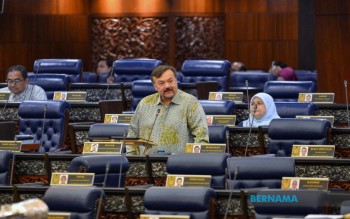
Malaysia's Finance Minister II, Datuk Seri Amir Hamzah Azizan, announced that the government has released over RM500 million in micro-financing to more than 30,000 entrepreneurs during a concentrated seven-week period from May 15 to June 26, 2026, as part of broader efforts to cushion small business operators against mounting operational costs and economic headwinds.
The financing injection represents a significant mobilisation of capital from a larger RM5 billion Micro Financing Facility Programme designed specifically to buttress micro enterprises struggling to maintain viability in an environment of escalating expenses. Speaking during Minister's Question Time in parliament on July 2, Amir Hamzah underscored the government's commitment to sustaining the entrepreneurial ecosystem, which forms the backbone of Malaysia's economic resilience and employment generation.
Distribution of these funds occurred through a coordinated network of established lending institutions, including Amanah Ikhtiar Malaysia (AIM), Agrobank, Bank Simpanan Nasional (BSN), Bank Rakyat, MARA, and TEKUN Nasional. This multi-channel approach ensures geographical reach and sector-specific expertise, allowing the government to address financing gaps across diverse micro-business categories and regions. The involvement of both conventional and Islamic banking institutions reflects Malaysia's dual financial architecture and broadens accessibility for entrepreneurs across different demographic groups.
Parallel to direct financing, the government has activated the RM5 billion MADANI Government Assistance Guarantee Scheme, administered through Syarikat Jaminan Pembiayaan Perniagaan Bhd (SJPP). This risk-mitigation mechanism removes lending obstacles by guaranteeing bank financing for enterprises that might otherwise struggle to meet stringent collateral requirements. Between May 15 and June 20, 2026, SJPP approved RM219 million in financing guarantees benefiting more than 300 micro, small and medium enterprises, with particular concentration in agriculture, construction, logistics and tourism sectors—industries particularly vulnerable to global economic fluctuations and supply-chain disruptions.
The targeted sectoral focus reflects sophisticated policy design recognising that certain industries require tailored support strategies. Agriculture and tourism, which depend heavily on external demand and commodity prices, face specific vulnerabilities in volatile international markets. Construction and logistics sectors, meanwhile, grapple with volatile input costs and complex supply-chain dependencies. By directing guarantee support toward these sectors, policymakers signal understanding of differential economic challenges facing Malaysia's entrepreneurial landscape.
Beyond guarantee schemes, SJPP has simultaneously engaged commercial banking partners to facilitate loan restructuring and rescheduling for existing borrowers in distress. This complementary initiative prevents cascading defaults among MSMEs already burdened by outstanding obligations, allowing businesses to recalibrate repayment schedules aligned with current cash-flow realities. Targeted repayment assistance programmes provide additional breathing room, acknowledging that temporary relief measures can prevent permanent business closures and preserve employment during cyclical economic downturns.
A third pillar of government intervention involves the RM5 billion SME Stabilisation Relief Facility (SME SRF) launched by Bank Negara Malaysia in mid-May 2026. Within weeks of activation, this programme channelled nearly RM1 billion to over 1,500 small and medium enterprises, demonstrating rapid capital deployment capability and institutional coordination between the central bank and government financing arms. The scale and speed of this initiative suggest both administrative preparedness and acute awareness of the urgency facing the business community.
Amir Hamzah's parliamentary statement, responding to a question from Datuk Andi Muhammad Suryady Bandy regarding government resilience measures for small traders and hawkers amid global challenges, emphasises that leadership recognises the political salience of grassroots economic security. Hawkers and street traders represent not merely economic units but cultural institutions and employment sources, particularly for lower-income Malaysians and newer migrants seeking economic participation. Government intervention at this level carries both economic and social significance.
Critically, the Finance Minister indicated that approximately RM4 billion remains available from the original RM5 billion Micro Financing Facility Programme allocation, suggesting the government views this initiative as an ongoing commitment rather than a temporary emergency measure. This buffer signals confidence in the ability to respond to subsequent applications and emerging financing gaps as businesses navigate recovery. The availability of substantial undeployed capital also provides flexibility for accelerating support if economic conditions deteriorate further.
For Malaysian business operators, particularly those in micro and small enterprise categories, these announcements represent material policy support mitigating inflation's bite on operational margins. However, the effectiveness of these programmes ultimately depends on rapid processing, minimal bureaucratic friction, and alignment between advertised terms and actual lending conditions. Past experience with SME financing initiatives has occasionally revealed gaps between announced allocations and actual uptake rates, stemming from documentation requirements, collateral expectations, or sector-specific eligibility criteria that exclude qualifying businesses.
Regional observers noting Malaysia's counter-cyclical fiscal response may draw comparisons with neighbouring economies' approaches to MSME stabilisation. Singapore, Thailand, and Indonesia have implemented similar guarantee schemes and facility programmes, though with varying success rates. Malaysia's ability to execute these programmes effectively while maintaining fiscal prudence will shape regional assessments of post-pandemic economic management capacity.
The concentration of approvals within a compressed timeframe—May 15 to June 26—suggests either exceptional administrative coordination or acceleration of processes that typically extend across longer periods. Understanding whether this reflects temporary expedited procedures or institutional capacity improvements would clarify whether future programme iterations might operate at comparable speeds, ultimately determining whether government support reaches businesses during critical cash-flow moments or arrives after damage has crystallised.
For entrepreneurs awaiting financing decisions, the existence of RM4 billion in remaining capacity provides genuine opportunity, though success hinges on application quality, institutional familiarity with lending criteria, and sector eligibility. The coming months will reveal whether this substantial financial commitment translates into meaningful business continuity across Malaysia's diverse micro-enterprise landscape.

