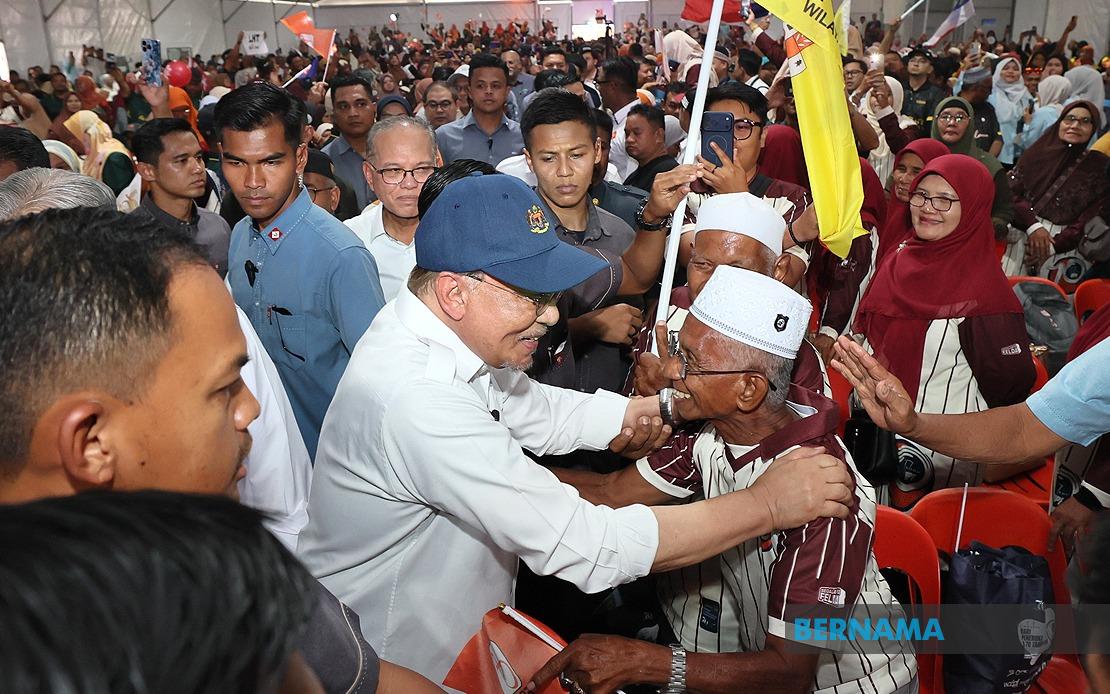
Prime Minister Datuk Seri Anwar Ibrahim has unveiled a substantial assistance programme for the Federal Land Development Authority community, signalling the administration's determination to sustain improvements in settler livelihoods as the organisation celebrates its 70th anniversary. The comprehensive package, announced during festivities at Tun Abdul Razak Stadium in Jengka, Pahang, comprises targeted investments across three critical development areas and represents a renewed commitment to one of Malaysia's historically significant rural constituencies.
The government has allocated RM15.85 million to expand digital literacy capabilities across 317 eligible FELDA settlements, acknowledging the growing necessity for technological competency in contemporary society. This initiative addresses a recognised gap in digital skills among settler populations, particularly among older residents who may lack familiarity with modern technology platforms. Enhanced digital proficiency could facilitate better access to government services, financial opportunities, and information resources, potentially transforming how settlers engage with broader economic systems and access market opportunities for their agricultural produce.
School infrastructure improvements have received RM10 million in dedicated funding to repair 370 primary and secondary educational facilities located within FELDA areas. This investment targets the physical learning environment where thousands of settler families' children receive education, addressing maintenance deficiencies that may have accumulated over years of operation. Educational quality remains foundational to long-term community development, as improved facilities directly influence student outcomes and community confidence in local institutions, particularly crucial in rural areas where educational alternatives may be limited.
Healthcare support has been strengthened through an additional RM3 million allocation designated for the FELDA MAYA Squad healthcare teams. These mobile medical units provide essential preventive and primary care services to remote settler communities, addressing accessibility challenges inherent in dispersed rural settlements. The reinforcement of this programme demonstrates recognition that healthcare delivery requires continuous investment and adaptation to serve populations often geographically isolated from major medical facilities.
Millah Yoot, a 73-year-old settler from FELDA Chemplak in Segamat, Johor, and recipient of the 2025 Outstanding Woman Settler Award, characterised the initiatives as evidence of sustained governmental protection for settler interests. Her perspective carries particular weight as an established community figure who has witnessed FELDA's evolution across multiple decades. She emphasised that younger settlers bear responsibility for maximising available resources and advancing the developmental trajectory initiated by earlier generations, framing government support as an opportunity rather than merely a provision.
Haron Sulaiman, a 66-year-old settler from FELDA Jerangau Barat in Ajil, Terengganu, viewed the digital literacy programme as especially valuable for encouraging younger residents to embrace advancement opportunities. His remarks underscored the perception that contemporary economic and social challenges require continuous adaptation and learning, with government facilitation potentially determining whether settler families remain competitive and prosperous within their communities. The digital initiative thus carries implications beyond mere technological adoption, potentially influencing whether youth maintain roots in FELDA settlements or pursue opportunities elsewhere.
Housing development emerged as another dimension of government support, with Muhammad Farizul Hafiz Awang, a 36-year-old resident of FELDA Panching Utara in Kuantan, highlighting initiatives that would expand homeownership pathways for younger settlers. The government's commitment to functioning as a facilitator for housing development reflects acknowledgement that property ownership remains central to wealth accumulation and family security within settler communities. Current restrictions limiting settlers to single housing units on residential lots have constrained wealth-building opportunities, particularly for second-generation settlers seeking to establish independent household units.
Prime Minister Anwar signalled intentions to amend the Land (Group Settlement Areas) Act 1960 to permit construction of multiple housing units on individual residential lots owned by FELDA settlers. This legislative modification would fundamentally alter property rights and development possibilities within settlements, enabling settlers to develop additional housing for rental income, family members, or eventual sale, thereby transforming property from merely residential shelter into productive economic assets. The amendment represents potentially transformative policy reform that addresses longstanding constraints on settler economic mobility.
These initiatives collectively address interconnected dimensions of settler welfare and community development, acknowledging that modern rural prosperity demands simultaneous attention to education, healthcare, technology adoption, and economic opportunity. The 70th anniversary occasion provided platform for reaffirming governmental commitment to FELDA settlers, a demographic group that has historically served instrumental roles in Malaysia's agricultural development and rural stability. The announced investments suggest recognition that FELDA communities remain relevant to national development objectives and warrant continued strategic attention.
For Malaysian readers, the FELDA support package carries broader implications regarding rural development philosophy and resource allocation across settler communities. These investments signal government willingness to sustain long-term commitment to agricultural communities, contrasting with approaches in some nations where rural regions receive progressively diminished investment as economies urbanise. The combination of digital, educational, healthcare, and housing initiatives suggests comprehensive rather than merely symptomatic responses to rural development challenges, potentially establishing models applicable to other agricultural or settlement communities throughout Southeast Asia facing similar modernisation pressures.

