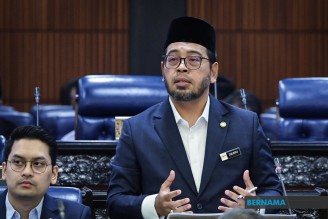
Malaysia's government has moved decisively to prevent future financial crises at Lembaga Tabung Haji (TH) by implementing a comprehensive overhaul of the Islamic pilgrimage fund's governance framework, as detailed during a marathon special parliamentary session that revealed the severity of past management failures. The sitting, which extended beyond ten hours, served as a forum for announcing legislative amendments to the Tabung Haji Act 1955 alongside concrete measures drawn from findings by the Royal Commission of Inquiry established two years earlier to investigate the institution's near-collapse.
The task of monitoring implementation has been entrusted to a high-level task force chaired by TH chairman Tan Sri Abdul Rashid Hussain, bringing together the governor of Bank Negara Malaysia Datuk Seri Abdul Rasheed Ghaffour and Securities Commission chairman Datuk Mohammad Faiz Azmi. This ensemble of financial regulators represents an unprecedented concentration of supervisory authority around TH's rehabilitation, signalling the government's determination to prevent a recurrence of the investment debacles that characterised the period under review. Minister in the Prime Minister's Department (Religious Affairs) Dr Zulkifli Hasan explained that the task force has already coalesced around a critical recommendation: the Securities Commission will assume regulatory responsibility for TH's investment portfolio, while the religious affairs ministry retains oversight of hajj operations themselves, preserving TH as a single institutional entity rather than fragmenting it among multiple agencies.
The financial damage detailed during the session underscored why such interventions became necessary. TH's investment losses approached RM13 billion, a figure that paled beside the potential catastrophe narrowly avoided when panic withdrawals threatened the fund. Had large-scale redemptions spiralled out of control in 2018, the government would have faced the prospect of absorbing liabilities exceeding RM74.5 billion—a contingency that would have reverberated through the national budget for decades. Finance Minister II Datuk Seri Amir Hamzah Azizan disclosed that seven of the fourteen troubled investments generated total losses, while another positioned TH as an unwitting participant in the 1Malaysia Development Bhd scandal through an intermediary investment in Putrajaya Perdana Bhd. These revelations crystallised the institutional vulnerability that had permitted connected parties and conflicted decision-makers to steer the fund toward speculative ventures bearing little relation to its core mission of facilitating hajj access for Malaysian Muslims.
Legislative reform forms the bedrock of the government's preventive strategy. Amendments to Act 535 will explicitly prohibit serving politicians from occupying board seats, a measure addressing the governance conflicts that historically plagued TH when elected officials used the fund as a repository for party-linked projects. Additionally, profit distributions will henceforth be calculated exclusively from independently audited accounts, eliminating the accounting flexibility that allowed TH to distribute returns even as underlying assets deteriorated. Every major decision affecting TH will be evaluated against a single criterion: the welfare of the Muslim community. This reorientation toward stakeholder protection rather than political convenience represents a fundamental philosophical reset for an institution whose depositors are disproportionately working-class and middle-income Malaysians saving systematically for the hajj obligation.
The Royal Commission report, released publicly on July 29 after remaining confidential for nearly two years, catalogued eighteen months of investigation into operational and management shortcomings spanning 2014 to 2020. Its two hundred eleven pages synthesised evidence concerning governance breakdowns, inadequate risk management protocols, conflicts of interest, and investment decisions divorced from prudential standards. Importantly, the commission distilled its findings into twenty-five specific recommendations, of which TH had implemented approximately three-quarters by late July—a timeline suggesting the fund had begun remedial work even before formal public disclosure. This proactive stance, while commendable, also raises questions about whether pre-publication reforms represented genuine institutional renewal or selective damage control aimed at influencing the RCI's final assessment.
Parliamentary contributions expanded the reform debate beyond TH itself, with lawmakers proposing structural changes to Malaysia's non-bank financial sector oversight. Aminolhuda Hassan, Member of Parliament for Sri Gading, advocated for establishing a unified regulator encompassing all major non-bank financial institutions, including the Employees Provident Fund, Permodalan Nasional Bhd, the Retirement Fund Incorporated, and the Armed Forces Fund Board alongside TH. Hassan's proposal highlighted a concerning regulatory gap: Malaysia currently lacks a single authoritative body responsible for prudential oversight, systemic risk assessment, and governance standards across the non-bank financial sector. This fragmentation has permitted supervisory inconsistencies and coordination failures that allowed institutions like TH to accumulate outsized exposures without triggering timely regulatory intervention.
Young Syefura Othman, representing Bentong, raised a distinct vulnerability concerning TH's income dependence on returns from UJSB sukuk instruments, which the RCI report identified as supplying nearly twenty-six per cent of annual revenue. This concentration of income generation in a single instrument category exposes TH to refinancing risks and market volatility while potentially incentivising aggressive sukuk procurement to maintain distribution levels. The Bentong MP's call for detailed mitigation measures reflects emerging recognition that simply preventing future fraud or political interference proves insufficient without simultaneously addressing structural vulnerabilities embedded in TH's funding model. Diversification of income sources would reduce the fund's vulnerability to sukuk market disruptions and decrease pressure to chase high-yield investments whose risks managers may imperfectly understand.
The government's emphasis on maintaining institutional coherence rather than dismantling TH reflects pragmatic policymaking. Fragmenting the fund into separate entities for investment management and pilgrimage administration would have created coordination challenges and potentially introduced new principal-agent problems at the interface between entities. Retaining TH as an intact organisation while substantially reallocating oversight responsibilities represents an attempt to achieve reform depth while minimising administrative disruption. The Securities Commission's assumption of investment regulatory authority imports that body's comparative institutional expertise in prudential supervision and investor protection—competencies developed through two decades of capital markets regulation that dwarf TH's internal governance capabilities.
For Malaysian workers and families who depend on TH savings as their designated hajj fund, these reforms carry profound significance extending well beyond technocratic governance adjustments. The inquiry's exposure of near-catastrophic losses and the public revelation that political allegiances shaped investment decisions have undermined trust in the institution's stewardship of their long-term savings. Restoration of that confidence requires not merely revised rulebooks but demonstrable changes in institutional culture—a shift from viewing TH as a patronage vehicle or leveraged investment platform toward accepting its role as a conservator of assets held in trust for a specific, time-bound purpose. Whether the task force and parliamentary oversight mechanisms prove adequate to that cultural transformation remains to be seen, but the intensity of policy attention now directed toward TH suggests a genuine reckoning with past failures rather than bureaucratic window-dressing.

