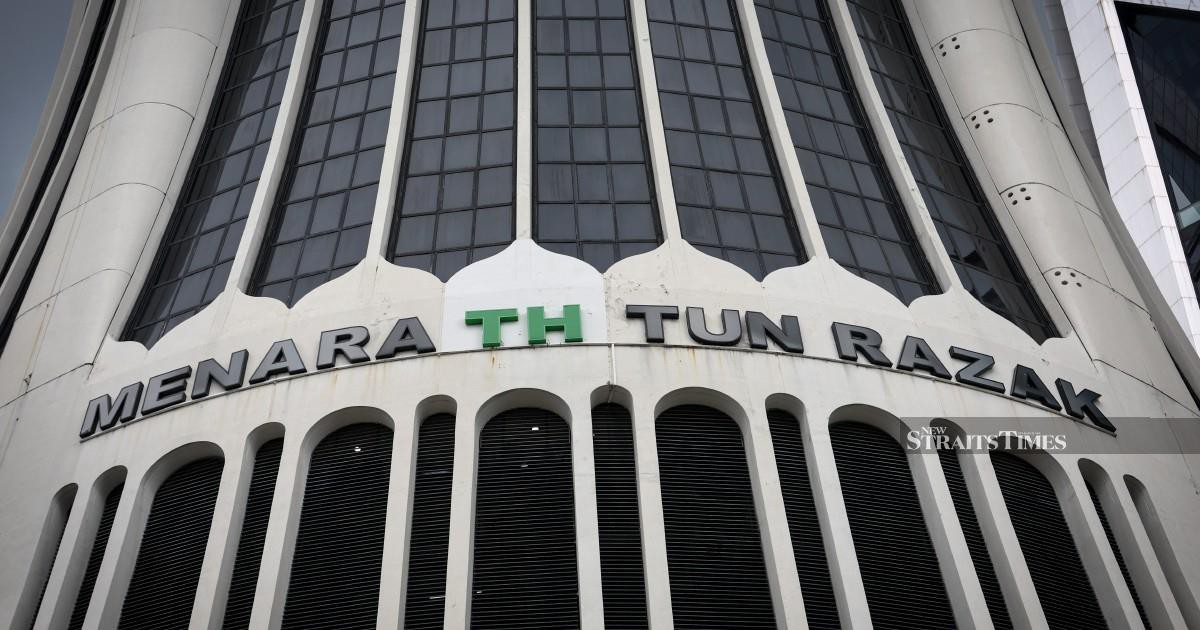
Malaysia's anti-corruption establishment has intensified pressure on the National Audit Department to undergo comprehensive reforms following the emergence of significant inconsistencies in financial reporting on Lembaga Tabung Haji. The Centre for Government Accountability, a prominent independent watchdog, has publicly demanded a thorough examination of the audit body's operations, prompted by conflicting figures regarding TH's financial status that differ by RM4.8 billion between two authoritative government sources.
The discrepancy has exposed a troubling gap in official oversight mechanisms, with the Royal Commission of Inquiry's report and the National Audit Department's separate assessment presenting markedly different pictures of the Islamic pilgrimage fund's financial health. This divergence raises fundamental questions about the reliability of independent auditing processes in Malaysia and the mechanisms through which public institutions maintain fiscal accountability. For Malaysian citizens, particularly the 9.8 million contributors to the pilgrimage savings scheme, such inconsistencies undermine confidence in institutional safeguards designed to protect their accumulated retirement and religious commitments.
The magnitude of the RM4.8 billion variance cannot be dismissed as a minor accounting discrepancy or a matter of technical interpretation. This sum represents a substantial portion of TH's annual financial activity and demonstrates either significant oversights in audit procedures or fundamental methodological differences between the two reporting entities. The scale of the divergence suggests that either the Royal Commission uncovered issues previously undetected by routine audits, or the audit department's evaluation contained material gaps that escaped notice until an independent inquiry was commissioned.
Tabung Haji's financial troubles have become increasingly visible to Malaysian observers over recent years, with concerns about management practices, investment strategies, and governance structures frequently surfacing in public discourse. The fund's difficulties have affected hundreds of thousands of Malaysian Muslims who rely on TH for financing their hajj pilgrimage to Saudi Arabia, making the institution's health a matter of direct public interest beyond mere corporate governance considerations. When audit processes fail to capture accurate financial positions, the entire framework for protecting public assets and individual savings deteriorates.
The watchdog's intervention reflects broader concerns about Malaysia's institutional accountability architecture at a critical moment when public trust in governance mechanisms remains fragile. Independent oversight bodies carry significant responsibility for validating the financial probity of government-linked entities, yet the TH case illustrates potential weaknesses in how such oversight is conducted and verified. If the National Audit Department's reporting substantially diverged from the RCI's findings without adequate explanation, it raises uncomfortable questions about audit independence, professional standards, and the adequacy of current investigative methodologies.
The call for departmental review carries implications extending beyond TH alone. Malaysia's regulatory environment depends heavily on the competence and reliability of the National Audit Department to scrutinise public finances across hundreds of government agencies and statutory bodies. Any systematic issues within audit operations could theoretically affect the quality of financial oversight across the entire public sector. This reality makes the integrity of auditing processes a matter affecting all Malaysians, whether they interact with government institutions directly or benefit from public services financed by taxpayer contributions.
Institutional reform of the audit department would likely require examination of several key areas including audit methodology, staff training and resources, technological systems for financial analysis, and the independence mechanisms protecting auditors from political or administrative pressure. Southeast Asian nations have increasingly recognised that strong, credible audit institutions strengthen economic competitiveness and investor confidence. Malaysia's regional standing depends partly on demonstrated commitment to rigorous financial oversight and transparent institutional reporting.
The timing of the Centre for Government Accountability's intervention suggests growing impatience within civil society regarding accountability lapses. Independent watchdog organisations typically escalate public criticism when internal institutional responses prove inadequate, making this statement a signal that voluntary reforms may not materialise without sustained external pressure. The fact that a specific RM4.8 billion figure has been quantified provides concrete reference points for monitoring whether subsequent investigations address the underlying causes of the discrepancy.
For policymakers, the situation underscores the importance of establishing clear protocols for resolving conflicts between different official auditing reports. Currently, when the National Audit Department and a Royal Commission reach contradictory conclusions, no obvious institutional mechanism exists to arbitrate between them or determine which assessment more accurately reflects financial reality. Such gaps in governance architecture leave room for ambiguity that erodes public confidence in official institutions. Moving forward, Malaysia may need to develop more sophisticated frameworks for coordinating independent audits and resolving significant discrepancies that emerge in official reporting.
The broader economic implications also warrant consideration. Institutional weakness in audit and oversight functions can discourage domestic investment in Malaysian assets and affect sovereign credit ratings assigned by international agencies. Investors and creditors assess governance quality as part of evaluating financial risk, meaning that visible audit failures translate eventually into real economic costs through higher borrowing rates and reduced capital inflows. This dynamic makes institutional reform not merely a governance concern but fundamentally an economic imperative.

