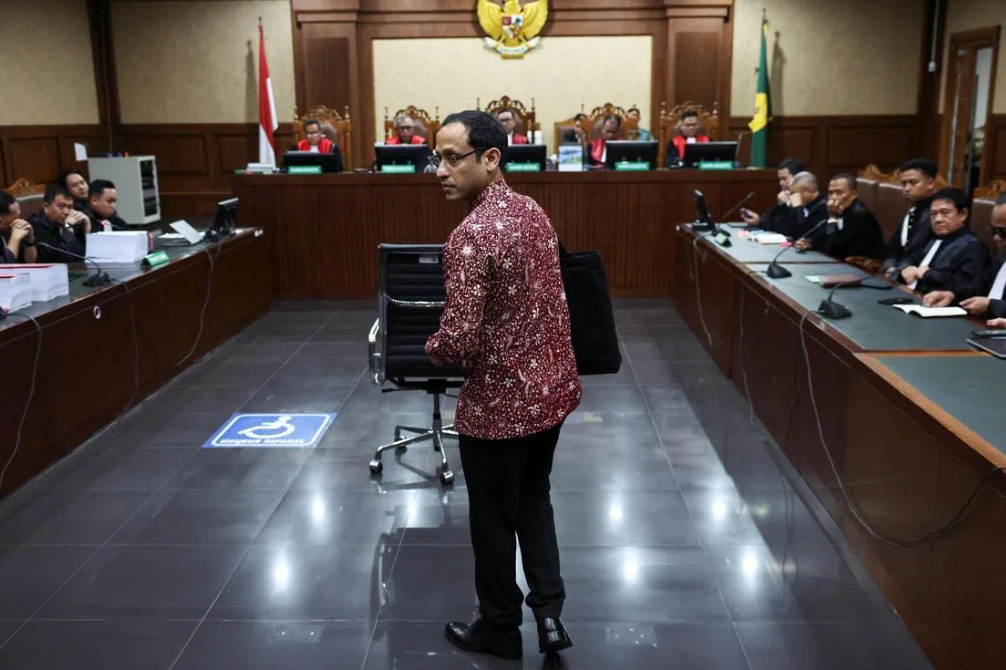
The Jakarta Corruption Court has delivered a landmark verdict that marks a striking fall from grace for one of Indonesia's most celebrated business leaders. Nadiem Makarim, the 41-year-old Harvard-educated founder of Gojek and former education minister, received a 10-year prison sentence on June 30 for orchestrating a flawed Chromebook procurement programme during the Covid-19 pandemic. The sentencing represents a dramatic conclusion to what became Indonesia's most closely watched corruption case, one that captivated public attention through livestreamed court sessions and social media engagement on an unprecedented scale.
Beyond the prison term, the court imposed substantial financial penalties that underscore the gravity of the conviction. Makarim faces a fine of 1 billion rupiah, equivalent to roughly US$56,000, and a restitution obligation of 809.6 billion rupiah, approximately US$45 million. Should he fail to settle this restitution amount, he will serve an additional five years in custody. These consequences represent a stark departure from his trajectory as a transformative figure in Indonesia's technology sector, having built Gojek into the nation's first unicorn startup valued at approximately US$10 billion by 2019.
The judges' reasoning provided critical insight into how the court assessed his culpability. Chief judge Purwanto stated that the panel determined Makarim guilty because the policy's implementation and underlying intentions demonstrated "an abuse of authority intended to unlawfully benefit certain parties." The five-judge panel concluded that Makarim had deliberately steered the Chromebook acquisition strategy with motivations rooted in strengthening his business relationship with Google and advancing the interests of PT Aplikasi Karya Anak Bangsa, Gojek's parent company. This finding proved particularly damaging given the judicial panel's assertion that such conduct constituted conduct "highly reprehensible" and violated the fundamental oath of ministerial office.
The backdrop to this corruption case traces back to Makarim's recruitment into former president Joko Widodo's administration in 2019. Having built Gojek into a sprawling super-app encompassing motorcycle taxi services, food delivery, and the GoPay digital payments platform, Makarim was enlisted to infuse technology-driven modernisation into government operations. His appointment represented the broader aspirational narrative in Indonesia about private sector leaders bringing innovation and efficiency to public administration. Yet the very digitalisation initiatives that defined his ministerial tenure ultimately became the foundation for the corruption charges filed against him in January 2026.
Central to the prosecution's case was an ambitious scheme to supply approximately 1.1 million Chromebook laptops to Indonesian schools between 2020 and 2022, when educational institutions transitioned to remote instruction amid the pandemic. Prosecutors asserted that this procurement caused approximately 2.18 trillion rupiah in state losses and that Makarim personally enriched himself by around 809 billion rupiah through transactions channelled via corporate entities. They presented evidence suggesting that Google's financial stake in Gojek influenced the decision to prioritise Chromebooks, a connection that Makarim consistently rejected throughout the proceedings. Notably, Google itself was not indicted in the case despite prosecutors' allegations regarding the company's involvement.
The prosecution had sought far more severe sanctions, requesting an 18-year sentence coupled with a 1 billion rupiah fine and 5.6 trillion rupiah in restitution. Their case relied heavily on documentary evidence, including a group chat from August 2019 that prosecutors claimed demonstrated discussions about a Chromebook-centric digitalisation strategy prior to Makarim's formal cabinet appointment. They also referenced ministry studies from 2018 conducted before Makarim took office, which had reportedly concluded that Chromebooks would prove ineffective in remote and rural regions lacking dependable internet infrastructure.
Makarim and his legal team mounted a vigorous defence throughout the trial, maintaining that the entire procurement initiative proceeded in good faith during an unprecedented disruption to Indonesia's education system. They presented evidence demonstrating that approximately 97 percent of the 1.1 million Chromebooks had reached 77,000 schools by 2023, emphasising the programme's educational reach and impact. Critically, they contended that Makarim received no personal financial benefit from the procurement and argued that the programme represented a reasonable policy response to unprecedented challenges facing the nation's schools. In early June 2026, Makarim's defence team formally requested complete acquittal.
The trial transcended typical legal proceedings to become a cultural phenomenon reflecting broader questions about public service and institutional trust in Indonesia. Dozens of Gojek drivers attended court sessions to demonstrate solidarity, and at one point Makarim arrived at the courthouse wearing a Gojek driver jacket before changing into formal attire. Court proceedings were livestreamed and generated calls for organised public viewing, while the court received amicus briefs supporting the defendant. This unusual public engagement reflected the complex position Makarim occupied as both a revered entrepreneur and a political figure whose credibility became contested.
Makarim's family background added another dimension to public perception of the case. His father, Nono Anwar Makarim, is a prominent lawyer, while his maternal grandfather participated in Indonesia's independence struggle. These family connections positioned him within Indonesia's established elite, yet they provided insufficient protection against the judicial system's determination to hold him accountable. As the trial progressed toward sentencing, Makarim increasingly reframed the case as having implications extending beyond individual culpability or procurement decisions.
In his defence plea delivered on June 23, just before the verdict, Makarim articulated a broader argument about the case's significance for Indonesia's institutional future. He suggested that the proceedings would fundamentally shape how younger Indonesians perceived public service and whether talented professionals operating outside traditional political structures would remain willing to enter government. Directly addressing the judges, he posed a question he framed as resonating throughout the country and among the diaspora: "Is this country still safe for us to serve?" This rhetorical framing sought to transform the specific corruption charges into a referendum on Indonesia's capacity to attract and retain technocratic talent.
On the eve of sentencing, Makarim released a statement through his legal team via LinkedIn, expressing continued faith in judicial processes despite months of exhausting legal proceedings. His statement reflected a posture of dignity in anticipation of conviction, acknowledging the extended trial while reaffirming belief in the justice system. This measured response contrasted with potential accusations of bitterness or denial, though it offered little indication of whether he intended to appeal the conviction.
The verdict carries significant implications for Indonesia's broader anti-corruption agenda and the relationship between the private technology sector and state institutions. If upheld on appeal, the conviction would establish important precedent regarding the accountability of high-profile businesspeople who transition into government roles. For Malaysia and Southeast Asia more broadly, the case illustrates both the opportunities and dangers when celebrated entrepreneurs assume public office, and the extent to which judicial systems remain willing to prosecute prominent figures regardless of their earlier accomplishments or public support.

