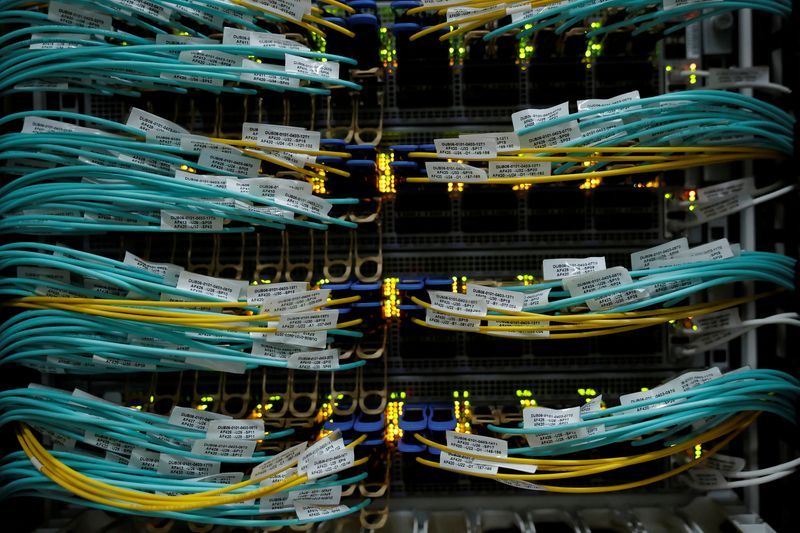
Governments and city administrations worldwide are increasingly moving to halt, restrict, or prohibit new data centre construction as the explosive growth of artificial intelligence infrastructure clashes with mounting pressures on energy systems, water resources, and surrounding communities. The conflict between accelerating tech investment and environmental sustainability has prompted a patchwork of policy responses across developed nations, ranging from temporary moratoriums to permanent bans that fundamentally reshape where tech companies can build their computational infrastructure.
In the United States, New York has become the first state to implement a comprehensive moratorium on data centre development. Governor Kathy Hochul imposed a one-year freeze on constructing facilities that consume 50 megawatts or more of electrical power. The measure reflects mounting anxiety over the state's capacity to support energy-intensive operations without compromising power availability for residents and existing industries. During this period, New York's Department of Environmental Conservation will refrain from granting new discretionary permits for such facilities, allowing officials to develop standardized protocols for evaluating the environmental consequences of data centre expansion.
Maine, another northeastern state grappling with the same pressures, has taken a different approach. Governor Janet Mills vetoed bipartisan legislation that would have created an 18-month moratorium on data centres drawing more than 20 megawatts of electricity—a threshold considerably lower than New York's benchmark. While Mills expressed philosophical alignment with the moratorium concept, she objected to specific language in the legislation that refused to exempt a proposed facility in the Town of Jay. This veto demonstrates how data centre policy remains contested terrain even among political allies, with regional economic interests and specific projects complicating what might otherwise be straightforward environmental protection.
On the Pacific coast, California has witnessed grassroots opposition crystallise into formal action. Monterey Park, a city in Los Angeles County, voted in June 2026 to permanently prohibit data centres within its municipal boundaries, marking the first U.S. city to impose such a comprehensive ban through direct ballot initiative. The decision came after sustained public outcry regarding a planned facility that residents feared would consume scarce water resources and disrupt their community. Monterey Park had previously imposed a temporary one-year moratorium in 2019, which evolved into a broader restriction in April 2025 banning all new data centre construction or expansions until at least 2030, effectively signalling the city's long-term hostility to such development.
The Netherlands, a European hub for data centre investment, has employed a more targeted regulatory framework. The Dutch national government's 2022 hyperscale ban concentrates large-scale facilities to just two designated locations across the entire country, attempting to balance tech sector growth with geographic containment of environmental impact. However, even this restricted model faces pressure from major operators. Microsoft successfully negotiated approval in January 2026 for a facility designed across three separate towers, each individually below the size threshold that would trigger the hyperscale classification. This arrangement illustrates how companies navigate regulatory boundaries through architectural creativity, fragmenting single large installations into multiple smaller structures to circumvent restrictions.
Dublin, Ireland, implemented one of the earliest grid-based restrictions on data centre expansion. Ireland's electricity grid operator effectively suspended new data centre connections around the Dublin area beginning in 2021, responding to warnings that these facilities were overwhelming the nation's power infrastructure at an unsustainable rate. The restriction persisted for years, fundamentally limiting where technology companies could establish operations. The freeze only concluded in December 2025, when authorities relaxed the blanket prohibition but introduced a compensatory requirement: new data centres must generate their own on-site electrical power through renewable or other sources, shifting the infrastructure burden from national grids to individual facility operators.
These varied policy responses reflect a fundamental tension reshaping the geography of AI development. Data centres require colossal amounts of electricity—modern facilities can consume as much power as mid-sized cities—alongside substantial freshwater for cooling systems. Communities adjacent to proposed facilities increasingly recognise that hosting such infrastructure transfers environmental and resource costs to local residents while concentrating economic benefits narrowly among tech corporations and shareholders. The cumulative effect of these restrictions is beginning to constrain where companies can situate new computational capacity, potentially redirecting investment toward countries and regions with less stringent regulatory environments or greater resource abundance.
For Southeast Asia, including Malaysia, these global restrictions carry significant implications. Malaysia has positioned itself as an attractive alternative hub for data centre investment, offering competitive electricity costs and strategic geographic location serving Asian markets. However, as major developed economies restrict such development, Malaysian policymakers face a choice: whether to welcome displaced investment and capitalise on regulatory arbitrage, or implement precautionary measures to protect domestic electricity grids and water supplies from similar strains. The experiences in New York, California, and Dublin suggest that communities eventually mobilise against data centre proliferation as environmental costs accumulate, potentially creating future political pressure for Malaysian restrictions that could destabilise long-term tech investments.
The emerging global pattern indicates that data centre policy will likely grow more stringent over time, particularly in regions with limited electricity generation capacity or water resources. Companies seeking locations for AI infrastructure increasingly must negotiate with authorities concerned about grid reliability, industrial water demands, and climate impacts. This environment may incentivise technology firms to develop more energy-efficient computational methods or to decentralise processing across multiple smaller facilities rather than concentrating operations in massive hyperscale installations. The regulatory environment surrounding data centre construction has fundamentally shifted from welcoming investment to carefully weighing technological benefits against environmental sustainability and community welfare.

