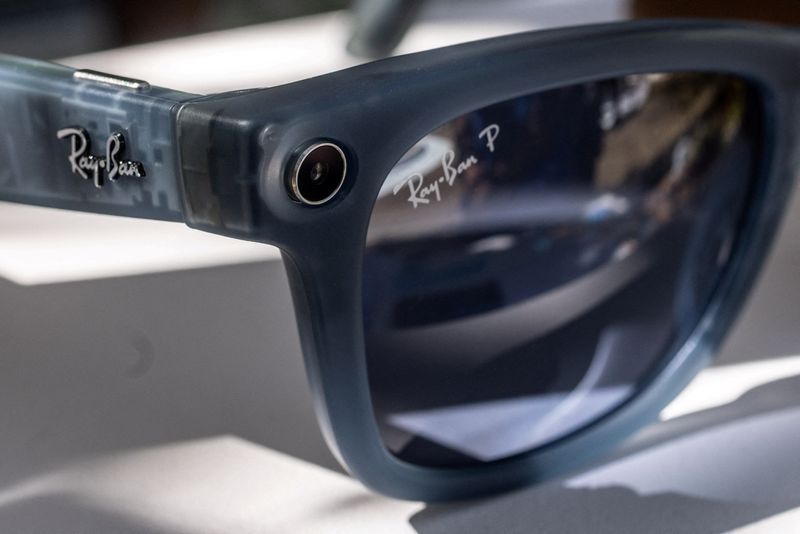
A significant legal challenge to Meta's artificial intelligence-enabled smart glasses has emerged from Germany, where privacy advocates filed formal criminal charges this week against the technology company and several major retailers. The complaint, submitted by HateAid—a Berlin-based digital rights organisation—targets not only Meta's management but also EssilorLuxottica and its Ray-Ban brand, along with prominent German eyewear and electronics retailers including Fielmann, Apollo-Optik, Mister Spex, and MediaMarkt. The action represents the escalating tension between consumer technology innovation and stringent European data protection standards, particularly in a nation with constitutionally enshrined privacy rights.
At the heart of the complaint lies a fundamental concern about surveillance in public spaces. HateAid argues that the Ray-Ban Meta Wayfarer glasses circumvent German legislation prohibiting the sale of communication devices designed to record people covertly. Josephine Ballon, the organisation's managing director, articulated the core anxiety driving the complaint: citizens face an impossible situation where they cannot predict or prevent being filmed in everyday settings, with recordings potentially distributed online without consent. This concern transcends technical specification—it addresses the broader social implications of normalising inconspicuous recording technology masked as ordinary fashion accessories.
The complaint was filed with ZIT, Frankfurt's specialised digital crime prosecution unit, marking an official escalation beyond public advocacy. While Mister Spex responded by stating it had not received formal notification and reaffirmed its commitment to privacy protection, other defendants including Meta, EssilorLuxottica, and most retailers did not immediately address the allegations. The silence suggests these companies may be preparing formal legal responses or awaiting clarification from German authorities about the substantive legal questions at stake.
HateAid's legal argument rests on federal digital data protection legislation that explicitly prohibits selling devices engineered for filming without awareness or consent. This statute reflects Germany's historical commitment to informational self-determination—the principle that individuals retain control over personal data and their public image. The complaint connects this established legal principle to contemporary technology, arguing that smart glasses represent a particularly insidious evolution of surveillance capacity precisely because they appear innocuous while embedding recording capability.
Regulatory attention to smart glasses has been building across German authorities. The Federal Network Agency, known as BNetzA, issued preliminary guidance in late 2023 clarifying that connected devices for covert audio or video recording face legal restrictions. However, a BNetzA spokesperson acknowledged this week that the agency permits smart glasses sales provided recording functions remain visually apparent—through optical indicators or similar signals. This distinction between covert and transparent recording capacity suggests regulatory uncertainty about how existing rules apply to devices that may comply with visibility requirements while remaining functionally capable of undetected footage.
Regional authorities have also begun scrutinising the technology. A state-level privacy protection agency in Hamburg initiated legal proceedings against smart glasses usage, according to broadcaster SWR reporting from July. This patchwork of federal and regional enforcement actions indicates that German authorities recognise the policy gap but have not yet achieved consensus on whether current legislation adequately addresses these devices or whether new specific regulations are necessary.
Beyond abstract privacy principles, HateAid grounded its complaint in documented patterns of harm. The organisation has increasingly documented image-based digital violence—the non-consensual recording and distribution of intimate or identifying images—which disproportionately affects women. Smart glasses amplify this risk by making surveillance technology simultaneously more capable and less visible than previous generations of recording devices. A person wearing Ray-Ban Meta glasses could theoretically capture high-quality video of others without detection, then immediately process or share that content via Meta's ecosystem.
This complaint arrives amid broader European regulatory scrutiny of Meta and artificial intelligence applications. The European Union's AI Act, now entering implementation phases, will impose obligations on high-risk AI systems. Whether smart glasses qualify as high-risk and how regulators should classify the intersection of recording capability, AI processing, and personal data collection remains contested. Germany's formal complaint may influence how other European jurisdictions approach the technology.
The case also reflects deeper tensions about technology adoption timelines and democratic deliberation. Meta has launched its smart glasses commercially while regulatory frameworks remain unsettled, placing the burden on advocacy groups and individual authorities to challenge business models after market entry. This reactive posture contrasts with the EU's preference for establishing rules before deployment at scale, a principle embodied in regulations like GDPR and the AI Act.
For Malaysian and Southeast Asian readers, the German case offers instructive lessons about regulatory responses to emerging technology. While Malaysia's personal data protection framework differs from Germany's, both jurisdictions increasingly recognise that surveillance technology embedded in consumer devices requires explicit legal attention. As smart glasses and comparable technologies proliferate regionally, similar questions about consent, visibility, and the boundaries between legitimate photography and privacy violation will inevitably arise in Malaysian courts and regulatory bodies.
The complaint's ultimate outcome remains uncertain. German courts and prosecutors must determine whether existing legislation adequately covers smart glasses or whether the technology exploits regulatory gaps. BNetzA's measured stance suggests the agency may require clearer guidance or new legislation rather than aggressive enforcement under current rules. Meta and retailers face potential liability but may argue the devices comply with transparency requirements if recording indicators function as specified. The resolution will significantly shape how smart glasses are marketed and regulated across Europe.

