German law enforcement agencies have initiated a series of coordinated searches across the country targeting the Deutsche Fußball-Bund, the nation's football governing body, over suspected irregularities in how tickets were allocated during the Euro 2024 tournament held earlier this year. The Bild newspaper first revealed the scale of the investigation on Wednesday, reporting that the raids were part of a broader probe into ticket distribution practices that may have breached regulations.
While police and prosecutors confirmed in a statement that searches were being conducted at several German locations as part of the operation, they did not initially publicly acknowledge the DFB's role in the investigation. However, Bild's reporting indicated that the soccer association's offices were among the sites targeted by investigators seeking documents and evidence related to the suspected violations. The specificity of the newspaper's account suggests the DFB is a central focus of the inquiry.
The investigation centers on allegations that tickets for matches during Euro 2024 were not distributed according to established protocols, potentially allowing preferential access to officials, intermediaries, or connected parties rather than genuine supporters. Such practices would breach FIFA and UEFA regulations governing how tickets for major tournaments must be allocated, typically requiring fair distribution systems and preventing scalping or back-channel sales at inflated prices.
According to Bild, the investigation involves at least one German national and one French national among others, though the newspaper did not immediately provide details about their identities or roles. This suggests the misconduct may have involved collaboration across borders or that foreign nationals profited from the scheme, adding a transnational dimension to the case that could heighten regulatory scrutiny from UEFA and other football authorities.
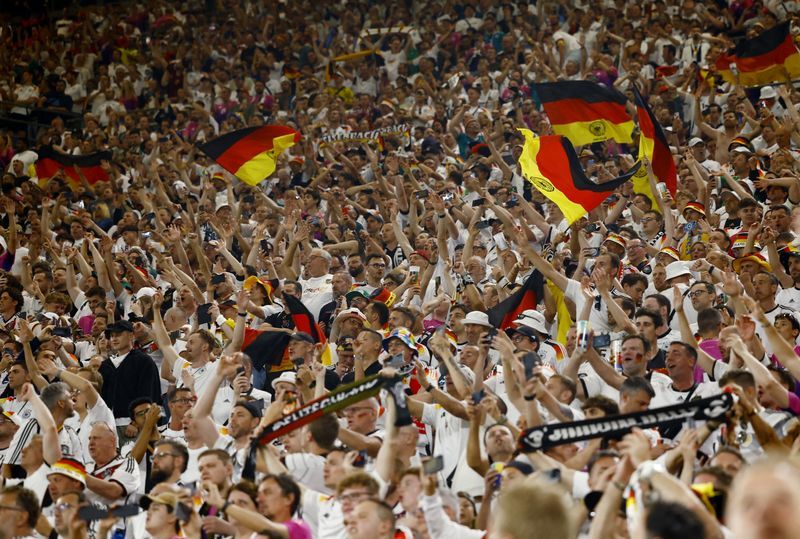
Euro 2024 represented a significant moment for German football, as the tournament was hosted domestically with matches played across ten cities from June to July. The championship draws massive crowds and global attention, making the integrity of ticket sales processes particularly important for maintaining public confidence in the sport and preventing corruption. Any evidence of systematic misallocation undermines the principle that ordinary fans should have genuine opportunities to attend matches.
Ticket allocation at major sporting events has long been vulnerable to exploitation. Governing bodies typically implement systems designed to prevent wealthy individuals or businesses from monopolizing access to premium seats, but enforcement remains challenging when insiders have the ability to divert allocations through unofficial channels. The scale of the DFB investigation suggests authorities discovered evidence that such unofficial pathways may have been systematically used during Euro 2024.
The timing of the raids in early July, shortly after the tournament concluded with Spain's victory over England, indicates that investigations likely began during or immediately following the championship. Authorities may have received whistleblower reports, noticed suspicious patterns in ticket distribution data, or discovered evidence through preliminary inquiries into complaints from fans unable to obtain tickets through legitimate channels.
For Malaysian and Southeast Asian readers, this case illustrates how corruption and regulatory violations in football governance can occur even at the highest organizational levels in wealthy, developed nations. The DFB's situation mirrors concerns sometimes raised about ticket allocation practices for major sporting events across the region, demonstrating that robust independent oversight and investigation mechanisms are essential whenever large-scale public goods like sporting event access are distributed.
The investigation also carries implications for how European football governing bodies might respond to similar concerns elsewhere. If evidence of systematic misconduct is confirmed, the DFB could face substantial penalties from UEFA, including fines or restrictions on hosting future competitions. Such consequences would send a signal that even powerful national federations cannot circumvent regulations without facing serious repercussions.
As the investigation progresses, the DFB's cooperation with authorities and their internal review of ticket distribution processes will likely become public focal points. Transparency regarding how the association responded once irregularities came to light could influence public perception and regulatory outcomes. German authorities' willingness to investigate such matters at the highest levels of sports administration also reflects broader European commitments to accountability and rule of law.
The probe underscores ongoing challenges in preventing corruption within sports administration, particularly regarding asset allocation at high-profile events where demand vastly exceeds supply. Successful resolution of this investigation may require not only identifying individual wrongdoers but also implementing stronger systemic safeguards to prevent future violations. Both UEFA and national football associations across Europe will likely monitor the case closely for lessons about strengthening ticket governance.
As additional details emerge from the investigation, further charges or findings could have ramifications for German football's reputation and for how other nations approach ticket distribution at forthcoming major tournaments. The case demonstrates that even in countries with strong institutional frameworks, vigilance and investigation are necessary to maintain integrity in sports governance.

