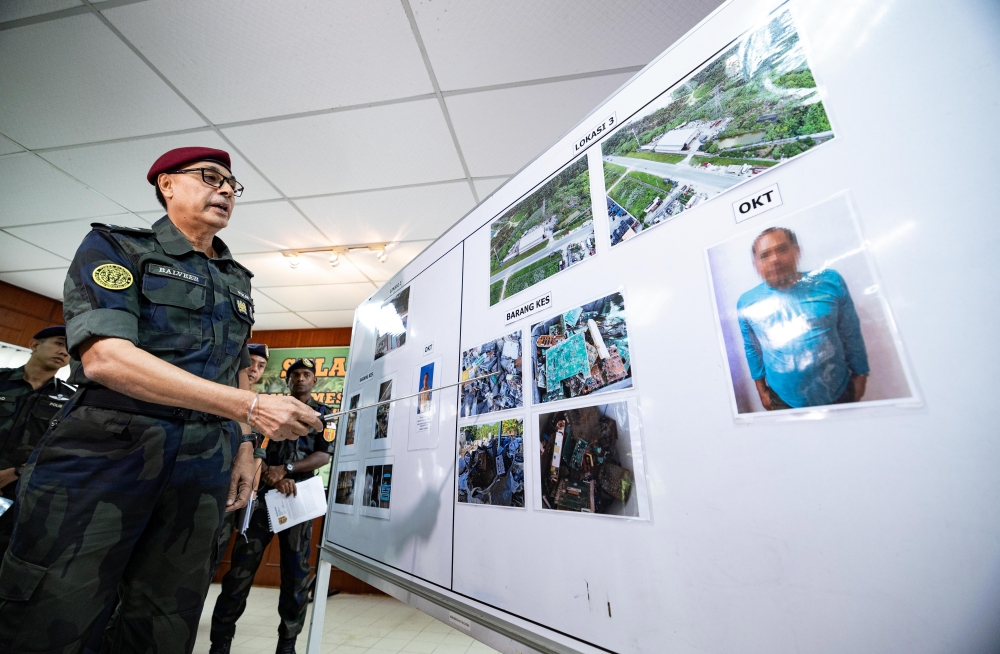
The General Operations Force Northern Brigade has struck a major blow against illegal electronic waste trafficking in Perak, seizing 120,220 kilogrammes of contraband materials valued at RM9.39 million across multiple coordinated raids in Ipoh. The operation resulted in the arrest of 14 individuals, marking one of the largest crackdowns on e-waste smuggling in the region and demonstrating intensified efforts to combat environmental crimes that have become increasingly prevalent across Southeast Asia.
The raids, conducted in the industrial areas of Ipoh, targeted storage facilities and warehouses suspected of serving as distribution hubs for illegally imported electronic waste. Security forces discovered substantial quantities of discarded computer components, obsolete mobile phone parts, circuit boards, and other electronic materials that had been collected without proper licensing or environmental clearance. The scale of the confiscation underscores the sophistication of the smuggling networks operating within Malaysia, which often exploit regulatory gaps and insufficient port monitoring to move contaminated materials across borders.
Official investigations indicate that the seized e-waste originated from international sources, likely destined for informal recycling operations where hazardous materials would be processed without adequate safety protections. This type of trafficking represents a critical environmental and public health concern, as unregulated e-waste dismantling releases toxic substances including lead, mercury, cadmium, and persistent organic pollutants into surrounding communities. Workers in informal recycling facilities face severe occupational hazards, whilst groundwater contamination and air pollution create broader ecological damage that extends far beyond immediate industrial zones.
The operation reflects growing coordination between Malaysian law enforcement agencies and regional authorities to address transnational environmental crime. E-waste trafficking has become increasingly organised, with criminal networks exploiting legitimate global supply chains to disguise shipments of hazardous materials as ordinary trade goods. The complexity of these operations requires sustained intelligence gathering and inter-agency cooperation that extends beyond traditional criminal investigations into environmental enforcement.
Malaysia's position as a major hub in Southeast Asian trade makes it particularly vulnerable to e-waste smuggling. Geographic proximity to several nations with inadequate waste management infrastructure, combined with Malaysia's own evolving recycling capacity, creates conditions where illegal imports can be rapidly integrated into local supply chains. Port authorities have intensified screening procedures in recent years, yet the sheer volume of container traffic ensures that determined smugglers can still exploit procedural weaknesses or corrupted officials to move contraband materials.
The arrested individuals are expected to face multiple charges related to illegal importation, environmental violations, and potentially money laundering, depending on investigative findings regarding the financial networks underlying these operations. Prosecution of such cases often extends over months or years, as authorities must establish the full scope of the criminal enterprise and identify upstream smuggling facilitators as well as downstream recipients of the contraband materials. Sentences for environmental crimes in Malaysia have been progressively strengthened to serve as deterrents.
This seizure arrives amid broader regional discussions about electronic waste management and the so-called Basel Convention, which restricts the transboundary movement of hazardous wastes. Whilst Malaysia is a signatory to this international agreement, enforcement remains inconsistent across Southeast Asia, with some neighbouring countries lacking adequate capacity or political will to prevent the export of toxic materials under the guise of legitimate recycling trade. The problem is exacerbated by genuine uncertainty regarding what constitutes illegal e-waste, as certain components retain residual value and can legitimately enter formal recycling supply chains.
The economic cost of RM9.39 million represents both the market value that smugglers sought to realise and the environmental remediation expenses that Malaysia's government will now incur to safely process and dispose of the confiscated materials. Proper recycling of such quantities requires specialised facilities meeting international standards, representing a significant financial burden for enforcement agencies. This reality underscores why prevention through port security and intelligence operations remains more cost-effective than post-seizure management.
For Malaysian manufacturers and legitimate technology companies, the crackdown provides reassurance that authorities are taking intellectual property and brand protection seriously, as counterfeit and substandard electronic components often enter Malaysia through the same smuggling channels utilised for e-waste trafficking. Consumers unknowingly purchasing refurbished electronics sourced through informal channels face risks of acquiring unreliable products whilst inadvertently supporting criminal networks. Enhanced enforcement therefore benefits legitimate businesses and consumer protection simultaneously.
The Northern Brigade's success reflects improved training and resource allocation within the GOF, which has expanded its environmental crime portfolio beyond traditional enforcement priorities. Future operations will likely focus on the upstream nodes of smuggling networks, targeting corrupt port officials, shipping intermediaries, and international facilitators who arrange the initial illegal exports from source countries. Intelligence sharing with foreign law enforcement agencies, particularly in regional partners like Thailand, Singapore, and Vietnam, will be essential for disrupting these transnational criminal enterprises at their origins.
State governments in Perak and neighbouring jurisdictions are increasingly coordinating with federal enforcement agencies to establish integrated environmental crime task forces, recognising that ad hoc operations, whilst important symbolically and operationally, cannot alone address the systematic challenges posed by organised waste trafficking. Long-term solutions require investment in domestic recycling infrastructure, stronger penalties for corruption, and international cooperation frameworks that align incentives for preventing rather than tolerating illegal e-waste movements. The Ipoh operation demonstrates Malaysia's capacity for decisive action, yet sustained commitment to infrastructure development and regional partnerships remains necessary to address root causes.

