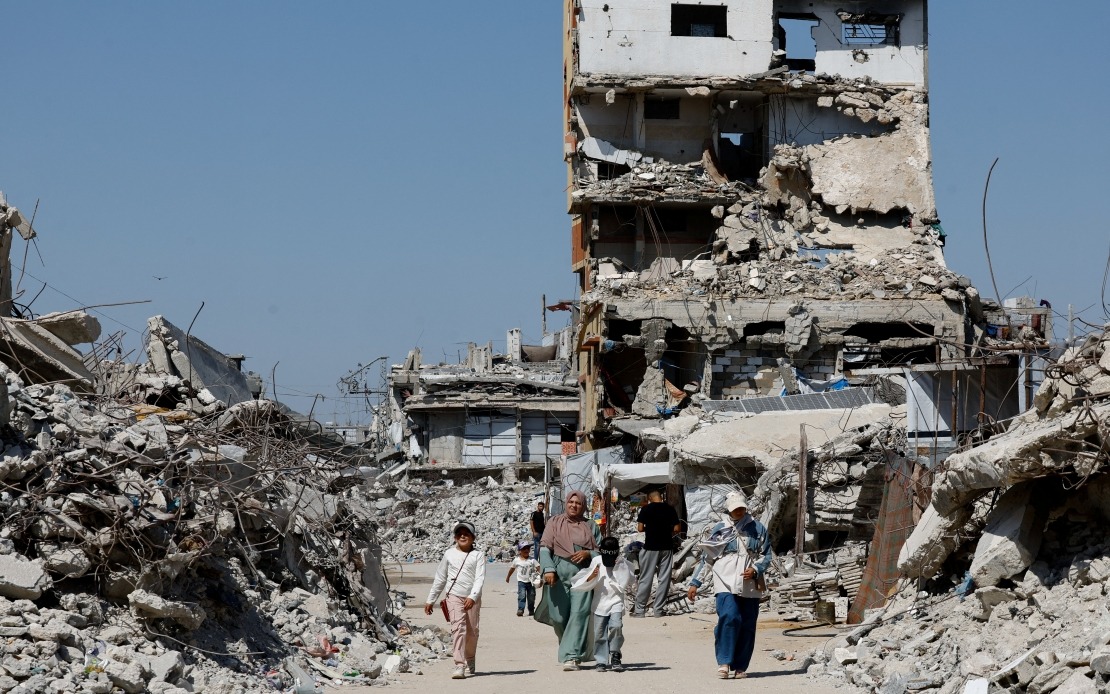
The humanitarian crisis in Gaza has deepened as the Palestinian death toll climbed past 73,400, with health authorities documenting ten additional fatalities and 25 wounded in a single 24-hour period, according to figures released Thursday. The ongoing violence underscores the fragility of recent ceasefire arrangements that were meant to halt military operations across the blockaded Palestinian enclave.
According to Gaza's Health Ministry, hospitals received ten bodies and 25 injured patients over the past day, continuing a steady stream of casualties that has defined the conflict since October 2023. The ministry's daily reports provide a grim measure of the humanitarian toll, though officials note that actual figures may be considerably higher given the difficulty of tracking deaths in areas experiencing active military operations.
More troubling for international ceasefire monitoring efforts is the apparent breakdown of the October 2025 truce agreement. The Health Ministry documented that ceasefire violations have resulted in 1,283 deaths and 4,248 injuries in the months following the supposed cessation of hostilities. These figures represent a significant portion of recent casualties and suggest that the agreement has failed to substantially reduce military operations despite international diplomatic efforts.
The ministry provided limited detail on the specific circumstances surrounding the latest deaths, but noted that Israeli military operations including shelling and gunfire continued across multiple locations in Gaza. This pattern of violence reflects the broader challenge facing any ceasefire attempt in the territory, where territorial control and security concerns create persistent flashpoints for renewed conflict.
A critical obstacle to casualty assistance and recovery efforts remains the inability of humanitarian responders to access affected areas. The Health Ministry highlighted that numerous victims remain trapped beneath collapsed buildings and on roads, with ambulance services and civil defence teams consistently unable to reach them due to ongoing military activity. This operational constraint means that official casualty counts likely underrepresent the true human cost of the conflict, as unretrieved bodies cannot be properly documented or counted.
The cumulative scale of destruction extends far beyond immediate military casualties. Approximately 90 percent of Gaza's civilian infrastructure has sustained damage, according to health ministry assessments, transforming the territory into a landscape of physical devastation. This wholesale destruction affects not merely buildings but the essential systems upon which any functioning society depends, from water and sanitation networks to electrical grids and communications infrastructure.
The financial dimensions of this destruction are staggering. United Nations estimates place reconstruction costs at approximately US$70 billion, a figure that vastly exceeds Gaza's existing economy and the resources available to Palestinian authorities. For context, this reconstruction bill would constitute multiple times the annual gross domestic product of Gaza, meaning that even with generous international reconstruction assistance, recovery will require decades of sustained effort and investment.
The humanitarian implications of this destruction have resonated across the Middle East and globally. Malaysia, as a prominent voice for Palestinian rights within the Association of Southeast Asian Nations and the Organisation of Islamic Cooperation, has consistently raised concerns about civilian casualties and the humanitarian conditions in Gaza. The mounting death toll and destruction figures provide additional impetus for Southeast Asian states to continue diplomatic pressure on parties to respect international humanitarian law and protect civilian populations.
The ceasefire violations recorded since October 2025 represent a critical test for international conflict resolution mechanisms. When agreed truces fail to hold, confidence in negotiated settlements erodes, making future agreements harder to achieve and more difficult to enforce. For regional stakeholders and international mediators invested in eventual Israeli-Palestinian peace negotiations, the current ceasefire breakdown presents a sobering reminder of the deep structural challenges underlying the conflict.
Within Gaza itself, the combination of sustained military operations, widespread infrastructure destruction, and ongoing humanitarian access restrictions has created a compounding crisis. Survivors face not only the threat of further violence but also scarcity of clean water, electricity, medical supplies, and other basic necessities essential for sustaining life. Health facilities operating under severe resource constraints struggle to treat the wounded and manage disease outbreaks that inevitably follow large-scale destruction and population displacement.
The international community's response to the mounting casualties and destruction remains fragmented. While various United Nations bodies have called for investigations and accountability, enforcement mechanisms remain weak and contested. Regional powers and global stakeholders continue to advance conflicting positions on appropriate responses, complicating efforts to establish independent fact-finding or protection mechanisms.
For Malaysian observers, the escalating humanitarian dimensions of the Gaza conflict reinforce the arguments advanced by government officials and civil society organisations advocating for stronger international intervention. The scale of civilian suffering and the apparent ineffectiveness of agreed ceasefires support contentions that more robust international mechanisms for civilian protection and conflict resolution are urgently required. As the death toll continues rising and destruction spreads deeper into the social fabric of Gaza, pressure will mount for renewed diplomatic initiatives aimed at achieving genuine and durable peace.

