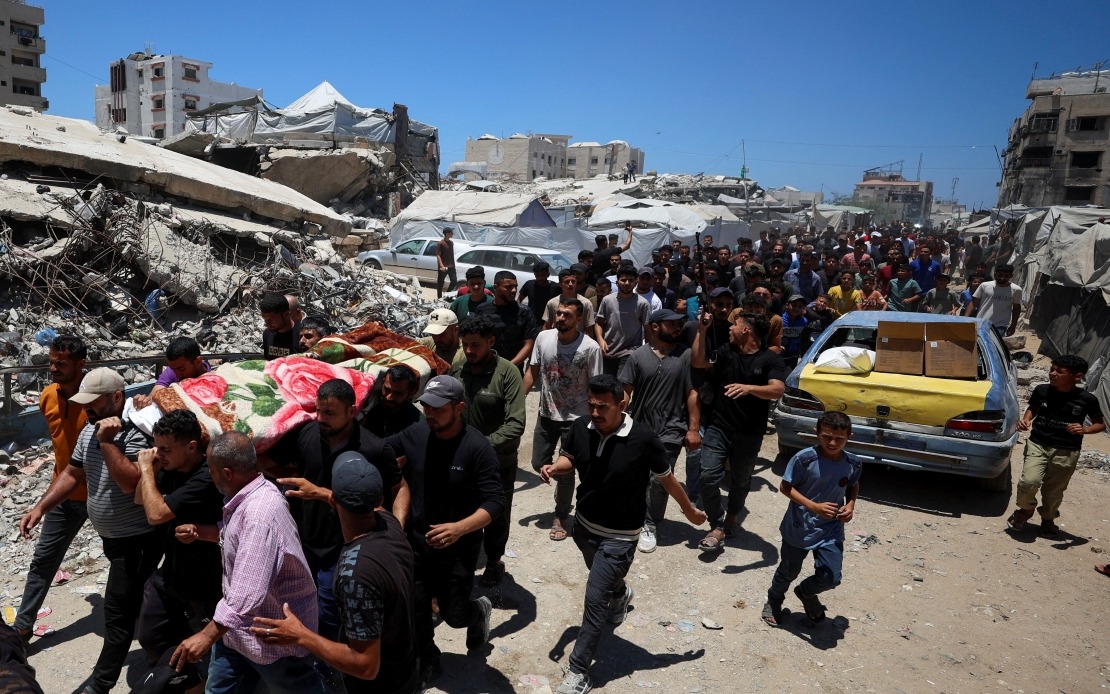
The humanitarian catastrophe unfolding in Gaza has intensified despite the implementation of a ceasefire, with Palestinian authorities documenting 1,021 additional deaths in the weeks following the agreement's commencement. According to a situation report released by the Palestinian Prime Minister's Office this week, the cumulative death toll since October 2023 now stands at 73,032, underlining the devastating human cost of more than eight months of sustained military operations in the densely populated enclave.
The reported surge in casualties following the ceasefire announcement suggests that hostilities have not fully ceased across the territory. Specific military operations conducted over recent days have targeted civilian areas including Nuseirat, Al-Mawasi, Khan Younis, and Gaza City, where air and drone strikes have continued to claim lives and damage critical infrastructure. This continuation of violence has raised questions among international observers about the comprehensiveness and enforcement of the ceasefire agreement, particularly among Malaysian policymakers monitoring regional stability and humanitarian obligations.
The destruction of residential infrastructure has reached catastrophic proportions, with Israeli military operations having destroyed or damaged 76.6 percent of Gaza's total housing stock. This unprecedented level of structural devastation has forced approximately one million Palestinians to seek shelter in makeshift tent camps, creating secondary health crises and exacerbating disease transmission risks. The scale of displacement rivals some of the largest humanitarian emergencies documented globally in recent years, yet has received comparatively limited media coverage in some Southeast Asian markets.
Access to basic utilities remains critically constrained, with severe water shortages forcing residents to depend almost entirely on limited humanitarian supplies distributed by international organizations. The Palestinian Government Communication Centre has emphasized that these conditions represent not merely temporary hardship but a deliberate obstruction of civilian life support systems. Clean water availability directly impacts public health outcomes, sanitation capabilities, and disease prevention, creating cascading humanitarian crises that extend far beyond immediate combat-related casualties.
Children constitute a particularly vulnerable demographic within this crisis. According to data provided by UNICEF, 265 Palestinian children have been killed and more than 400 others injured specifically since the ceasefire's announcement, indicating that the cessation of major hostilities has not translated into genuine protection for minors. These figures underscore how even localized military operations and air strikes in populated areas result in disproportionate harm to the youngest and most defenseless population segments. The psychological trauma affecting hundreds of thousands of surviving children will carry long-term developmental and social consequences for Palestinian society.
International humanitarian organizations have raised alarms regarding the systematic obstruction of aid delivery mechanisms. Oxfam representatives presented testimony to the United Nations Security Council documenting how Israeli-imposed restrictions continue preventing adequate distribution of life-saving assistance throughout the enclave. These barriers operate separately from combat operations themselves, representing administrative constraints that compound the humanitarian emergency and limit the capacity of aid organizations to respond effectively to population needs.
The conflict's geographic scope extends far beyond Gaza into the occupied West Bank, where a parallel crisis of forced displacement is accelerating. The United Nations High Commissioner for Human Rights has documented a significant uptick in the forced removal of Palestinians from their homes, driven by a combination of settler violence, military demolitions, movement restrictions, and formal eviction procedures. This westward expansion of displacement represents a strategic dimension of the broader territorial dispute that carries profound implications for long-term Palestinian territorial viability and demographic composition.
Agricultural destruction in the West Bank has inflicted substantial economic damage upon rural Palestinian communities. Palestinian Ministry of Agriculture officials have documented the destruction of 7,258 trees, including 1,270 olive trees specifically, with estimated financial losses exceeding US$5.17 million. These figures represent not merely environmental damage but the destruction of livelihoods, food security assets, and intergenerational economic resources. The targeting of agricultural infrastructure suggests a strategy aimed at rendering land economically unviable for Palestinian stewardship. Additionally, arson attacks have targeted religious institutions in the villages of Jiljilya and Mazra' al-Nubani, indicating the intersection of political violence with attacks on cultural and spiritual heritage sites.
Military operations concentrated in refugee camps located in Jenin, Tulkarem, and Nour Shams have displaced more than 33,000 Palestinians since the beginning of 2025, demonstrating that the territorial conflict continues producing mass displacement even within established Palestinian administrative areas. The camps themselves, originally established decades ago to house refugee populations, have become zones of intense military activity and civilian vulnerability. These locations carry historical and symbolic significance within Palestinian political consciousness, making their militarization particularly charged.
Conditions within Israeli detention facilities have deteriorated markedly, according to Palestinian prisoners' rights institutions. Reports document severe overcrowding, inadequate sanitation, and disease outbreaks within these facilities, raising concerns about the treatment of detained Palestinians and compliance with international humanitarian law standards. The intersection of detention practices with broader conflict dynamics creates additional layers of human suffering extending beyond active combat zones into the institutional mechanisms of military occupation.
Despite the overwhelming security and humanitarian challenges confronting Palestinian civil society, educational institutions have continued operating and preparing students for critical examinations. The Palestinian government has completed preparations for this year's General Secondary Education Examination, which will involve approximately 91,000 students overall, including roughly 37,000 candidates in Gaza itself. These Gaza-based students will sit for examinations electronically for the third consecutive year, representing an adaptation to conflict circumstances that nonetheless maintains academic continuity. This persistence of educational functions amid catastrophic conditions illustrates Palestinian institutional resilience, though it also highlights how normal life has become defined by emergency conditions and digital alternatives to traditional schooling.
For Malaysian observers and policymakers, these developments carry significant implications beyond humanitarian concern. The Palestine-Israel conflict continues reshaping regional geopolitics, influencing diplomatic alignments throughout Southeast Asia and the broader Muslim world. Malaysia's longstanding advocacy for Palestinian rights positions these developments within a broader framework of international law, humanitarian obligations, and the principle of self-determination that extends beyond the immediate bilateral conflict to encompass questions of global justice and institutional accountability.