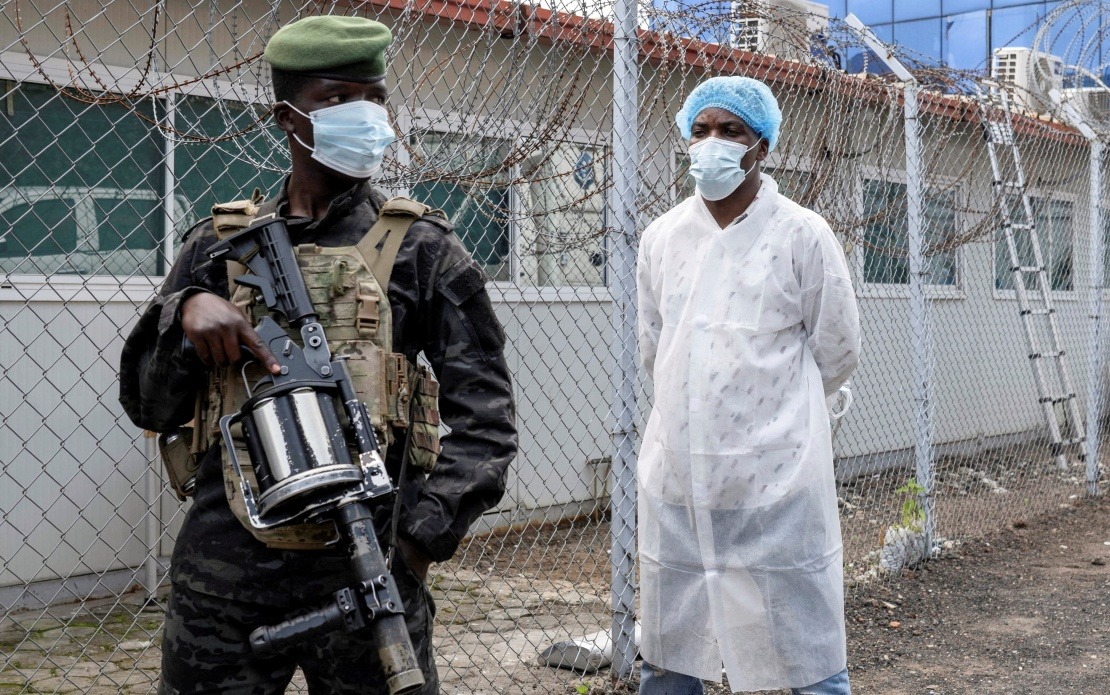
The practice of transporting deceased Ebola patients across the Democratic Republic of Congo to ancestral burial grounds is creating a dangerous vector for viral transmission, according to a warning issued by United Nations officials on Friday. The alert comes as the outbreak, which emerged in mid-May, continues its alarming trajectory with fatalities surpassing 800 and confirmed infections exceeding 2,100 cases. This cultural collision between traditional mourning practices and epidemiological imperatives represents one of the most pressing challenges facing health authorities struggling to contain what has become a rapidly expanding public health emergency.
Data from Congo's Health Ministry reveals a case fatality rate of 37.5 per cent, positioning this as among the most lethal Ebola variants encountered in recent years. The geographic spread has extended across five provinces—Haut-Uele, Ituri, North Kivu, South Kivu and Tshopo—creating a complex containment landscape that defies simple public health interventions. The virus's penetration into multiple administrative regions suggests substantial community-to-community transmission, complicating efforts to isolate and monitor cases effectively.
The trajectory of the outbreak has accelerated dramatically in recent weeks, expanding by approximately 70 per cent over a fourteen-day period with an average of more than forty new infections reported daily. International Organisation for Migration Regional Director Frantz Celestin emphasized during a video briefing that this exponential growth reflects both the virus's transmissibility and the structural barriers undermining containment strategies. The scale of daily case additions underscores how quickly Ebola can overwhelm resource-constrained healthcare systems, particularly in regions lacking adequate diagnostic and treatment infrastructure.
Culturally rooted funeral traditions fundamentally complicate the epidemiological response. The IOM documented that 105 cadavers were intercepted at border crossings and designated health zone entry points, illustrating the continuous flow of bodies across provincial boundaries. These movements represent direct transmission opportunities, as family members and burial specialists maintain close physical contact with highly infectious remains. The practice reflects deep-seated beliefs about ancestral connection and proper death rituals that cannot be dismissed as mere superstition but rather understood as integral to community identity and social cohesion.
Community hostility toward official burial protocols has emerged as a critical impediment to outbreak containment. According to Celestin's assessment, widespread resistance from local populations continues to obstruct safe burial operations, with burial teams encountering organized opposition and, in alarming instances, physical violence. This friction between public health authorities and communities suggests underlying trust deficits, potentially rooted in historical experiences with state institutions or misconceptions about the disease's nature and transmission pathways.
A particularly severe incident occurred last month in Bunia, the capital of Ituri province, where violence erupted during the funeral of an Ebola victim. Four Red Cross volunteers sustained serious injuries when youths attempted to forcibly open a coffin during the burial ceremony. This violent confrontation exemplifies how funeral practices intersect with community skepticism, creating situations where humanitarian workers themselves become targets. The incident raises questions about security protocols for burial teams and whether current approaches adequately address the social tensions underlying such resistance.
Among the outbreak's most troubling characteristics is that approximately 60 per cent of recorded deaths have occurred within community settings rather than medical facilities. This pattern indicates substantial delays in case identification, suggesting many individuals transmit the virus to family members and neighbours before diagnosis occurs. The concentration of deaths outside healthcare settings reflects both geographical barriers to medical access and potential community preference for home-based care, underscoring how cultural practices and healthcare infrastructure deficiencies interact to amplify transmission risk.
The causative agent, identified as the Bundibugyo virus strain, has proven particularly aggressive and transmissible. Médecins Sans Frontières characterized the outbreak as the third-largest and fastest-growing Ebola event documented in medical history, achieving this distinction within merely two months. This trajectory suggests viral properties favouring human-to-human transmission or population characteristics enhancing susceptibility. The comparison to historical outbreaks provides sobering context for international response mobilization.
Geographic expansion continues unabated, with the World Health Organisation documenting an increase from 36 to 42 affected health zones over a single week. This widening footprint complicates coordination among multiple provincial health authorities and strains already-limited resources. Each additional health zone represents new populations requiring surveillance, additional border crossings where case detection must occur, and expanded geographic terrain across which transmission chains potentially extend.
For Malaysia and Southeast Asian observers, this unfolding crisis illustrates the persistent vulnerability of disease emergence in sub-Saharan African regions with weak health systems and limited diagnostic capacity. The intersection of cultural practices, community distrust, and governmental capacity limitations creates conditions enabling rapid viral spread. The lesson carries particular relevance as regional governments continue deliberations about pandemic preparedness and cross-border health security arrangements, particularly regarding early warning mechanisms and coordinated response protocols.
The Democratic Republic of Congo's experience demonstrates that epidemiological expertise alone proves insufficient without parallel investments in community engagement, cultural competency, and trust-building. International health agencies must balance respect for local traditions with disease containment imperatives, a balancing act requiring sustained dialogue and inclusive decision-making. As the outbreak continues escalating, success will ultimately depend on transforming adversarial relationships between authorities and communities into collaborative partnerships grounded in mutual respect and shared commitment to survival.

