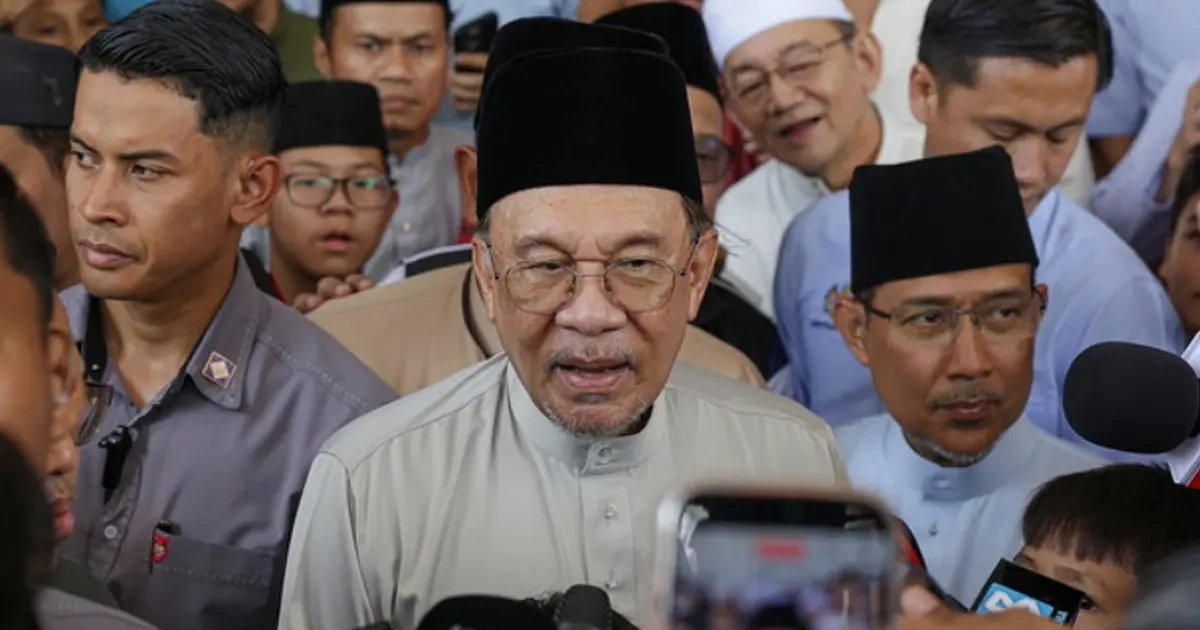
Prime Minister Anwar Ibrahim has declared that the Royal Commission of Inquiry report examining Tabung Haji has been published without any editorial interference or censorship, a statement that signals the government's commitment to transparency regarding the troubled pilgrimage savings fund that has faced mounting scrutiny over financial irregularities and governance concerns.
Tabung Haji, the state-owned fund designed to help Malaysian Muslims save for their Hajj pilgrimage, has become a lightning rod for public scrutiny following revelations of significant losses, mismanagement allegations, and governance failures that have shaken confidence in the institution. The publication of the comprehensive RCI report in its unaltered form represents a pivotal moment in the government's accountability agenda, distinguishing this approach from previous administrations that faced criticism for withholding or sanitising findings from official inquiries.
The release of the full report without modifications addresses longstanding public concerns about the integrity of investigative processes in Malaysia. Historically, government-commissioned reports have faced allegations of selective disclosure or editorial adjustments that diminished their impact or shielded powerful figures from scrutiny. By releasing the Tabung Haji RCI findings entirely, the current administration appears intent on demonstrating that official investigations will be conducted with genuine independence and public accountability, even when findings prove unflattering to institutional stakeholders or powerful individuals.
Tabung Haji's troubles have accumulated over several years, with the fund recording unprecedented losses that have eroded the savings of hundreds of thousands of Malaysian pilgrims. The RCI was established to investigate the root causes of these failures, examine governance structures, and identify individuals or entities responsible for financial mismanagement. The scope of the inquiry was deliberately broad, encompassing administrative decisions, investment strategies, internal controls, and the conduct of various officials and board members who oversaw the fund during critical periods.
The prime minister's confirmation that no censorship occurred carries particular weight given Malaysia's historical relationship with official inquiries and their findings. Previous royal commissions examining high-profile issues have faced public scepticism regarding whether their conclusions were presented without amendment or strategic omission. The transparent release of the Tabung Haji report therefore establishes a potential precedent for how the government handles other sensitive investigations, potentially influencing public confidence in the integrity of future institutional reviews.
For Malaysian savers who entrusted their money to Tabung Haji, the availability of the complete, unedited findings offers crucial clarity about what transpired within the fund and why their investments deteriorated. The report's comprehensive nature should illuminate the decision-making processes that led to questionable investments, inadequate oversight mechanisms, and internal failures that permitted mismanagement to occur unchecked. This transparency serves both an accountability function and a restorative one, allowing affected Malaysians to understand the precise nature of the institutional failures that damaged their savings.
The implications extend beyond Tabung Haji itself to broader questions about governance and accountability in Malaysia's statutory bodies and government-linked companies. Many such entities operate with limited public scrutiny, and revelations about Tabung Haji's mismanagement have prompted stakeholders to question oversight mechanisms across the broader public sector landscape. The government's willingness to release an unfiltered RCI report may encourage similar demands for transparency regarding other government institutions facing governance questions.
Regionally, Malaysia's approach to publishing the Tabung Haji findings could influence governance standards across Southeast Asia, where questions about state fund management and institutional accountability have gained prominence. Nations like Indonesia and the Philippines have grappled with similar challenges regarding pilgrimage funds and government savings schemes, and Malaysia's transparency in addressing its Tabung Haji crisis might establish benchmarks for how comparable institutions in the region should handle investigations into financial irregularities.
The full publication also carries implications for Anwar Ibrahim's broader governance agenda, which has emphasised institutional reform and anti-corruption measures as central pillars. By demonstrating commitment to unaltered reporting on contentious investigations, the prime minister seeks to rebuild public trust in government institutions that previous administrations had eroded through perceived opacity and selective disclosure. This approach aligns with his administration's stated intention to modernise Malaysian governance standards.
However, the availability of the complete report represents merely the beginning of the accountability process. The document's findings must now translate into concrete remedial action, including potential legal proceedings against individuals identified as responsible, structural reforms within Tabung Haji to prevent recurrence, and compensation mechanisms for affected savers. The public and political scrutiny will now focus on whether the government implements the RCI's recommendations with the same transparency and commitment that characterised its release.
The Tabung Haji situation underscores the vulnerability of state institutions to mismanagement when governance oversight weakens, and how institutional failures can devastate the financial security of ordinary Malaysians who relied upon supposedly protected savings mechanisms. The RCI's unrestricted publication offers both accountability and an essential record for future institutional reform, though stakeholders will closely monitor whether findings translate into meaningful systemic change and individual accountability.

