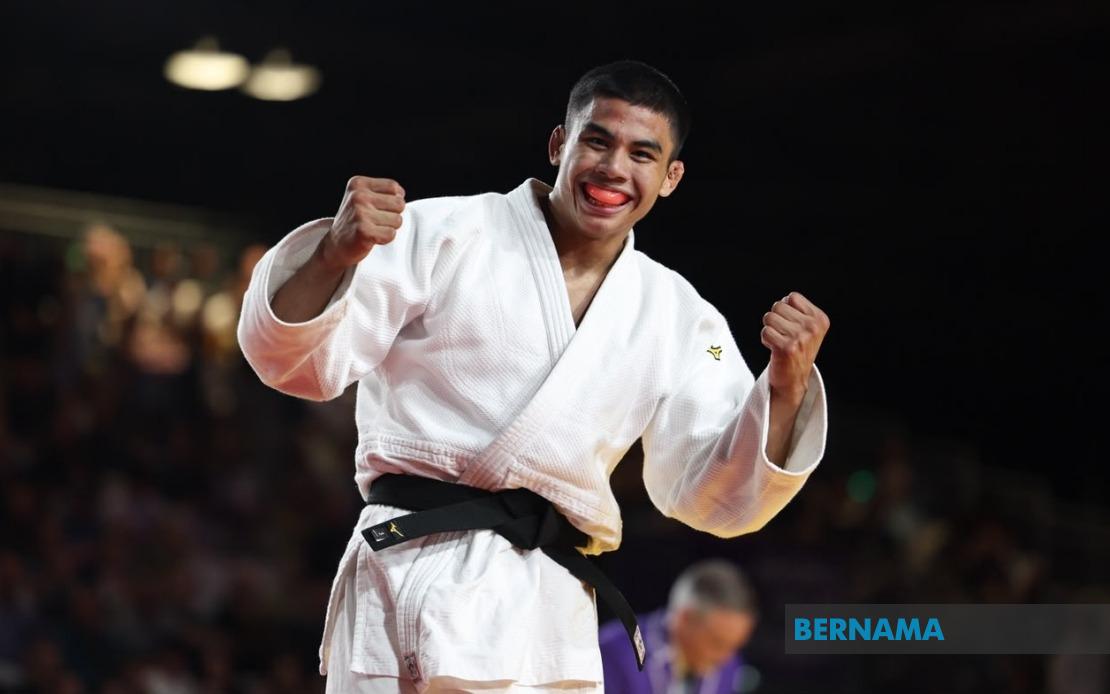
Amir Daniel Abdul Majeed's path to becoming Malaysia's first Commonwealth Games judo gold medallist began not in a training hall but in a family living room, where a simple storybook became the unlikely catalyst for a character trait that would define his athletic career. The 21-year-old Penang-born judoka defeated South Africa's Timothy Meuwsen in the men's under-81 kilogramme final at the Scottish Event Campus in Glasgow, delivering the nation's eighth gold medal at the 2026 Commonwealth Games and etching his name into Malaysian sporting history.
His mother, Yeoh Suatkhim, offers a revealing window into the roots of her son's extraordinary discipline. When Amir Daniel was four years old and refused to abandon his thumb-sucking habit despite her initial efforts, Yeoh deployed what proved to be an ingenious motivational strategy. She promised him a storybook on the condition that he stop the behaviour entirely. The result was immediate and complete: within a single day, the habit disappeared. For a child to demonstrate such willpower over an immediate gratification impulse—not gradually, but decisively—revealed something fundamental about his nature that would later translate into athletic excellence.
Yeoh reflects on how this early episode illustrated a pattern that has remained consistent throughout Amir Daniel's life. Her son possesses an unwavering ability to commit fully to any objective he sets for himself. Once he decides something matters, he pursues it with singular focus. This quality, visible in a four-year-old's choice to forgo an ingrained comfort for a future reward, matured into the mental resilience required to compete at elite levels in a sport that demands technical precision, physical conditioning, and psychological fortitude. It is this fundamental character trait—more than any single training session or coaching intervention—that his mother identifies as the bedrock of his success.
Amir Daniel's introduction to judo at age five introduced him to Md Nashriq Md Nassir, the national coach who has remained his mentor throughout his competitive journey. What began as a sporting relationship evolved into something broader. Md Nashriq became a trusted figure not merely for refining Amir Daniel's technical abilities on the mat, but for reinforcing the discipline and commitment that would extend into his academic responsibilities. Whenever Amir Daniel faced important examinations, Yeoh would consult with his coach, who would establish what amounted to an informal agreement with the athlete to ensure his studies remained a priority. This integration of sporting ambition with educational commitment prevented the common trap of many talented young athletes who allow their education to suffer at the expense of their athletic pursuits.
The significance of having such a coach extends beyond the technical aspects of judo instruction. Amir Daniel's respect for Md Nashriq is so profound that once he makes a commitment to his coach, he treats it with absolute seriousness. There is no hedging, no renegotiation, no casual disregard. This quality of honouring one's word to a trusted mentor—a value deeply rooted in Malaysian and broader Asian culture—has proven instrumental in maintaining the balance that Yeoh believes is essential for long-term success. The coach's role transcends sport, becoming a formative influence on the young man's character development and life choices.
At the Birmingham 2022 Commonwealth Games, Amir Daniel had demonstrated promise by securing a bronze medal in the men's under-73 kilogramme category, signalling that he possessed the talent to compete at the highest levels of Commonwealth competition. Yet four years later in Glasgow, he moved beyond promising performance into history-making achievement. The leap from bronze to gold, and his advancement to a heavier weight category, reflects not merely improved physical conditioning or technical refinement, but the deepening of the mental and emotional foundations that his mother and coach had been cultivating since his childhood.
For Malaysian sports observers, Amir Daniel's achievement carries particular significance. Malaysia has historically struggled to produce world-class judokas, and the lack of Commonwealth Games gold medals in the sport represented a gap in the nation's medal portfolio despite having competitive athletes. His victory closes that gap and establishes a benchmark for future Malaysian judokas. More broadly, his success demonstrates that the pathway to elite athletic achievement in Malaysia is achievable when family support, quality coaching, and institutional backing align with an athlete's personal discipline and determination.
Yeoh's philosophy regarding child development extends beyond her son's sporting achievements. She believes strongly in exposing children to sports and structured learning from an early age, using these activities to keep them engaged in meaningful pursuits while broadening their experiences and capabilities. She applied this approach with her eldest child, Nur Yasmeen, before Amir Daniel made the independent choice to pursue judo seriously. This parental strategy—neither forcing nor discouraging athletic participation, but creating the conditions for children to discover their own interests and develop their capacities—reflects a approach that many Malaysian parents might adopt more deliberately.
Looking forward, Amir Daniel's Commonwealth Games gold represents not an endpoint but a milestone in a larger ambition. Both he and his mother envision an even greater objective: competing at the Olympic Games. Yeoh has expressed her hope that his historic Glasgow achievement will serve as a springboard toward this loftier goal. Yet even as he pursues such elevated ambitions, the same values that brought him from thumb-sucking childhood to Commonwealth champion remain paramount. Amir Daniel continues to prioritise his education and to support his fellow judokas, indicating that his success has not altered the balanced approach to life that his coach and mother have consistently encouraged.
The story of Amir Daniel's journey from a four-year-old who needed motivation to break a habit into a 21-year-old international gold medallist encapsulates a broader truth about athletic excellence in Malaysia. Success at this level rarely emerges from isolated talent alone. It requires family environments that value discipline and long-term thinking over short-term gratification. It demands coaches who understand their role extends beyond technique to character formation. It necessitates young athletes who possess an almost stubborn commitment to their goals, willing to sacrifice immediate comforts for future achievements. As Amir Daniel sets his sights on Olympic competition, his earlier victory in Glasgow should be understood not as the culmination of his potential but as validation of a development philosophy that other Malaysian athletes and their families might productively emulate.

