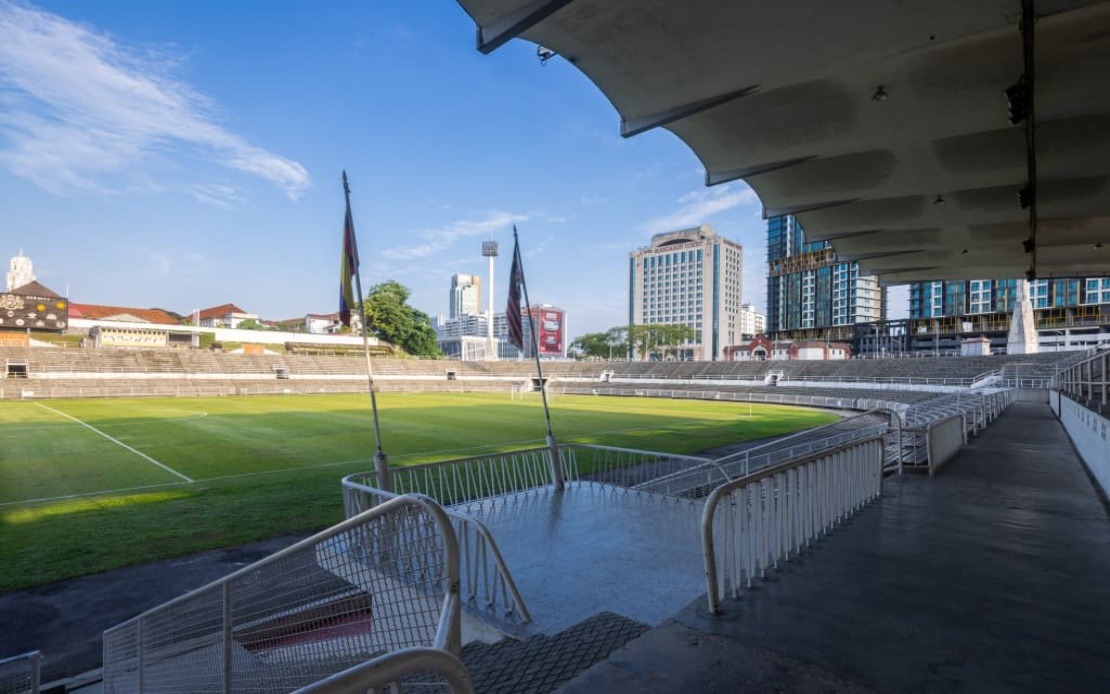
When Tunku Abdul Rahman Putra Al-Haj uttered the historic seven-fold cry of "Merdeka!" at Stadium Merdeka on August 31, 1957, he did more than declare the end of British colonial rule—he set the stage for an entire nation's coming of age. Nearly seven decades later, that same foundational moment continues to resonate through Malaysian society, though the physical spaces where citizens gather to commemorate independence have fundamentally transformed.
Today, National Day celebrations extend far beyond the confines of a single stadium. The ceremonial torch has passed to Putrajaya, the administrative capital established in 1995, which has become the centrepiece for national-level commemorations. This year marks the tenth occasion Putrajaya hosts the main celebration, a frequency that underscores a deliberate strategic shift in how the government orchestrates Malaysia's most significant patriotic observance. The Cabinet's April 2025 decision to designate Putrajaya as the official venue for three consecutive years from 2025 to 2027 signals an intentional commitment to this new paradigm.
The journey from Stadium Merdeka to Putrajaya reflects more than mere logistical convenience or architectural modernization. It encapsulates Malaysia's rapid transformation from a newly independent nation still navigating its identity to a contemporary state with established administrative infrastructure and urban development aspirations. Putrajaya, formerly the district of Prang Besar, represents deliberate nation-building—a custom-designed administrative hub conceived to showcase Malaysia's modernity and organizational prowess. When Putrajaya first hosted the national celebration in 2003 under the theme "Keranamu Malaysia," it symbolically transferred the custodianship of independence commemoration from a historic sports venue to a purpose-built governmental centre.
Yet this transition raises important questions about generational memory and national identity. Does relocating celebrations diminish how younger Malaysians understand their nation's hard-won independence? Scholars of Malaysian society argue persuasively that the answer is nuanced. Prof Dr Sarjit Singh Gill, Chairman of the National Unity and Progressive Society Cluster at the Malaysian Professors Council and a Professor of Anthropology and Sociology at Universiti Putra Malaysia, contends that Stadium Merdeka and Putrajaya should not be viewed as competing symbols but rather as complementary historical monuments. Stadium Merdeka evokes profound nostalgia for older generations—those aged 70 or 80 and beyond—who possess living memories of the independence struggle itself. Putrajaya, by contrast, embodies Malaysia's architectural ambitions as a "smart city in a garden," representing the nation's forward-looking trajectory.
This dichotomy proves pedagogically valuable for fostering national consciousness among younger generations. Celebrating at both locations allows contemporary Malaysians to appreciate the continuity between their nation's origins and its contemporary aspirations. As Prof Sarjit emphasizes, comprehending Malaysia's social transformations and developmental progress requires understanding the historical scaffolding upon which modern achievements rest. The celebration locations themselves become texts through which to read national history—one a monument to liberation, the other a testament to post-colonial governance capacity.
Preserving patriotic sentiment among younger, postmodern-generation Malaysians demands intentional curation of specific historical elements within National Day observances. Prof Sarjit identifies two essential components that celebrations must consistently emphasize: first, recognition of past leaders who secured independence through negotiation and consensus-building rather than violent insurrection, distinguishing Malaysia's path from many postcolonial nations; second, celebration of Malaysia's racial diversity and the principle of unity within pluralism that underpins the social contract. These thematic commitments ensure that National Day transcends ceremonial spectacle to become a genuine vehicle for civic education. The active participation of young people proves crucial here—they transform from passive observers of patriotic performance into active participants, creating authentic emotional investment in national identity.
Putrajaya's practical advantages reinforce its selection as the primary national venue. The Event Management and Innovation Unit at the Ministry of Communications emphasizes that accessibility through the Mass Rapid Transit network, water taxi services, and shuttle buses facilitates crowd management and reduces reliance on private vehicles—a significant logistical achievement when accommodating hundreds of thousands of citizens. This infrastructure advantage proves particularly important for ensuring genuine accessibility across socioeconomic strata, preventing National Day celebrations from becoming events only accessible to those with personal transportation or flexible schedules.
The thematic architecture of recent celebrations embodies this past-future continuum explicitly. The 2026 National Day and Malaysia Day theme, "Malaysia MADANI: Kesejahteraan Dinikmati" (Malaysia MADANI: Shared Prosperity Enjoyed), deliberately traces a narrative arc from independence achievement to contemporary prosperity-building. This framing positions independence not as a historical endpoint but as a foundational platform upon which subsequent national development unfolds. The well-being of citizens becomes the ultimate validation of independence's value, transforming abstract patriotism into lived experience of material improvement.
Modern celebration programming incorporates creative and technological elements designed specifically to resonate with younger audiences. Performances such as "Gema Inovasi MADANI" (Echoes of MADANI Innovation) and "Rentak MADANI, Paluan Tradisi" (MADANI Rhythms, Traditional Beats) deliberately fuse contemporary and traditional cultural expressions, signalling that Malaysia's future need not abandon its heritage. A "Human Graphic" visual formation involving 1,500 schoolchildren exemplifies how celebrations function as participatory events rather than passive spectacles, investing young people directly in commemorative proceedings.
For younger Malaysians navigating contemporary life, National Day celebrations offer experiential opportunities to encounter patriotism as something emotionally real and socially connected. Muhammad Nasrul Nasir, a 30-year-old Administrative Assistant in the Federal Territories Department, exemplifies this engagement trajectory. His progression from spectator at last year's Putrajaya celebration to active parade participant this year demonstrates how inclusive, well-organized commemorations catalyze deeper civic involvement. His recollection of witnessing skydiving performances alongside family and friends reveals how National Day celebrations create shared memory across generations and social networks—precisely the social glue that sustains long-term patriotic commitment beyond rhetorical declarations.
The evolution from Stadium Merdeka to Putrajaya ultimately reflects Malaysia's maturation as a nation confident enough to recontextualize its foundational narratives without erasing them. Both venues now function as necessary historical anchors in an expanding national consciousness. The question moving forward is not whether one location supersedes another, but whether Malaysian society can consciously leverage both spaces to continuously regenerate patriotic understanding among subsequent generations, ensuring that the spirit animating Tunku Abdul Rahman's 1957 cry of "Merdeka!" continues burning brightly even as Malaysia navigates an uncertain future.

