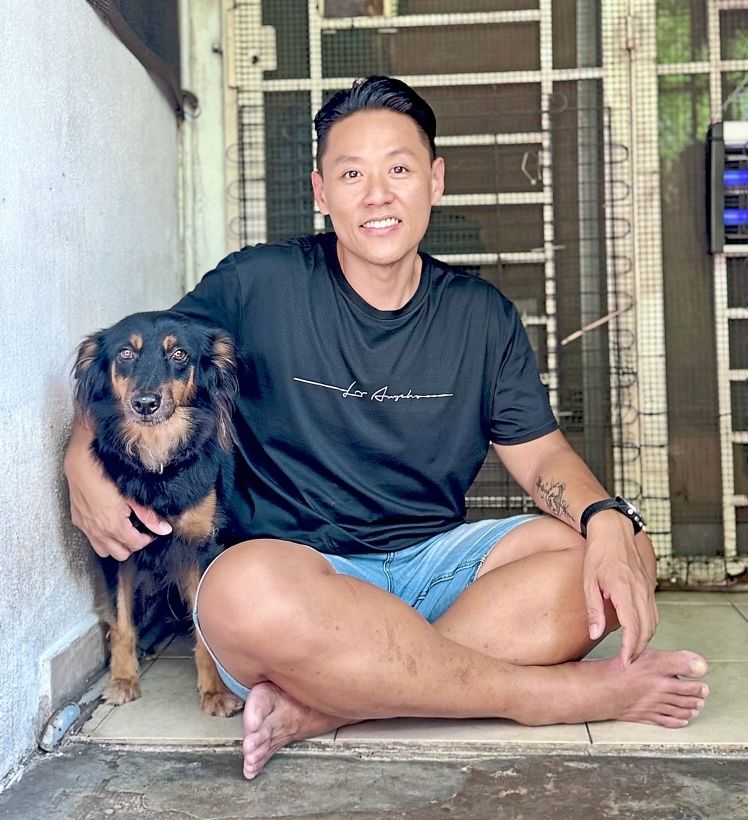
When Benjamin Tan, a real estate negotiator from Puchong, Selangor, brought his trembling new rescue dog home three years ago, he could never have imagined that Zudy would transform from a terrified, silent creature into the vocal, confident companion she is today. The Tan family had visited a pet fair at Mid Valley Megamall hoping to find a companion for Blacky, their ageing poodle, and sought guidance from Brenda Chia, a volunteer with Malaysian Dogs Deserve Better, an animal rescue organisation. Chia introduced them to Zudy, and the family was instantly captivated—though what followed would test their patience and compassion in ways they had not anticipated.
Zudy's arrival at the Tan household revealed the emotional scars of her past. The little dog arrived shaking uncontrollably, her body wracked with anxiety that spoke volumes about the neglect or mistreatment she had endured before rescue. For the first several days, her fear was so overwhelming that she could not bring herself to eat, leaving the family deeply concerned about her physical and mental wellbeing. Benjamin Tan reflects on those early weeks with evident sadness, acknowledging that the severity of her distress hinted at cruelty inflicted by previous handlers. Rather than despair, however, the Tans responded with unwavering gentleness and patience, creating a safe environment where Zudy could slowly begin to heal.
The recovery process unfolded gradually over months rather than weeks. The visible tremors that had characterised Zudy's every movement persisted for approximately nine months before finally subsiding, a timeline that underscores the depth of her trauma. During this extended period, the family made no demands on the frightened animal, instead allowing her to set the pace of her own rehabilitation. They provided consistent care, predictable routines, and the reassurance that comes from a stable home environment. Slowly, imperceptibly at first, Zudy's nervous system began to regulate. The constant shaking diminished. Her breathing became steadier. The rigid tension in her body gradually softened as she began to trust that this new home represented genuine safety.
Even as Zudy's physical symptoms of distress improved, her emotional recovery revealed an unexpected quirk: the rescue dog appeared to be completely mute. Benjamin Tan grew accustomed to her absolute silence, wondering aloud whether Zudy might be congenitally unable to vocalise. Dogs typically express themselves through a rich vocabulary of huffing, whining, yipping, yelping, barking, and howling, yet Zudy produced none of these sounds. Her silence was so complete that Tan began to question whether her vocal cords functioned at all, or whether the trauma she had endured had somehow robbed her of the ability to communicate through sound.
The family's approach to Zudy's rehabilitation extended beyond the confines of their home. They regularly took her to a dog-friendly park near their Puchong residence, where the rescue dog could gradually acclimate to wider social interaction and environmental stimulation. Initially, Zudy's shyness was pronounced; she remained glued to Tan's side, unwilling to venture far or interact with unfamiliar people. However, the consistent exposure to new experiences and gentle encouragement bore fruit. Over time, her wariness began to transform into curiosity. She would sniff cautiously at strangers, and with patience and reassurance, would eventually accept their presence. The park visits became a measure of her progress, a tangible reminder that she was slowly reclaiming her capacity for engagement with the world.
During the first year of her residence with the Tans, Zudy's silence persisted even as her confidence grew in other dimensions. Benjamin Tan observed something curious: though Zudy made no audible sound, she would sometimes attempt the physical gesture of barking. At home, when Blacky would raise his voice at delivery personnel, security guards, or passersby in the street, Zudy would lift her head and mimic the motion—opening her mouth, assuming the posture of a barking dog—yet producing nothing but silence. She was less likely to attempt even this gesture in the park, her timidity still too pronounced to permit such assertiveness in public spaces. It was as though the trauma of her past had not merely silenced her, but had suppressed the very impulse to express herself vocally.
The breakthrough came approximately one year into Zudy's residence with the family, in a moment that would prove transformative. Benjamin Tan heard Blacky's distinctive bark ring out from somewhere in the house, followed immediately by a second bark—but this one was markedly louder and more forceful than the first. Tan's immediate assumption was that the sound could not possibly have originated from Zudy; surely the little rescue dog remained incapable of such vocalization. Yet the evidence was unmistakable. Zudy had found her voice. Whether some internal threshold had finally been crossed, or whether the accumulated months of safety and love had finally penetrated the deepest layers of her trauma, the result was the same: the silent dog had learned to bark.
Since that pivotal moment, Zudy has embraced her newly discovered vocal capacity with remarkable enthusiasm. She now serves as an active participant in household security, joining Blacky in barking at the security guard during patrol rounds. Her vocal repertoire has expanded beyond mere alertness; she yaps along when birds sing at the back of the house and announces her presence when she spots lizards in the garden. Benjamin Tan occasionally finds himself requesting that she moderate her volume, a complaint he delivers with evident amusement and pride. The transformation is complete: where once there was silence, there is now a small dog confidently asserting her presence through sound.
Perhaps most tellingly, Zudy has parlayed her newfound confidence into a position of considerable domestic authority. The Tans maintain a strict dinner schedule, serving her meal at 8 p.m. each evening. Minor delays of a few minutes are tolerated without complaint, but should the family become distracted and dinner service stretch beyond thirty minutes, Zudy takes decisive action. She approaches her humans and barks with unmistakable purpose, as though managing household staff who require supervision. Her demands are invariably met with immediate compliance; Zudy's dinner arrives promptly upon her insistence. In this dynamic, one observes the full arc of her transformation: from a dog too afraid to eat, to one who confidently commands that her needs be met.
The Tan family's experience with Zudy illuminates several important truths about rescue animals and the healing power of patient, unconditional care. That a traumatised dog could spend months in a safe home without demonstrating even basic vocalisation suggests the profound ways that fear and abuse can suppress an animal's natural behaviours and instincts. Yet the fact that Zudy eventually did find her voice, did develop confidence, did learn to play freely in public spaces, and did claim her place as a beloved family member demonstrates that recovery is possible even from severe trauma. At 15 years old, Blacky remains a cherished companion, but Zudy has emerged as his equal, a vocal, assertive, confident presence in the household. For animal rescue advocates in Malaysia, her story serves as powerful testimony to the transformative potential of adoption and the difference that a loving home can make for animals in crisis.

