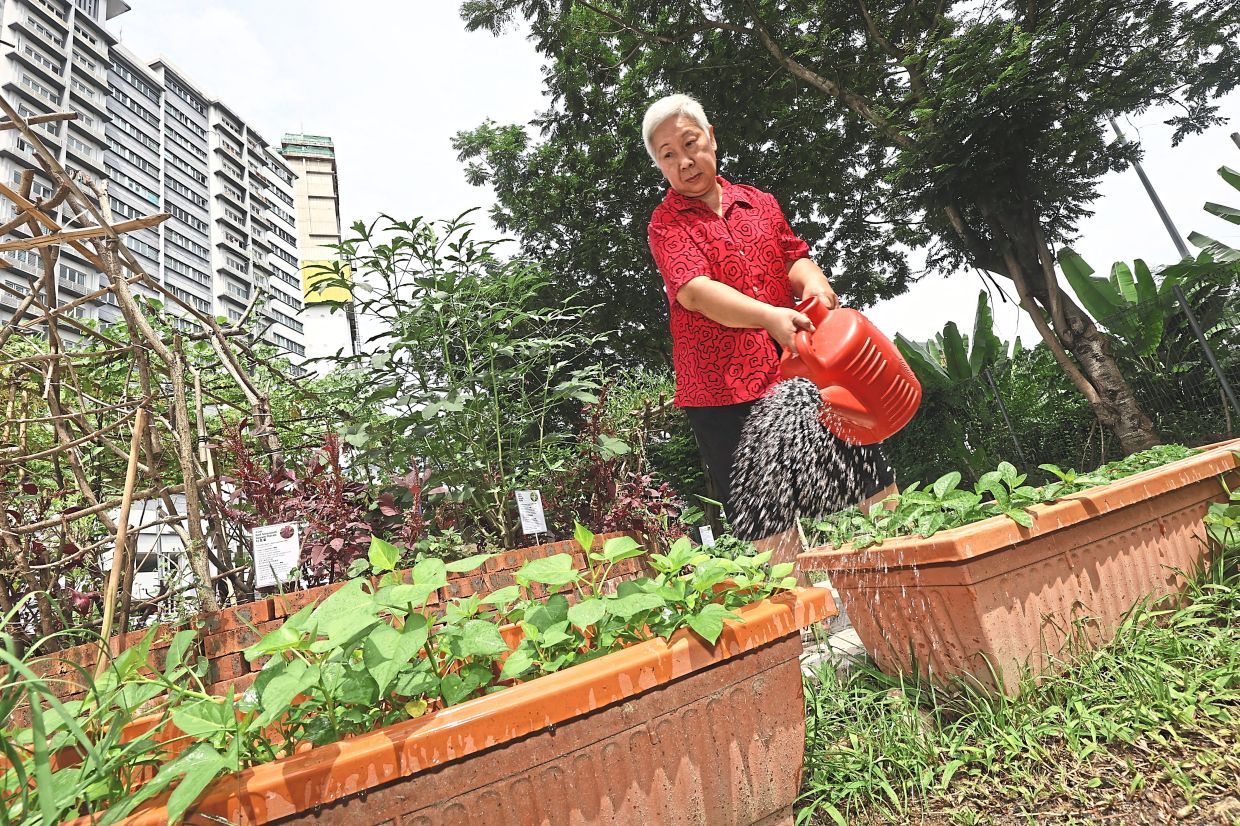
What was once a forgotten patch of overgrown land tucked behind 1Razak Mansion in central Kuala Lumpur has undergone a remarkable transformation. Six months of dedicated effort have converted the neglected corner into a flourishing urban garden bursting with herbs, vegetables, fruit-bearing plants and flowering species. The project represents more than simple beautification — it demonstrates how strategic urban planning can address pressing social challenges within high-density residential communities, particularly those with ageing populations facing isolation and declining mental health outcomes.
The 1Razak Mansion Food Forest represents a collaborative effort between social enterprise PWD Smart FarmAbility, the building's management corporation, and engaged residents. The official launch of the initiative underscores a growing recognition among policymakers and community leaders that green spaces serve critical wellness functions beyond their aesthetic appeal. Minister in the Prime Minister's Department (Federal Territories) Hannah Yeoh highlighted during the opening ceremony that approximately 80 percent of residents at 1Razak Mansion are senior citizens, a demographic for whom structured activities supporting both physical and mental well-being have become essential. While tai chi classes and other exercise programmes have long been available, Yeoh stressed the equally vital importance of mental health support, suggesting that community gardens can bridge gaps left by traditional recreational offerings.
Resident Alice Fernandez, 64, articulates precisely how the garden addresses multiple dimensions of well-being simultaneously. For elderly residents with limited mobility or reduced inclination to exercise beyond the residential compound, tending plants offers manageable physical engagement without the fatigue associated with external activities. The practical economics also matter significantly. As a communal resource, the garden enables residents to supplement their diets directly from the plot, a meaningful cost reduction for those on fixed incomes navigating Malaysia's rising living expenses. Fernandez notes that the garden's proximity to previously unusable spaces — it sits near the garbage room, historically avoided by residents — has fundamentally altered movement patterns through the compound. What was once an eyesore has become a destination, prompting seniors to venture outdoors daily, contributing to both physical activity and social connection.
The psychological benefits extend beyond basic stress relief. Fernandez describes how the garden has become woven into her daily rhythm, a stopping point after her morning jog where she dedicates time to watering plants and contributing to maintenance. This integration of the space into personal routine reflects how environments can encourage consistency and purposeful engagement. For residents lacking employment or pressing obligations, the garden provides what developmental psychologists recognise as essential structure and meaning — reasons to rise, specific tasks to accomplish, and tangible evidence of one's contributions to a shared environment.
Behind the scenes, project implementer Thieeben Sivabalasingam, 38, managed the logistical complexities during the construction phase. His experience reveals the often-invisible coordination required to transform vision into reality. Standing with his three-year-old son overlooking the completed garden, Sivabalasingam expressed the satisfaction of witnessing scattered deliveries of materials and temporary chaos coalesce into a functional community asset. The journey from clearing overgrown land to organising fences and establishing planted beds involved numerous site visits, each revealing new progress. Sivabalasingam's perspective extends beyond the immediate physical transformation; he recognises that the garden addresses a critical need within ageing communities — the requirement for daily purpose and anticipation.
The demographics of interest extend beyond the immediate 1Razak Mansion community. Jenny Wong, 70, and her husband KC Wong, 76, travelled from the neighbouring Razak City Residences specifically to attend the launch, demonstrating how such initiatives capture attention among similar residential populations. Jenny identified the dual benefits of hobby development and environmental contribution, while KC articulated the challenge facing many retirement-age residents: substantial unstructured time coinciding with the desire to contribute meaningfully to their communities. The couple's interest in replicating the model in their own residential complex reflects broader awareness that community-based food production addresses multiple contemporary challenges simultaneously — healthcare costs, environmental sustainability, social isolation, and the search for retirement-age purpose.
Dr Billy Tang Chee Seng, 60, the founder and social entrepreneur driving PWD Smart FarmAbility, positions the food forest as merely an initial phase of a more expansive vision. The enterprise recognises that sustainable community transformation requires building practical capabilities alongside environmental improvement. Plans for a kitchen hub housed in a small building at the garden's centre will enable residents to transform harvested produce into prepared meals while acquiring cooking skills. This vertical integration — from cultivation through processing to consumption — creates multiple engagement points and educational opportunities throughout the agricultural cycle.
The intergenerational dimension of these planned expansions carries particular significance for Malaysia's increasingly age-diverse urban environment. Introducing scientific education through soil microscopy and microorganism study positions the garden as a living classroom, connecting younger residents to principles of sustainability and biological systems. This approach recognises that food forests function most effectively when they serve the entire community spectrum, from senior citizens seeking mental stimulation and affordable nutrition to younger residents developing scientific literacy and environmental awareness. The kitchen hub concept similarly bridges generational interests, allowing grandparents and grandchildren to collaborate in food preparation and skill-sharing.
The 1Razak Mansion initiative reflects a broader shift in urban development thinking, particularly relevant to Malaysian cities managing rapid ageing populations in high-density residential settings. Rather than treating ageing as primarily a medical or welfare challenge requiring institutional intervention, the food forest demonstrates how strategic environmental design can activate community assets and foster autonomy. The garden operates on principles of co-production, where residents transition from passive consumers of services to active participants in creating and maintaining community goods. This shift carries profound implications for social cohesion, individual dignity, and the sustainability of urban communities increasingly dominated by non-working-age populations.
The success of such initiatives depends fundamentally on committed leadership and community buy-in. The collaboration between PWD Smart FarmAbility, residential management, and enthusiastic participants like Sivabalasingam demonstrates that transformation requires coordination across institutional, organisational, and individual levels. The enthusiasm expressed during the launch — particularly from residents discovering unexpected potential in their living environment — suggests that the food forest has already begun generating the psychological and social returns envisioned by its architects, even as the cultivation of physical crops continues its growth cycle.

