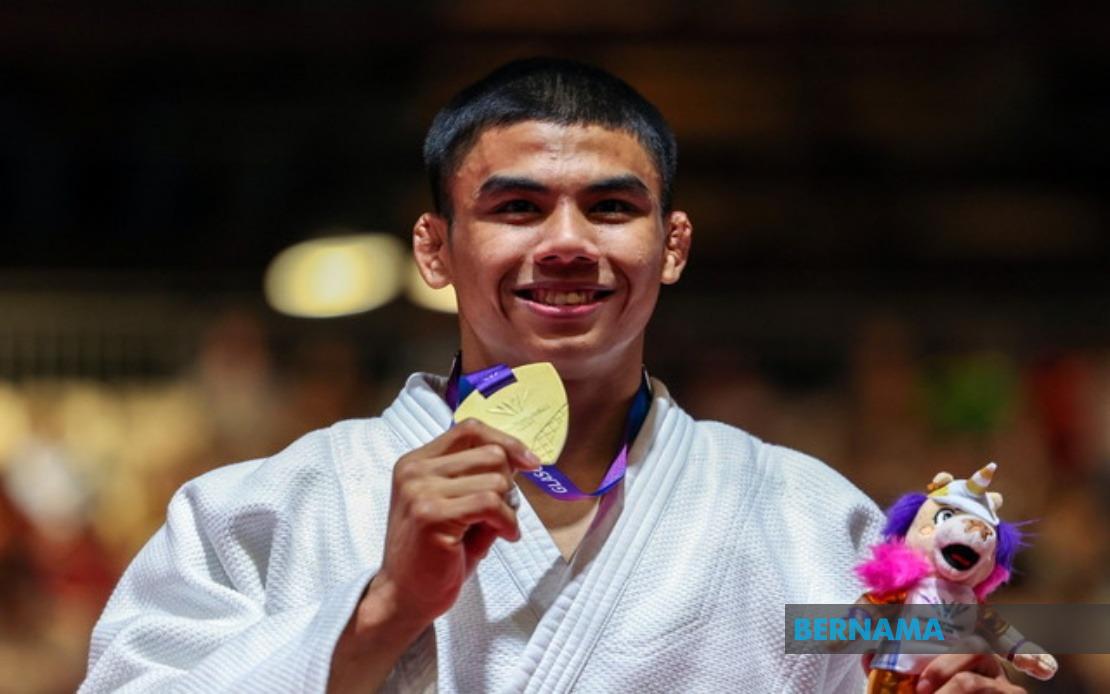
The transition from elite athlete to coach has proven far more psychologically demanding than Amir Daniel Abdul Majeed anticipated. At just 21 years old, the Commonwealth Games gold medallist has discovered that directing athletes from the sidelines generates considerably more anxiety than stepping onto the mat himself during competition. Speaking in Shah Alam after Penang's strong showing at SUKMA Selangor 2026, the young judoka candidly reflected on how his new role as assistant coach to the Penang judo squad has fundamentally altered his relationship with pressure and responsibility.
The psychological shift from individual performer to team mentor represents a marked departure from the athlete's previous experience. When competing, Amir Daniel bore sole responsibility for his own performance—the outcomes rested squarely on his technical execution, tactical decisions, and mental resilience on the mat. That self-contained pressure, while intense, offered a degree of control and immediacy. Now, as an assistant coach managing 13 athletes at a major multi-sport games, his anxiety stems from factors partially beyond his direct influence. He must monitor the emotional states, technical preparation, and mental readiness of an entire squad, each with their own strengths, weaknesses, and competing anxieties heading into their respective bouts.
Amir Daniel's reflection on this transition carries particular weight given the Penang judo delegation's accomplished performance throughout the three-day competition. The squad concluded their campaign with an impressive haul of three gold medals, one silver medal, and five bronze medals, positioning Penang as joint-top medalists alongside Johor in the overall games tally. For a young coach mentoring his first competitive squad, such results validate the quality of his input and guidance, even as he grapples with the unfamiliar sensation of watching others execute strategies he has helped formulate.
The responsibility of stewarding athlete development from early stages through to competitive readiness has created a distinctive emotional investment for the former competitor. Amir Daniel disclosed that he has observed many members of the current squad progress through judo since their childhood years. During his own competing career, he trained and competed directly alongside several of these athletes as peers. That historical connection—having shared the mats, the training hardships, and the early competitive disappointments with them—adds a layer of personal concern to his coaching obligations. The transition from peer to mentor among athletes he has known for years creates psychological complexity that differs markedly from coaching strangers or younger-generation judokas.
Managing a squad of 13 athletes introduces logistical and emotional complexity that individual sport does not demand. During his competing years, Amir Daniel needed only to coordinate his own preparation, manage his own physical recovery, and organize his own mental approach before competition. Today, he must juggle the diverse needs of a large group—ensuring each athlete receives adequate technical attention, maintaining team morale, managing interpersonal dynamics, and distributing coaching resources equitably. This expanded scope of responsibility, he acknowledged, carries considerably greater weight than the self-focused pressure of personal athletic performance.
Yet despite the added strain, Amir Daniel emphasizes that witnessing his athletes' tangible progress and achievements provides profound professional satisfaction. The observable improvement in technical proficiency, competitive confidence, and medal-winning performances offers a reward that differs qualitatively from personal athletic success. Where individual medals validate personal effort, coaching medals validate his ability to develop others—a distinction that appears to resonate deeply with the young mentor as he contemplates his long-term career trajectory in the sport.
Beyond his current coaching commitments, Amir Daniel remains focused on his own competitive aspirations. He is currently awaiting official confirmation regarding his selection for the Aichi-Nagoya 2026 Asian Games in Japan, with the selection committee scheduled to convene this week to finalize team rosters. The timing of this decision coincides with his emerging coaching responsibilities, meaning he may need to balance both roles throughout the coming competitive year. Such dual commitments are not uncommon among young athletes transitioning into coaching, yet they demand careful management of limited time and energy reserves.
The judoka's perspective on the forthcoming Asian Games reflects strategic thinking about his competitive trajectory. He explicitly acknowledges that Japan's judo environment presents substantially more rigorous opposition than most regional competitions. Rather than viewing this as intimidating, he frames the challenging matchups as invaluable preparation for his long-term Olympic ambitions. The Asian Games represent both an end goal in themselves and a stepping stone toward greater international competitiveness. This framing suggests a mature approach to athlete development—prioritizing quality of competition and exposure to elite-level opponents over simply accumulating medals in less competitive arenas.
The SEA Games Malaysia 2027, scheduled to take place on home soil, looms as another significant milestone in Amir Daniel's competitive calendar. Preparing for both the Asian Games and the subsequent regional championships requires a multi-year development strategy. Competing at Aichi-Nagoya 2026 provides six months of valuable international fight exposure that should enhance his technical sharpness and tactical sophistication before the SEA Games arrive. This sequencing of major competitions demonstrates how elite athletes and their support teams coordinate competitive schedules to maximize development opportunities.
Amir Daniel's dual engagement with coaching and elite-level competition reflects broader trends in Malaysian sports development. The pathway from athlete to coach need not be a permanent retirement from competition; increasingly, accomplished performers remain active competitors while contributing to athlete development within their organizations. This model leverages their recent competition experience, credibility with younger athletes, and technical expertise. However, it also creates the pressures Amir Daniel articulates—managing both personal competitive demands and the emotional investment required to mentor others effectively.
The young judoka's candid assessment of coaching pressures offers valuable insight into often-overlooked aspects of sports development. While media and public attention typically focus on athletes competing for medals, the coaching ecosystem that produces medal-winning performances rarely receives comparable scrutiny. Amir Daniel's testimony underscores that coaching at competitive levels demands distinct psychological resilience and emotional management strategies that differ markedly from athlete-focused pressures. His ability to articulate this transition so clearly suggests he possesses the reflective capacity that often characterizes coaches capable of developing future generations effectively.
As Amir Daniel awaits the Asian Games selection committee's decision, his parallel existence as both competitor and mentor encapsulates the multifaceted demands of elite judo in Malaysia. Whether he competes at Aichi-Nagoya 2026 or focuses primarily on coaching the Penang squad, his evident commitment to advancing the sport through multiple channels—personal achievement and athlete development—positions him as an important figure in Malaysian judo's continued development and international competitiveness.

