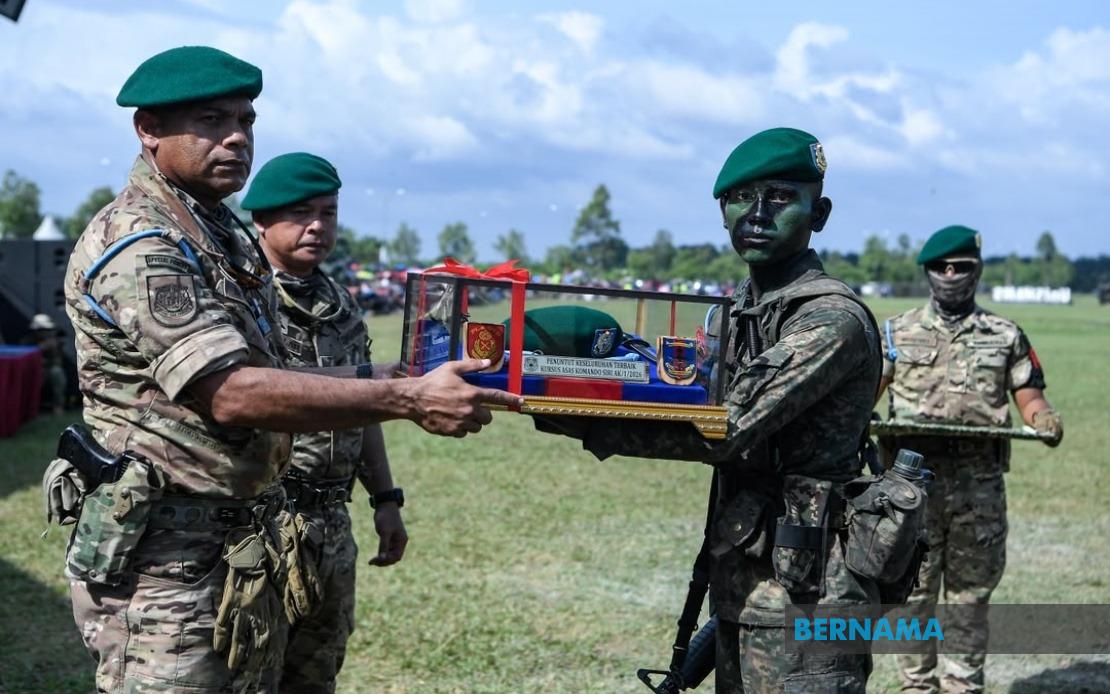
Second Lieutenant Muhammad Fadli Jamalluddin's path to becoming Malaysia's latest commando elite was anything but straightforward. The 24-year-old officer from Ampang, Kuala Lumpur, secured the Best Overall Trainee honour at the conclusion of the Basic Commando Course Series AK/1/26, held at Universiti Sultan Abdul Halim Mu'adzam Shah in Kuala Ketil, yet his journey involved not one but two near-crushing defeats that would have derailed most aspirants.
Muhammad Fadli's determination to pursue an elite military career traces back to his secondary school years, when he first became captivated by military service. This ambition crystallised into action through his academic pathway at the National Defence University of Malaysia (UPNM), from which he graduated with a Bachelor's degree in Global Policing and Intelligence with Honours. Upon completing his studies, he enlisted with the Royal Malay Regiment in 2024, positioning himself within Malaysia's fighting force during a formative period of his military development.
The decision to pursue commando training stemmed from a deeply personal motivation. As the third of five siblings, Muhammad Fadli sought to challenge himself at the highest level while honouring his family, particularly his father. This familial dedication took on heightened significance when his father suffered a stroke more than a year prior to his commando course completion. Rather than diminishing his resolve, this family circumstance appeared to strengthen his commitment to achieving what he regarded as one of the military profession's most prestigious distinctions.
His initial attempt at the Basic Commando Course Series 3/2024 resulted in failure, a result that could have discouraged lesser-willed candidates from pursuing another round. Instead, Muhammad Fadli emerged from that disappointment with renewed purpose and greater understanding of the demands ahead. He chose to reapply and recommit himself to the stringent preparation necessary for success in one of Malaysia's most competitive military training programmes.
During his second attempt at the course, Muhammad Fadli navigated through the demanding three-month programme relatively successfully until week eight, when he faced another critical hurdle. He fell short during one of the pivotal training exercises—a moment that carried the real possibility of requiring him to restart the entire course from the beginning. By that point, he had already endured more than 100 kilometres of exhausting endurance marching, pushing his physical reserves to their limits. The emotional impact of nearly losing all progress was profound; he openly acknowledged weeping at the realisation of his temporary failure.
What distinguished Muhammad Fadli's character was his rejection of well-intentioned but ultimately limiting advice from those around him. Multiple individuals counselled him to abandon his pursuit, citing the programme's exceptional rigour and the toll it exacts on participants. He refused these suggestions categorically. Instead, he reframed his temporary setback as a learning opportunity rather than a terminal defeat, channelling his disappointment into renewed determination to overcome the remaining obstacles standing between him and the coveted green beret.
The three-month training curriculum subjected participants to both demanding land-based and maritime exercises designed to forge operators capable of operating under extreme stress. These programmes test not merely physical endurance—though the 100-plus kilometre endurance marches certainly demand substantial cardiovascular and muscular resilience—but equally important cognitive and psychological resilience. The commando pipeline demands personnel who can think strategically under pressure, make sound tactical decisions when circumstances remain ambiguous, and operate as cohesive team members despite fatigue and fear.
Muhammad Fadli's personal philosophy about commando service highlights the distinction between becoming a commando soldier and becoming a commando officer. The additional expectations placed upon officer-level commandos extend beyond the physical demands that already challenge even the most athletically gifted recruits. Officers must possess the intellectual capacity to plan sophisticated special operations, the strategic acumen to adapt to unforeseen circumstances, and the leadership capacity to guide other personnel through equally demanding conditions. His academic background in Global Policing and Intelligence equipped him with analytical frameworks relevant to these elevated responsibilities.
The course ultimately produced thirty-nine successful graduates consisting of five officers, including Muhammad Fadli, alongside thirty-four other ranks. This completion rate reflects the stringency of the selection and training process, where roughly one-third of candidates do not achieve programme completion across typical iterations. The accolade of Best Overall Trainee represents recognition not merely of physical capability but of the integration of mental fortitude, tactical understanding, and resilience that defines elite commando capability within Malaysia's military structure.
Colonel Nordin Abu, serving as Commandant of the Special Warfare Training Centre (PULPAK), presented the award, underscoring the institutional significance attached to commando training within Malaysia's defence establishment. The completion ceremony itself marked a formal recognition of Muhammad Fadli's transformation from a rejected candidate during his first attempt into the exemplary graduate honoured above all his peers.
For Muhammad Fadli, this achievement carried meanings extending far beyond professional accomplishment. He positioned the honour as the most meaningful gift he could present to his family, particularly his father, whose health challenges during the preceding year had infused his training efforts with additional emotional weight. Though his father could not physically attend the ceremony, Muhammad Fadli expressed hope that knowledge of his son's triumph would provide paternal strength during his ongoing recovery. This personal dimension—anchoring elite military achievement within the fabric of family dedication and filial devotion—resonates within Malaysian cultural contexts that traditionally emphasise familial bonds alongside individual accomplishment.
Muhammad Fadli's narrative offers Malaysian military personnel and civilians alike a compelling illustration of how strategic persistence, emotional resilience, and refusal to accept initial failure can lead to exceptional outcomes. His progression from a rejected candidate to top graduate of one of Malaysia's most demanding military courses exemplifies qualities—determination, adaptability, and psychological fortitude—that the military organisation itself seeks to cultivate within its personnel. For younger officers contemplating whether to pursue commando training despite its acknowledged hazards and demands, his example provides testimony that early setbacks need not define ultimate capability or achievement.

