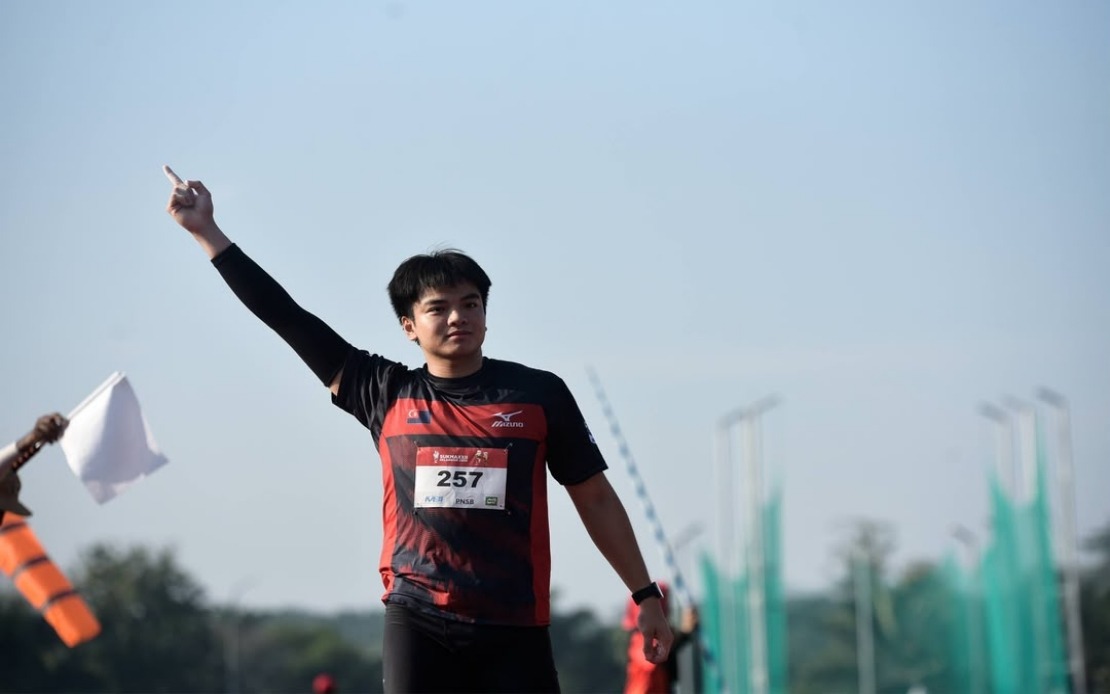
Eighteen-year-old Chai Kai Le's path to athletic stardom reads like a conversion story, yet the Johor javelin thrower insists his breakthrough was largely accidental. Until recently, the now-record-breaking athlete was simply a schoolboy wielding a badminton racket with notable proficiency, until a perceptive teacher recognized something in the mechanics of his shuttle release that suggested untapped potential in the throwing arena. That chance observation in Standard Six would reshape the entire trajectory of his sporting life, ultimately landing him at the apex of Malaysian track and field competition.
At the Selangor 2026 Malaysia Games held at Universiti Putra Malaysia's Sports Centre, Kai Le catapulted himself into the record books with a commanding 64.44-metre heave on his second attempt, obliterating the previous benchmark of 62.33 metres that had stood since the year 2000 when Sarawak's Kho Mei Kuan established it in Penang. The 2.11-metre improvement, though seemingly modest in absolute terms, represents a significant advancement in a discipline where marginal gains often require years of technical refinement and physical conditioning to achieve.
The athlete's recollection of his transition from racket sport to field event captures the formative influence of mentorship in determining athletic outcomes. Observing elite performers at training sessions and domestic competitions kindled within him a desire to emulate their prowess, creating an internal motivation that extended far beyond the confines of formal coaching instruction. This observation-based learning model demonstrates how inspiration derived from peers operating at higher competitive levels can fundamentally alter an athlete's aspirations and commitment trajectory.
Behind Kai Le's ascent lies a foundation of consistent parental investment that extends beyond the typical encouragement offered by most sporting families. His father, Chai Yin Huan, has demonstrated remarkable commitment to his son's development, systematically addressing each impediment to progress whether through medical intervention, equipment replacement, or logistical support. The elder Chai's approach, characterized by a measured emphasis on health preservation rather than podium obsession, has created an enabling environment where the younger athlete can pursue excellence without the psychological burden of excessive parental expectation.
The past twelve months have tested both father and son considerably, as Kai Le has grappled with a constellation of injuries affecting his posterior chain and upper extremities—specifically recurring back problems alongside right shoulder and elbow complications that remain incompletely resolved. Rather than compelling withdrawal from competition, these physical challenges have coexisted with continued training efforts and competitive participation, suggesting either exceptional pain tolerance or a deep-seated determination to maintain competitive momentum despite physiological impediments.
Kai Le's participation in the Indonesia Open earlier this year yielded a personal best performance of 65.65 metres while simultaneously establishing the national under-20 record, demonstrating his capacity to elevate his output when competing against international opposition. This metric assumes particular significance as it exceeds his current SUKMA standard, indicating that his record-setting performance at the Games may represent a relatively conservative expression of his current capabilities rather than an apex achievement.
The athlete's next competitive horizon involves pursuing a 70-metre threshold during the forthcoming twelve months, a target intimately connected to qualification standards for the 2027 Southeast Asian Games. This progression from the current record to the next aspirational benchmark represents approximately a 5.6-metre improvement, a jump that would typically demand concentrated technical refinement combined with enhanced strength development and sport-specific conditioning. To facilitate this advancement, Kai Le intends to undertake specialized training in Japan during the early months of 2025, leveraging external coaching expertise and potentially superior training infrastructure.
The significance of Kai Le's achievement extends beyond individual accomplishment or national record-keeping into the broader context of Malaysian athletic development. At an age when many Southeast Asian athletes are still determining their sporting trajectories, Kai Le has already established himself as a competitive force at the regional level, positioning himself advantageously for participation in continental competitions. His progression also illustrates how investment in grassroots coaching and teacher-led talent identification can yield measurable returns in elite athletic performance.
For Malaysian track and field enthusiasts, Kai Le's emergence as a potential SEA Games contender provides grounds for optimism regarding the nation's field event competitiveness at upcoming regional championships. The combination of existing national record credentials, demonstrated capacity for improvement, and access to international training opportunities suggests a trajectory that could yield substantial returns for Malaysia's sporting profile throughout the remainder of this Olympic quadrennium and beyond.

