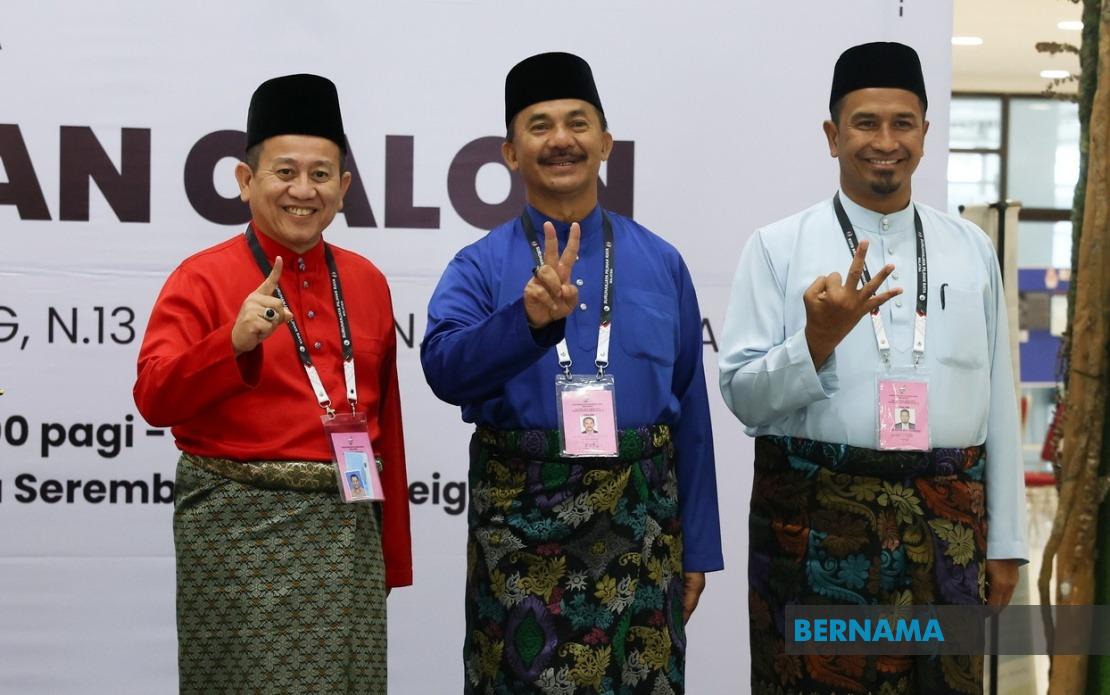
The 16th Negeri Sembilan State Election is shaping up as a contest between experience and renewal, with political parties across the ideological spectrum strategically blending seasoned politicians with first-time candidates to appeal to voters seeking change. The infusion of new names into the electoral landscape reflects a deliberate recalibration within Malaysia's major political coalitions, each attempting to project vitality while retaining institutional knowledge and organisational strength heading into the August 1 polling date.
Pakatan Harapan has committed its full machinery to all 36 State Legislative Assembly seats, deploying 24 new candidates alongside a dozen established figures. This represents a notable refreshing of the coalition's candidate pool, signalling confidence that fresh personalities can resonate with an electorate increasingly interested in alternatives to long-serving incumbents. Among the PH contingent, however, several recognisable names retain prominent positions. Datuk Seri Aminuddin Harun, who helms the coalition's Negeri Sembilan chapter, has opted not to seek re-election in the Sekamat seat where he previously held sway, instead pivoting to the Linggi constituency—a manoeuvre suggesting tactical recalibration rather than retrenchment from frontline politics.
The presence of high-profile PH campaigners also underscores the coalition's strategy of layering credibility across the state. DAP Secretary-General and Transport Minister Anthony Loke will defend the Chennah seat, providing the party with ministerial gravitas and national profile in what remains a closely contested state political arena. Such positioning allows PH to combine the energising effect of new faces with the reassurance of proven leadership, a balancing act critical in a state where political fortunes have shifted considerably over the past decade.
Barisan Nasional's approach diverges somewhat, fielding 25 candidates of whom 13 are newcomers to electoral politics—a lower proportion of fresh faces than its coalition rival, yet still indicative of generational transition within UMNO and its alliance partners. Datuk Seri Mohamad Hasan, the Deputy President of UMNO and Foreign Minister, will seek to retain the Rantau seat, embedding national ministerial credentials within the BN campaign narrative. The presence of such figures underscores BN's reliance on ministerial office and established party machinery to maintain relevance in state-level competition.
Notable among BN's candidate shuffles is Datuk Ismail Lasim's decision to relinquish the Senaling seat he captured in the previous 2023 election, instead contesting the Juasseh constituency. Such repositioning reflects either strategic confidence in BN's ability to retain Senaling with a fresh face, or acknowledgment that demographic or political currents favour different candidates in different terrain. Datuk Seri Jalaluddin Alias, the BN state chairman, will defend his Pertang seat won in the 2023 contest, anchoring the coalition's leadership team at grassroots level.
Perikatan Nasional, meanwhile, is contesting 11 seats through a multicommunal coalition spanning PAS, Gerakan, Wawasan, and the Malaysian Indian People's Party, each component bringing its own candidate mix. The inclusion of multiple parties within PN's Negeri Sembilan campaign reflects the coalition's broader strategy of presenting itself as a pluralistic alternative to the BN-PH duopoly that has dominated state politics. This fragmented but deliberate alliance appeals to constituencies dissatisfied with the two major coalitions yet seeking stability through formal political structures.
Bersatu's participation in this election marks a significant transition. The party, which competed under the PN banner in the 2023 state election, has opted to field its own logo this time—a symbolic and organisational shift indicating either estrangement from PN or strategic repositioning. Among Bersatu's 24 candidates is Datuk Tun Faisal Ismail Aziz, representing the party's cohort of fresh entrants to electoral politics. Concurrently, Hanifah Abu Bakar carries the banner of continuity, trusted to defend the Labu DUN seat, exemplifying how even smaller parties within the political ecosystem balance renewal with retention.
The broader candidate field also encompasses smaller parties and independent contenders, with Parti Berjasa, Parti Orang Asli Malaysia, and Parti Sosialis Malaysia each fielding one candidate apiece, alongside four independent candidates. This proliferation of electoral options reflects Malaysia's increasingly fragmented political marketplace, where the dominance of established coalitions faces pressure from niche political movements and individual challengers willing to navigate the electoral process outside mainstream structures.
Demographic analysis of the candidate pool reveals generational diversity across party lines. The oldest candidate, Datuk Abd Latiff A Tambi of PH contesting the Gemencheh seat, is 70 years old, while Leevineshwaraan Murugan, Bersatu's Sri Tanjung candidate, is just 23—a 47-year age gap that encapsulates the spectrum of political experience and life perspective represented in this election. Such diversity, whether intentional or incidental, may resonate with voters across age cohorts, from those seeking seasoned judgment to younger electors seeking peers who understand their contemporary concerns.
With 103 candidates confirmed after the nomination closure on July 18, the Negeri Sembilan State Election presents one of Malaysia's most competitive sub-national contests in recent years. The proliferation of credible candidates and multiple coalitions competing seriously across most constituencies suggests voters will have genuine choice, distinguishing this election from contests where outcomes appear predetermined. Early voting is scheduled for July 28, with main polling day on August 1, providing a compressed but intense campaign period for parties to mobilise their renewed and experienced candidates across the state's diverse urban and rural constituencies.
The emphasis on fresh faces by major parties reflects broader recognition that Malaysian voters, particularly in state-level politics where issues often centre on service delivery and local governance, increasingly demand representatives who embody both competence and connection to contemporary concerns. By fielding substantial cohorts of new candidates while retaining ministerial figures and party stalwarts, PH, BN, and PN all seek to capture the apparent paradox of modern electoral preference: voters simultaneously desire change and reassurance, innovation and proven capability. How voters navigate this choice in Negeri Sembilan will offer important signals about electoral dynamics across the region as Malaysia approaches its next federal election cycle.

