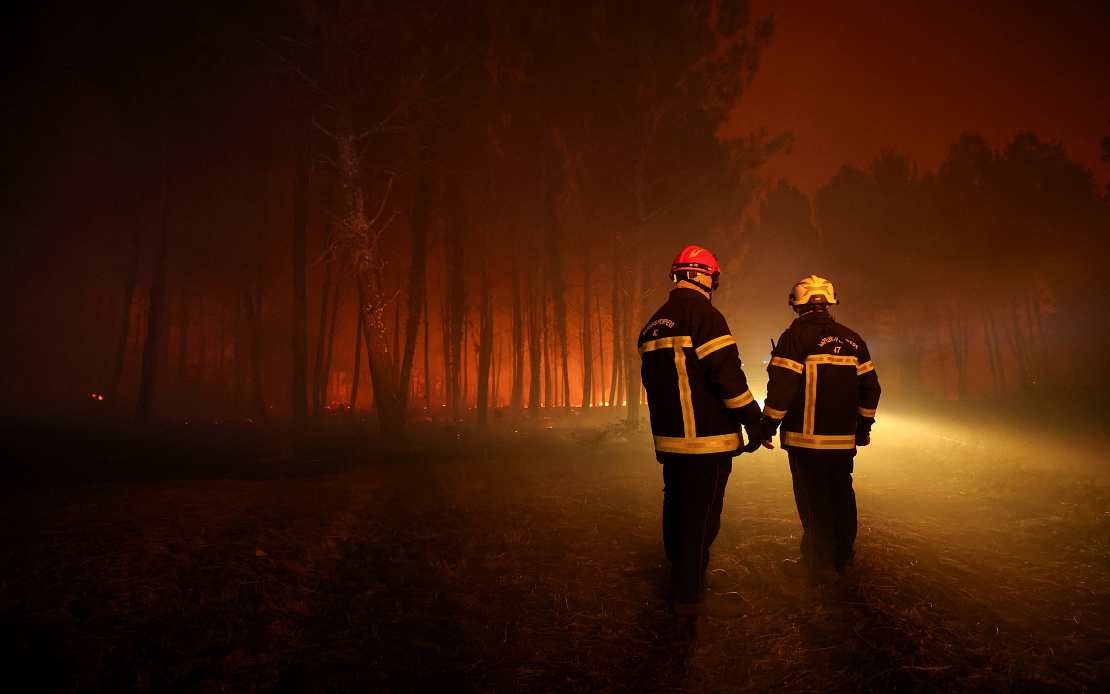
A 15-year-old boy in France has been formally charged in connection with a devastating fire near Bordeaux airport that claimed the lives of two firefighters last month. The teenager appeared before a judge on Thursday and was subsequently placed in a closed educational centre following the charges related to the fire in Merignac, a residential area near the airport.
The case represents a tragic outcome from what authorities believe was a moment of carelessness. According to local French media reports, the young man and his 22-year-old brother were stopped in the Merignac area when the incident occurred. As the brothers smoked cigarettes in a parking lot, the teenager allegedly discarded his cigarette onto nearby grass, inadvertently igniting a fire that would spiral out of control with devastating consequences.
The distinction between the brothers' actions proved significant for their legal outcomes. While the older brother also disposed of his cigarette in the parking lot, investigators determined that his actions did not directly cause the fire. Following his arrest on Wednesday, the 22-year-old brother was subsequently released after the teenager accepted responsibility for starting the blaze. This development allowed authorities to focus their prosecution efforts on the younger sibling, who remained in custody following his court appearance.
The fire that erupted from that discarded cigarette proved catastrophic for emergency responders. On July 21, two firefighters lost their lives while attempting to extinguish the building fire that had spread across Merignac. The tragic circumstances of their deaths underscored the severe consequences of what had began as a preventable incident—their emergency vehicle became trapped by encroaching flames as they battled to contain the blaze, ultimately costing them their lives.
The scale of the tragedy prompted immediate action from French authorities. The Bordeaux prosecutor's office launched a comprehensive investigation into the incident, examining both the circumstances surrounding the fire and the factors that led to the fatal outcome for the emergency responders. Such investigations are standard in cases where deaths result from incidents that may involve criminal negligence or careless conduct.
For Malaysian readers, this case carries particular resonance given how similar incidents have occurred within Southeast Asia. Cigarette-related fires remain among the most preventable causes of fire deaths across the region, yet carelessness with smoking materials continues to pose significant risks in public spaces and residential areas. The incident highlights the serious legal consequences that can follow from actions that may initially seem minor, particularly when those actions result in loss of life.
The case also illustrates how judicial systems in developed nations approach youth offenders involved in incidents resulting in deaths. Rather than treating the teenager as a common criminal, the French system has placed him in a closed educational centre—indicating an approach that balances accountability with considerations of rehabilitation and education. This contrasts with how some jurisdictions handle similar cases involving minors.
The distinction between the two brothers' legal treatment further demonstrates how forensic investigation and evidence-gathering determine culpability. By carefully examining the exact locations where each cigarette was discarded and the fire's point of origin, investigators could establish which action directly caused the ignition. This precision prevented the older brother from facing charges he did not warrant, though both brothers' decision to smoke in an area prone to fire hazard contributed to the circumstances that led to tragedy.
Beyond the immediate legal proceedings, this incident serves as a sobering reminder about fire safety in public spaces. Many residential and parking areas across Southeast Asia lack adequate fire prevention awareness campaigns, leaving populations vulnerable to incidents sparked by careless disposal of smoking materials. Merignac's proximity to Bordeaux airport suggests the area may have housed temporary structures or semi-permanent buildings, which can be particularly vulnerable to rapid fire spread.
The deaths of the two firefighters also underscore the inherent dangers emergency responders face daily. Their sacrifice while responding to a preventable fire adds weight to the legal proceedings against the teenager, as courts typically consider the severity of consequences when determining charges and sentences for individuals whose actions contributed to such outcomes.
For France, the case contributes to ongoing discussions about youth responsibility and environmental awareness. Educational institutions and public authorities may leverage this incident to reinforce messages about fire safety and the consequences of negligence, particularly targeting adolescents who may underestimate the dangers posed by discarded smoking materials in dry conditions.
As the legal process continues, the teenager's case will likely be followed closely by French legal experts and fire safety advocates. The outcome may influence how similar cases are prosecuted in future, particularly those involving minors whose actions, however unintentional, result in significant loss of life and property. The balance between rehabilitation and accountability will be central to how French courts handle the proceedings against the young man.

